
A metalworking distributor is asked whether to stock a thin cut-off wheel or a more robust-looking thicker one. The right answer is not “thinner is always faster” or “thicker is always safer.” Wheel construction, diameter, abrasive specification, supported workpiece and operating technique all matter. Thickness influences the kerf and handling, but it cannot be chosen independently of the wheel maker's intended use and the exact grinder's guard, speed and flange arrangement.
This guide addresses buying and kit design, not wheel-mounting instructions. Use the approved wheel for the tool and task, and follow both makers' manuals. Norton Abrasives' industrial catalog describes distinct thin and thicker cut-off wheel applications within one product family; those statements apply to those products, not every wheel on the market.
Define the cut before comparing wheel thickness
Write down material, section shape and thickness, cut length, access angle, desired edge quality and number of cuts per shift. Cutting thin tube for installation may prioritize a narrow kerf and manageable burr. Cutting thicker structural stock repeatedly may lead to a different durability and wheel-life trade-off. A retail assortment can legitimately carry both, but each wheel needs a clear use case.
Define the customer too. A fabrication shop may manage several wheel specifications and a disciplined tool setup. A general hardware customer may benefit from fewer, carefully described options. Avoid a package that says “universal metal cutting” while hiding restrictions on material, wheel speed or grinder size. The buyer should map wheel variants to the actual grinders it sells.
The wheel's outside diameter, thickness, bore and maximum operating speed all belong in the SKU record. Thickness alone is a misleading headline. The related wheel RPM compatibility guide explains why the marked speed and tool speed must be checked before use.
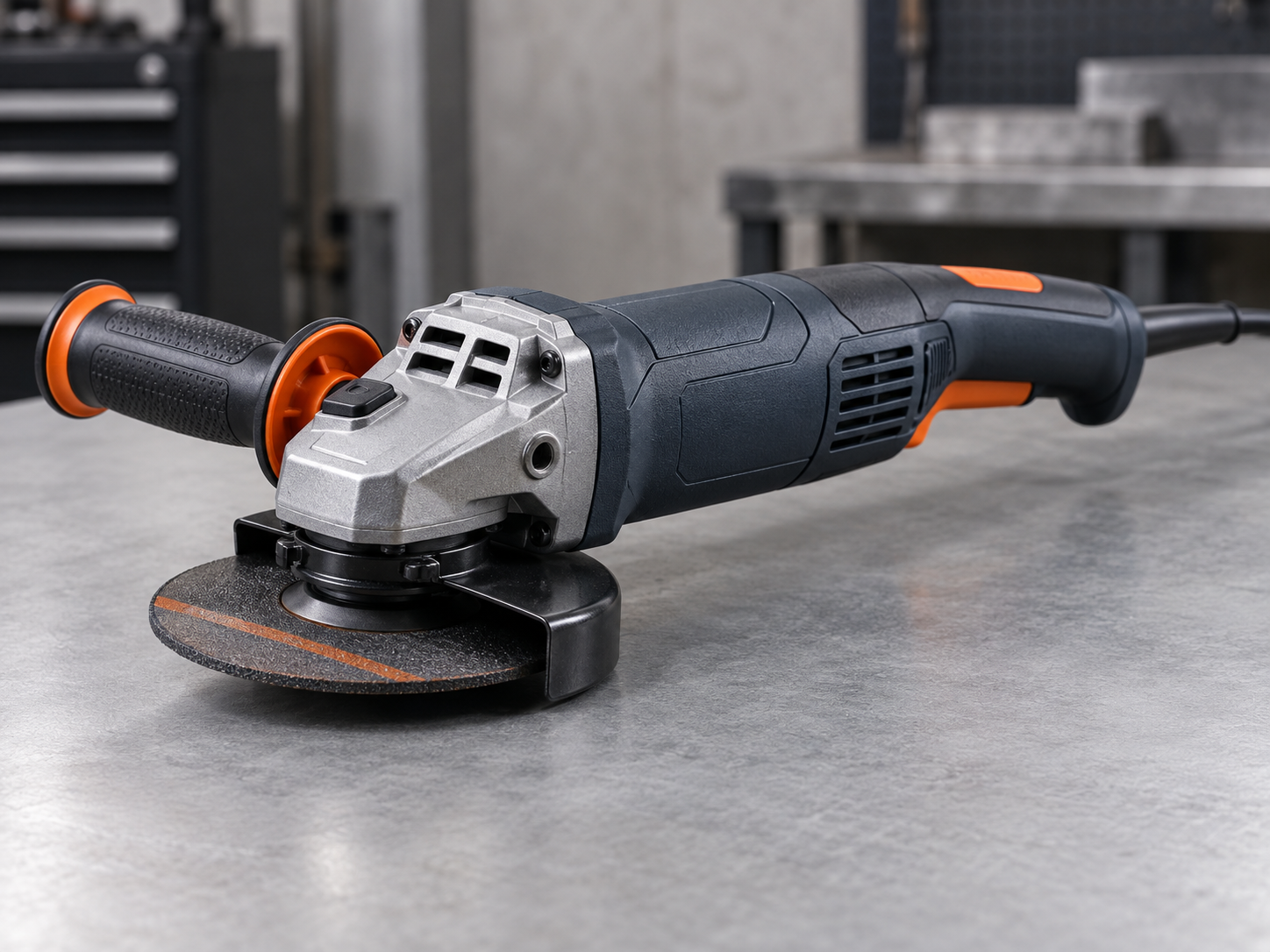
Caption: The wheel's complete specification matters more than a single thickness number.
What changes when the kerf changes?
All else equal, a narrower wheel removes a narrower band of material. That can reduce material loss and may affect the effort and burr profile on suitable thin stock. But “all else equal” rarely holds across brands or abrasive formulations. Grain, bond, reinforcement and wheel design can change performance substantially. A thin wheel used with side pressure or an unsuitable task can be damaged quickly.
A thicker wheel may be appropriate where the maker designs it for more demanding cutting or longer life. That does not authorize side grinding with a cut-off wheel. Cutting wheels and grinding wheels are different products and must be used according to their marked function. OSHA's portable powered-tool rules address guarding, wheel inspection and compatibility in U.S. workplace settings; local rules and the product manual may add requirements.
The cost comparison should include wheel consumption, cut time, finished-edge work and replacement frequency. A cheaper wheel per piece can be more expensive per completed cut if it wears rapidly; a higher-priced wheel can also be poor value if it is over-specified for a light retail task. Buyers should calculate from a controlled application test rather than select by unit price alone.
Verify the mounting system first
Before any powered comparison, the wheel must fit the grinder's bore, spindle, flange and guard arrangement as instructed. Inspect for cracks, chips, moisture damage or distorted packaging. Check the marked maximum operating speed against the tool. Do not stack wheels or improvise spacers to achieve a desired thickness. The arbor and flange fit checklist covers this stage.
Confirm that the guard type and position are suitable for cutting with the selected wheel. A grinder supplied for grinding may require a different guard configuration for a cut-off application, depending on its design and instructions. If the buyer intends to sell a bundled wheel, test that exact combination. Do not assume that a wheel marketed for a nominal disc diameter will be safe on every grinder of that diameter.
Look at the label and packaging. Are dimensions, operating speed, wheel type, material application and required warnings readable? Does the kit manual identify the included accessory and the guard arrangement? A private-label pack that copies generic artwork may make it difficult for users and retailers to choose the right replacement.
Build a fair cutting trial
Use trained operators, suitable PPE, a secured workpiece and a safe workstation. Define one or more representative cuts, such as a set length of tube or a fixed number of sections from a steel profile. Use compatible new wheels, the same tool where appropriate, and a consistent operator method. Measure the actual wheel thickness and diameter rather than relying only on a catalog number.
Record cut time, wheel wear, number of cuts, edge condition, visible burrs, need for secondary finishing and any interruptions. The trial should stop immediately if the wheel behaves abnormally. Avoid pushing a wheel sideways or using more pressure to force an impressive speed result; this both biases the comparison and can be hazardous.
Repeat enough cuts to see whether the initial result persists. A wheel may make the first cut quickly but wear rapidly. Another may take slightly longer per cut yet retain its diameter. For a trade distributor, cost per acceptable cut and operator handling can be more informative than a single fastest-cut clip.
Do not claim the trial predicts every metal grade or grinder platform. A stainless tube and mild-steel solid bar are different applications. If the intended range covers both, test both or narrow the product claim. Keep photographs of the workpiece, wheel before and after, and the setup so the result remains interpretable months later.
Mid-article sourcing CTA: Building a grinder-and-wheel assortment? Send the metal profile, grinder model and cut-quality target for a kit and sample-test discussion.
Turn results into an assortment
An assortment can offer a light, precise cutting option and a durable option for harder service, but the product pages should explain the differences in customer language. Use specific task examples and complete wheel specifications. A buyer may decide that one versatile wheel is enough for a small channel, while a specialist dealer needs several. There is no requirement to stock both simply because both exist.
If a grinder kit includes a wheel, identify its supplier and part number. A seemingly minor substitution can change cutting feel, package markings or customer expectations. Treat an accessory change as a new configuration review, especially when the product page shows the original wheel. Keep a replenishment path so repeat buyers can purchase the same approved accessory.
The cutting-disc versus grinding-wheel article can be linked in retail training, but it should not be used to blur the new thickness choice. First decide whether the customer is cutting or grinding; then choose among suitable wheels for that operation.
Inspect stock and respond to complaints
At receiving, check cartons for crush, water exposure and missing identification. In storage, protect wheels from impacts and conditions outside their maker's guidance. A damaged wheel should not be sold simply because its dimensions match the purchase order. At pre-shipment inspection, sample the actual bundled wheels and verify marking, count, packaging and fit with the approved grinder kit.
If customers report rapid wear or breakage, collect the wheel lot, tool model and speed, workpiece, guard and flange setup, and any damage evidence. Do not ask them to reproduce a suspected fracture event. Quarantine suspect stock and involve the wheel supplier when safety is in question. The investigation may reveal a wrong application, a mounting mismatch, transport damage or a manufacturing concern.
An honest product claim states what has been evaluated. “In a defined mild-steel tube trial with the stated grinder, this wheel produced an acceptable cut with the recorded wear” is useful. “Cuts all metal faster and safer” is not supported by one trial. Buyer confidence grows from accessible test boundaries, not superlatives.
Calculate cost per acceptable cut
Price per wheel is easy to compare; cost per usable cut is harder but more relevant. A simple field sheet can record wheel price, number of cuts made to the agreed stopping point, average cut time, burr condition and rework needed. It should also record the workpiece and operator. Divide the consumed wheel cost by acceptable cuts only after exclusions and damaged starts are identified. A very thin wheel that makes a narrow kerf but breaks the surface finish requirement may not be the cheaper solution.
Do not present this local calculation as a guarantee. A customer's steel grade, clamping and grinder may differ. Its value is comparative decision-making under stated conditions. If a supplier claims a specific life advantage, request the underlying method and check whether it used the same wheel diameter and material as your range.
Watch for retail confusion between wheel types
A thin cut-off wheel and a thick grinding wheel can sit near each other on a shelf. The buyer should ensure package color, name, icon and warnings make the intended operation clear in the destination language. A label that shows only diameter and price may lead a customer to use the wrong wheel. Retail staff should know how to distinguish cutting, grinding and finishing accessories without relying on a vague “metal disc” nickname.
If the grinder box includes a wheel, use a specific caption in photographs and manuals. A photograph showing side grinding with a cut-off wheel would be misleading even if a disclaimer appears elsewhere. Check AI-generated marketing images for the same error. Good visual communication is part of safe product positioning.
Compare wheel performance over a realistic sequence
A useful buyer trial includes setup time, a series of cuts and wheel changeover, not just the fastest single cut. Record whether the wheel tends to bind in narrow kerfs, how much diameter remains after the sequence and whether the operator must stop to reorient the workpiece. The task should be safely designed by trained personnel and stopped on any abnormal wheel behavior.
For a distributor serving several segments, run separate trials on a thin hollow profile and a heavier section rather than forcing one result to represent both. A wheel may be excellent in one and mediocre in the other. The resulting assortment could offer two clearly differentiated products, or one bounded “general purpose” option. The customer should see the choice, not an unexplained wall of thickness numbers.
Treat packaging as a technical control
Cut-off wheels can be damaged before a customer mounts them. The retail pack and master carton should protect edges and markings, and warehouse staff should follow the wheel maker's storage guidance. A thin wheel may need especially careful support, but do not invent one universal packing method. Inspect production-intent cartons after a realistic transit test and compare them with the approved sample.
At receipt, segregate crushed or wet stock for assessment. Reprinting a label or replacing a sleeve does not prove a wheel is sound. A complaint about early wheel failure may originate in handling rather than abrasive formulation, so the supplier and importer need lot and transport records to investigate fairly.
A final assortment test
Place the proposed wheel packs side by side with the grinders the retailer actually stocks. Ask a trained sales colleague to select a wheel for a thin tube and one for a heavier section using only the information customers will see. If they cannot distinguish the approved products and guard needs, revise the labels or simplify the assortment. A technically correct wheel that is routinely selected for the wrong task is not a successful retail offer.
Repeat this check when a package is translated or a new wheel family is added. The selection path, not only the engineering data, determines what customers take home.
The package should state the wheel dimensions and intended application clearly enough that a buyer can reorder the same item without relying on color alone.
Frequently asked questions
Is a thin cut-off wheel always better?
No. Thin wheels can offer a narrower kerf for suitable cutting tasks, but wheel construction, durability and workpiece matter. Follow the maker's intended application and compare complete specifications.
Can a cut-off wheel be used for side grinding?
Do not assume so. A cut-off wheel is intended for cutting according to its maker's instructions; side loading may be prohibited and hazardous. Use a wheel designed and approved for the actual operation.
Should a distributor compare only price per wheel?
No. Consider cost per acceptable cut, wheel consumption, finish, operator handling, replacement availability and any bundled-kit implications. A controlled trial makes the comparison more meaningful.
Does the same diameter guarantee fit on every grinder?
No. Bore, spindle, flanges, guard, speed and tool instructions must match as well. Verify the exact grinder and wheel combination before approval.
Conclusion
Wheel thickness is one useful choice within a larger accessory system. Define the cut, verify fit and safety information, test representative work and compare the full cost of an acceptable result. That produces a clearer assortment than a shelf label built around “thin versus thick” alone.
Send your requirements
Share the intended grinder, metal application, wheel dimensions and target channel. ToolViron can discuss the grinder kit and accessory approval questions that should be resolved before ordering. Send your requirements to begin.

Caption: The wheel shipped with a kit should be the wheel whose application and markings were approved.
Images illustrate product and inspection topics; they are not documentary evidence of a specific ToolViron test or customer project. Confirm the exact model and market requirements before ordering.