
An abrasive wheel can be the right diameter for an angle grinder and still be an unsuitable match. A purchasing team needs to compare the wheel's maximum operating speed with the grinder's maximum spindle speed, then check the bore, mounting parts, guard, intended work and the wheel maker's instructions. A retail kit is only as coherent as the complete tool–accessory configuration.
For distributors, this check belongs in sample approval and in the bill of materials. It is not enough to put a generic “115 mm disc” beside a generic “115 mm grinder” on a product sheet. The exact disc and exact grinder model need to be reviewed together.
Start with two different ratings
The grinder's no-load speed is a tool characteristic, usually expressed in revolutions per minute (RPM). The wheel's maximum operating speed is a limit set for that particular accessory. The wheel rating must not be lower than the maximum speed at which the grinder can drive it. Read both ratings from the approved products, not from a distributor's summary table that may cover several variants.
OSHA's abrasive-wheel rules for construction are a useful primary reference for guards and operating-speed principles in that jurisdiction. The wheel manufacturer's actual label and instructions govern its intended use; importers must also check the requirements of the destination market. A catalogue claim should never replace the accessory marking.
Do not assume a variable-speed grinder makes a lower-rated wheel acceptable. The user can change the setting, a service replacement may differ, and the wheel may have other limitations. If a special configuration depends on speed control, obtain an engineering and compliance review for the exact combination before listing it.
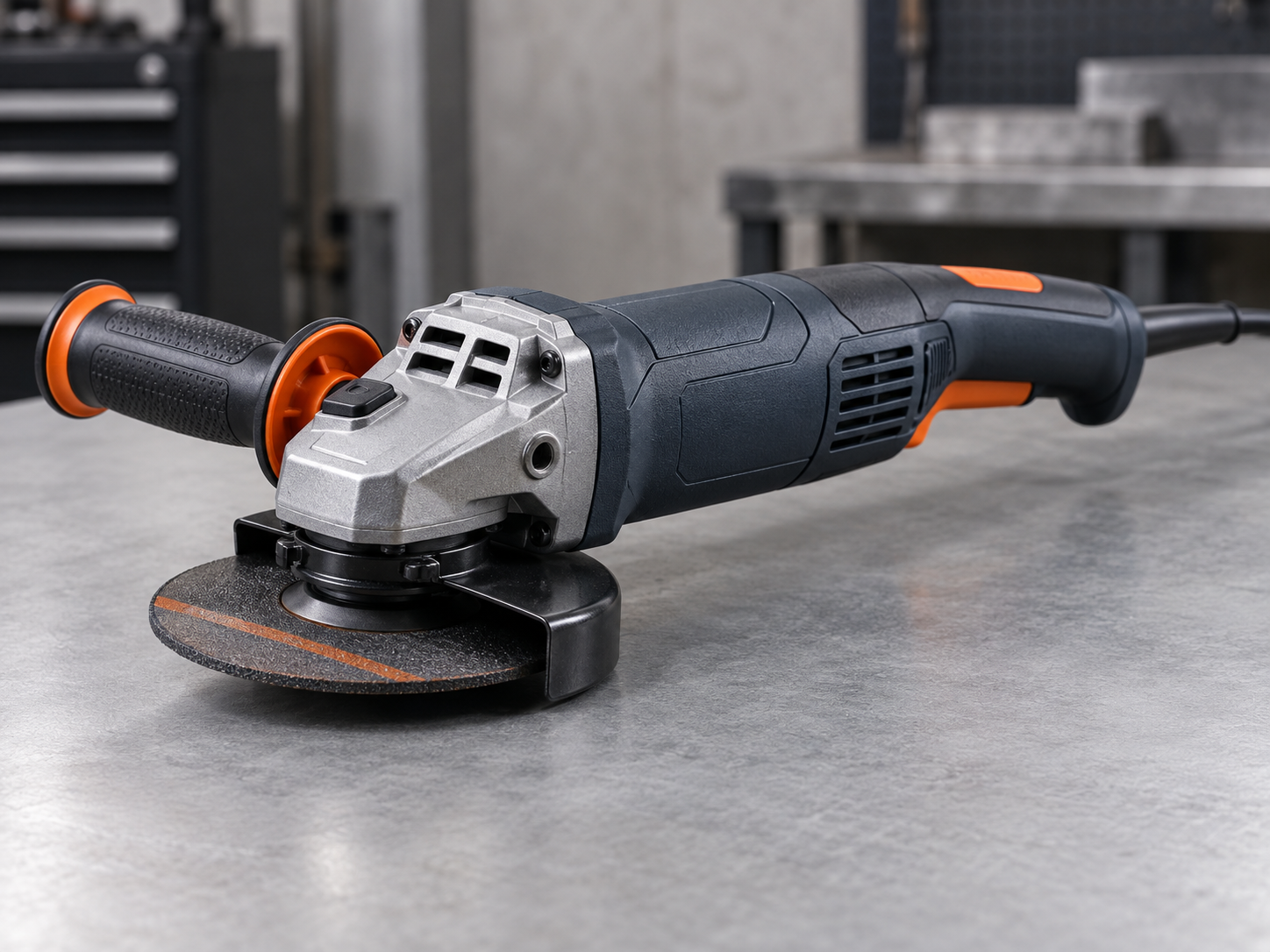
Caption: Verify the rating of the exact wheel against the maximum speed of the exact grinder model.
Diameter is only the first compatibility question
Diameter influences how much wheel is exposed and which guard size is appropriate. Yet equal diameter does not establish equal construction, thickness, bore, flange arrangement or permissible task. A thin cutting wheel and a grinding wheel may share an outside diameter while requiring different use and potentially different guard arrangements. Read the cutting-disc versus grinding-wheel guide before building a mixed accessory kit.
The bore should fit the spindle and required mounting parts in accordance with the accessory instructions. A loose fit, an improvised adapter or a missing flange is not a minor assembly detail. Ask the supplier for a photo of the installed wheel and guard, and compare it with the approved sample in person. The sample record should identify the spindle thread, flanges and supplied wrench or tool-free mechanism where relevant.
For a private-label product, document the complete packed configuration: tool model, guard type, auxiliary handle, wheel SKU, wheel marking, flanges, manual and carton illustration. If any of these changes after approval, repeat the compatibility review. A substitute wheel from another supplier is a new component even if the outer carton says the same size.
Read the wheel label like a technical document
Record wheel type, size, speed limit, intended material, permitted operation and any mounting or safety symbols. Ask whether the label will still be readable after warehouse storage and distribution. If the wheel is individually packaged, ensure its package does not contradict the tool's manual or retail listing.
3M's cut-off wheel information illustrates an important distinction: a cut-off wheel is intended for edge cutting, not side grinding. That statement concerns the referenced 3M wheel; for any other wheel, use its maker's markings and instructions. It is unsafe sourcing practice to assume all products with similar appearance have the same permissible application.
The buyer should also verify any regional standards or certification claims made for the accessory. Ask for product-specific evidence with a traceable model or batch, rather than accepting a generic certificate detached from the supplied wheel. Avoid promising that every abrasive wheel is suitable for every material; application limits belong in the listing and instructions.
Compare the guard with the operation
Wheel speed is necessary but not sufficient. The guard must be compatible with the wheel and the intended cutting or grinding operation. Ask how it is fixed, adjusted and retained during use. Inspect the sample in the operating position used for the customer's actual task, including the auxiliary handle and workpiece support.
For photographs and instructional graphics, show the guard in the correct position. A lifestyle image with the guard removed can undermine otherwise accurate technical copy. Review marketing assets at the same time as the manual and pack artwork; these materials shape installation preparation for a first-time buyer.
Wheel changes should be described with the machine disconnected or battery removed, following the exact manufacturer instructions. Avoid giving a one-size-fits-all mounting procedure in a retail listing. The intended user needs the manual for the approved model, not a generic web article.
Mid-article sourcing CTA: Preparing a grinder-and-disc kit? Send your wheel size, ratings, material and destination market for a model-specific quotation discussion.
Create a repeatable sample-check record
A short inspection sheet can prevent incompatible accessories from entering a shipment. Put the grinder and wheel model IDs at the top. Capture their speed ratings, dimensions, bore and flange arrangement, guard identification, intended material and operation, plus photos of the mounted assembly and packaging. Note the reviewer, date and sample revision.
Run a controlled application check with the workpiece and protective measures appropriate to the product. Record whether the wheel mounts correctly, whether the guard remains usable, and whether the user instructions reflect the tested configuration. Do not treat one clean demonstration cut as proof of durability or certification. Performance, safety and market compliance require separate evidence.
Before shipment inspection, sample the packed cartons to confirm the approved wheel SKU has not been replaced. A packaging line can accidentally mix accessories that look nearly identical. Checking wheel markings and box contents against the bill of materials is a practical way to catch this. If an optional wheel is sold separately, do not put it in the “included accessories” photograph.
Plan for after-sales replacements
Customers will buy replacement wheels after the original is consumed. The retail product page should therefore state the necessary size and compatibility limits without implying universal fit. Train customer support to request the grinder model and wheel marking when answering an accessory question. The angle grinder range can be the entry point to the relevant model documentation.
A supplier can support a cross-reference list for approved accessories, but the importer should maintain version control. The original kit, a later wheel supplier and a later grinder motor revision may not be identical. A compatibility matrix is useful only if every row has a revision date and evidence behind it.
Check speed claims in a multi-market assortment
An importer may order the same grinder housing for several regions, but the motor rating, voltage or speed may differ by version. Do not assume a wheel approved with one regional variant is automatically suitable for every other variant. Record the actual nameplate and no-load speed of each market SKU, then review the accessory against the highest relevant spindle speed for that version.
Retailers sometimes want to use one accessory pack across several grinder models. A compatibility matrix can support that, but every entry needs an evidence trail. State the approved wheel model, grinder model, guard and flange set, and the dates of the review. When either supplier changes a component, mark the affected rows as needing reassessment rather than quietly leaving them active.
If the kit is sold online, avoid a dropdown that groups incompatible tool variants under one generic “fits all” page. The customer should see exactly which tool and wheel are supplied. The same discipline applies to translated product pages: speed units and decimal punctuation must be unambiguous.
What a buyer should do with an apparent mismatch
If a wheel's marking is unclear, do not guess its rating from diameter or colour. Quarantine the proposed accessory from the approved kit and ask the manufacturer for traceable documentation. If a shipment inspection finds a different wheel from the approved bill of materials, hold the affected cartons for review. A spot-check should determine scope, but the buyer should not simply relabel a questionable wheel in the warehouse.
In a supplier meeting, separate a documentation gap from a physical incompatibility. A missing datasheet may be resolvable by obtaining the correct model document; a wheel rated below the tool's speed requires a different approved accessory or tool configuration. The action and evidence should be recorded before product release.
For customer support, give staff a clear escalation route. They should request photographs of the tool nameplate and wheel marking, advise against use if compatibility cannot be confirmed, and refer the question to a qualified technical reviewer. A generic answer such as “all 125 mm discs fit” is not adequate.
A practical carton audit before release
Select a sampled carton from the production lot and open it without relying on a supplier's display sample. Check the grinder nameplate, wheel label, guard, flanges and manual as a single set. Write down the tool's maximum speed and the wheel's maximum operating speed exactly as marked. Confirm the latter is not lower, then compare dimensions and intended operation. Take clear photographs for the shipment record.
Next, verify that the wheel can be mounted only according to its maker's instructions using the supplied parts. A physical fit is not a full approval, but an obvious mismatch is grounds to stop. Inspect the guard installed with the actual wheel. If the carton includes more than one wheel type, repeat for every supplied type and the intended use of each.
Finally, compare the carton artwork and quick-start information with the contents. A high-speed grinder image beside a lower-rated accessory can indicate that two sourcing streams were merged without technical review. Do not let a label correction in the warehouse conceal a real compatibility problem. The exact scope of affected stock should be determined before release.
Why speed ratings are a ceiling, not a performance target
A wheel's maximum operating speed does not tell the buyer how quickly it will cut or grind. It is a limit. Accessory construction, abrasive type, work material, pressure and technique affect performance. A retailer should not imply that a wheel with a higher maximum RPM necessarily removes material faster or lasts longer. Those claims require relevant comparative tests.
Similarly, the grinder's no-load speed is not the speed it maintains under every load. However, for compatibility checking, the buyer should use the relevant maximum available tool speed specified by the manufacturer, not an observed lower speed during one test. The safety margin cannot be based on an operator's promise to keep pressure on the wheel or leave a dial at one setting.
Explain this distinction in internal training. Procurement staff may otherwise treat ratings as marketing performance figures and accept a lower-rated wheel because a demonstration appeared slow. A controlled specification review is both more reliable and easier to repeat when the accessory supplier changes.
Questions to ask when accessory suppliers change
What is the new wheel's exact manufacturer and SKU? Does its label identify the same permitted operation and material? Is its maximum operating speed sufficient for the exact grinder variant? Do the bore and required flanges match? Is the existing guard still appropriate? Which product pages, cartons and replacement charts need revision? A complete answer should be documented before the new disc is packed.
Ask for a production sample of the substitute, not only a digital drawing. Compare it with the retained approval item and perform the necessary fit and application checks. If the supplier cannot provide traceable model documentation, the importer should not infer compatibility from appearance. Keep old and new versions separated by batch so customer support can answer later questions accurately.
This change-control discipline also applies when the grinder motor or gearing changes. A faster tool variant can invalidate an accessory match that was acceptable for an earlier model. Maintaining a dated compatibility record is therefore part of normal range management, not a one-time launch exercise.
Frequently asked questions
Can a lower-RPM wheel be used if the grinder has a speed dial?
Do not assume so. Compare against the grinder's maximum available spindle speed and seek a product-specific engineering review. Users can change the dial, and the wheel may have additional operating restrictions.
Is a matching wheel diameter enough?
No. Check maximum speed, bore, thickness, wheel type, intended material, flanges, guard and the accessory maker's instructions.
Should a buyer check the disc in every shipment?
The approved accessory should be part of incoming or pre-shipment sampling because substitutions and pack-out errors are possible. The inspection frequency depends on the buyer's risk plan and supplier history.
Can a cutting disc be used to grind a weld?
Only if its maker explicitly designs and labels it for that use. Ordinary thin cut-off wheels are intended for edge cutting, not side grinding.
Conclusion
RPM compatibility is a component-level decision, not a line of small print. A reliable grinder assortment connects the exact tool, exact wheel, appropriate guard, mounting hardware and user information. Buyers who record that configuration during sample approval make later shipment and after-sales checks much easier.
End-of-article CTA: Ask ToolViron for a grinder catalogue and configuration review. Share the tool size, intended wheel type, application and destination market; we can discuss an appropriate sample plan without claiming that one accessory fits every job.
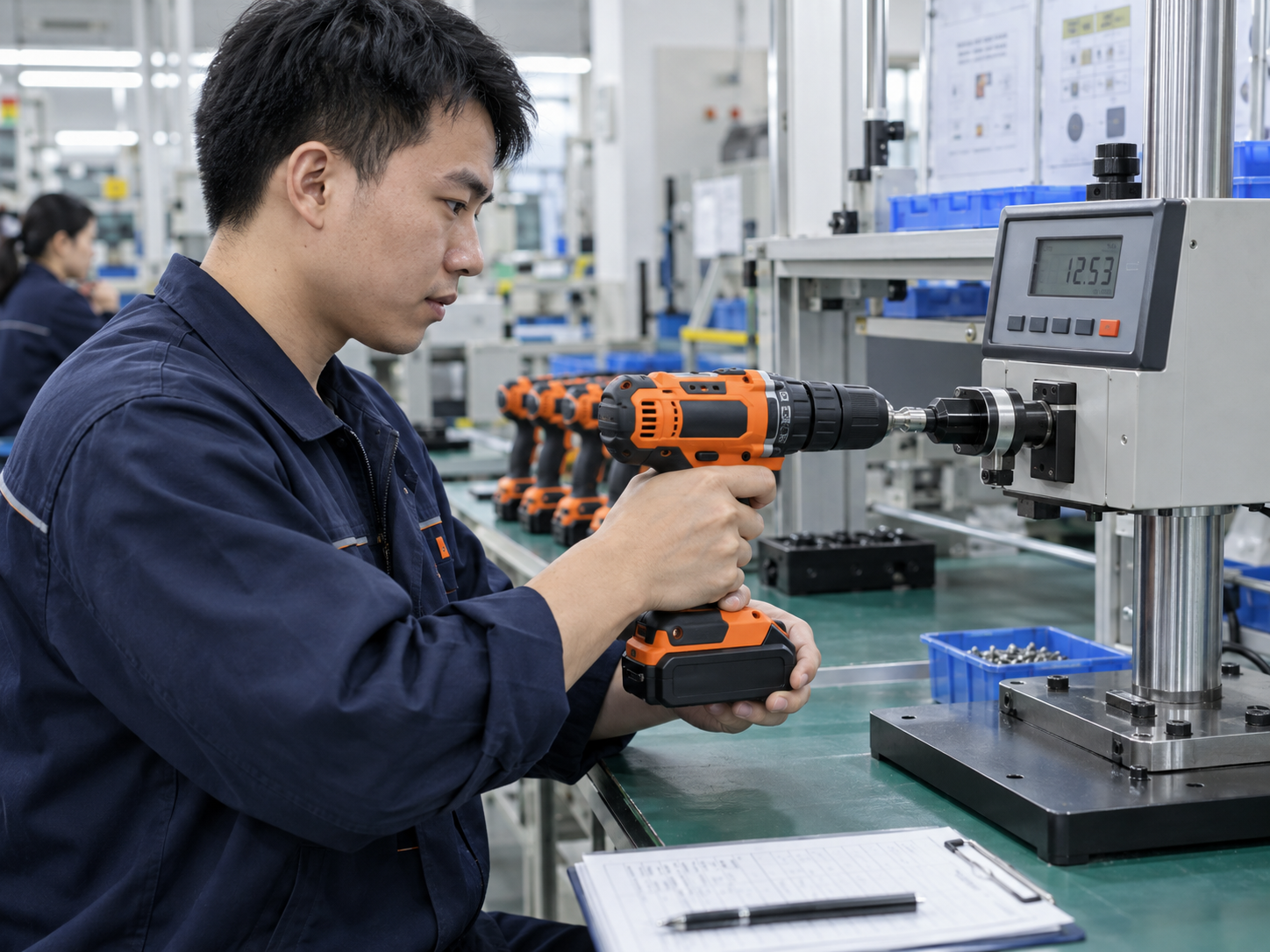
Caption: A documented sample review gives the shipment team an exact approved reference.
Images illustrate product and inspection topics; they are not documentary evidence of a specific ToolViron test or customer project. Confirm the exact model and market requirements before ordering.