
A rough planed board does not automatically mean that the electric planer is defective. Tear-out can occur when the blades lift and split wood fibres rather than cut them cleanly, especially where grain changes direction, the material is figured or the cutting setup is aggressive. Blade condition, depth, feed and workpiece support can also affect the result. A B2B buyer who judges two planer samples on unlike timber or blames every torn patch on motor power can choose the wrong product or reject a usable one.
This guide gives importers and woodworking distributors a diagnostic sample method. It does not claim that one setting can eliminate tear-out on every species or piece. The exact planer and blade manufacturer's instructions govern operation and maintenance, and cutting trials should be performed by competent users with secured stock and appropriate protection.
Identify what the customer expects the surface to become
An installer trimming a door edge may accept a surface that will be sanded or painted. A joiner preparing a visible hardwood component may require a cleaner finish before a final hand-tool or sanding stage. The buyer should state the intended finish, workpiece dimensions and wood species before comparing planers. “Smooth finish” without material and acceptance criteria is too vague for a purchasing decision.
Record the grain direction and any reversals or knots in the sample. A single board may contain areas that behave differently during a pass. Mark the start and direction of each pass; photograph the board before cutting. If the grain slopes in opposing directions across the same surface, do not present one clean strip as proof that the tool is universally tear-out-free. The correct conclusion may be that the application requires a different pass direction, shallower cut or separate finishing operation.
The tool also has a material-use boundary. The buyer should not ask a small hand planer to remove large amounts of dense hardwood in one pass simply because the adjustment dial allows a high maximum depth. The planer depth-setting test guide explains how to relate a dial position to a measured cut and repeatable sample.
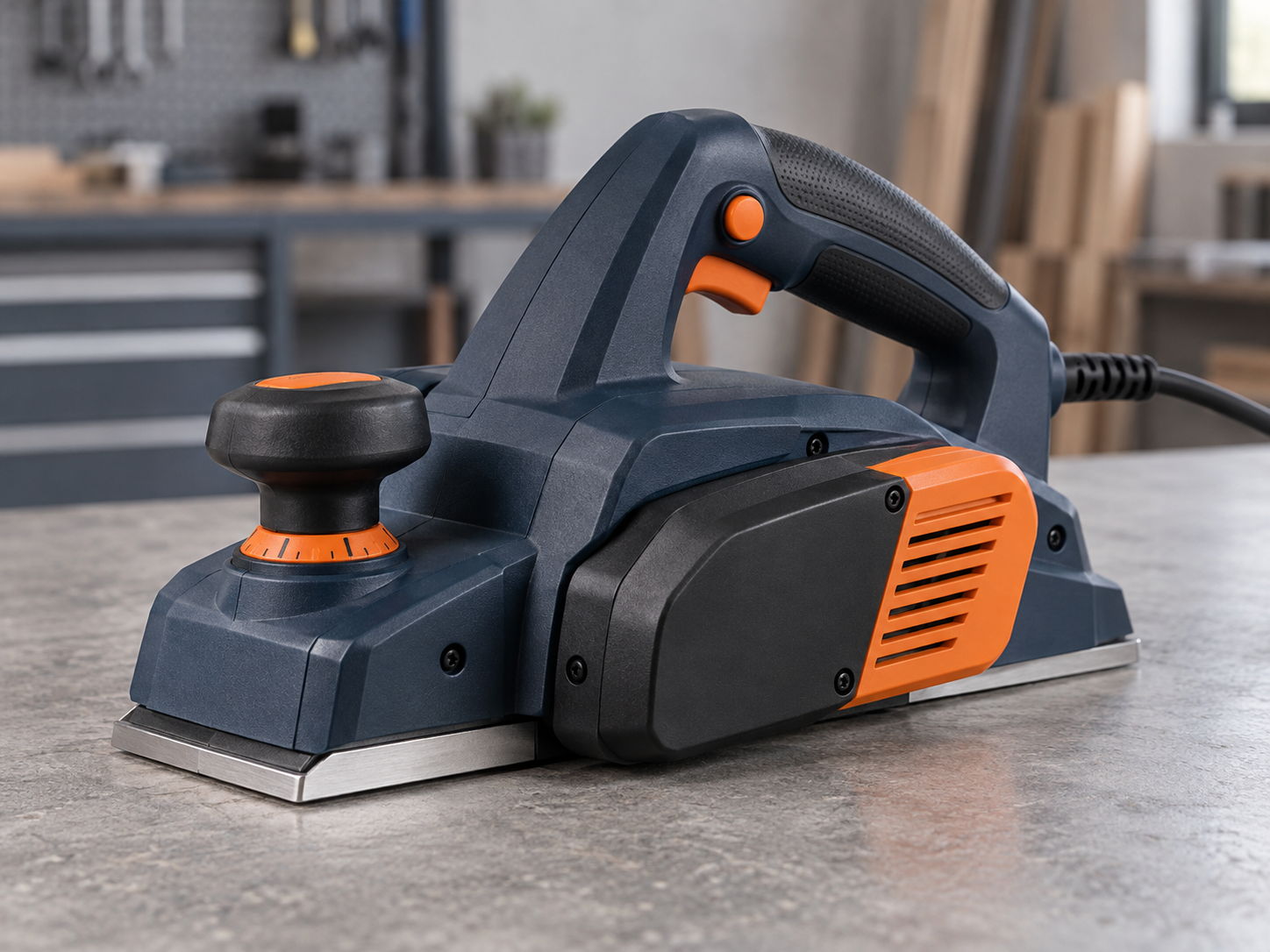
Caption: Grain direction and blade condition should be documented before a planer finish is judged.
Separate material causes from tool causes
Prepare more than one board from the target species, ideally with a consistent reference area and clearly marked grain. A defect confined to one figured patch may point toward material behaviour; repeating stripes or ridges in the same position across boards may point toward a blade or sole issue. Neither observation alone is conclusive, but the pattern tells the technician what to check next.
Assess blade condition before making a performance claim. A nicked blade can leave a persistent ridge; a dull blade can increase tearing or require more force. The tool should be isolated from power before any inspection, following its manual. Bosch's hand-planer manual demonstrates how model-specific blade selection, seating and paired replacement are described by an original manufacturer. Those instructions are for Bosch's model, not a substitute for the manual of a different ToolViron configuration.
Check the front and rear soles for damage and cleanliness. Debris under the sole or an unstable workpiece can alter the tool's contact with the board and mimic a cutting defect. Inspect the ejection path and dust-management arrangement as well; clogged chips can interfere with visibility or operation. The chip-ejection guide covers that separate system decision.
Build a fair planing trial
Use a secured board and a competent operator. Set an agreed shallow cut appropriate to the exact tool and material, note the dial position, and make a controlled pass according to the manufacturer's instructions. Repeat with grain direction and, where safe and justified, compare a second direction on a separate equivalent board. Do not ask the operator to improvise a dangerous reversal or hold narrow stock by hand to satisfy a test matrix.
Record board ID, species, moisture context if known, grain orientation, blade type and wear, depth setting, number of passes, feed observations and the resulting surface. Use consistent lighting for photographs; raking light can reveal torn fibres that a front-lit image conceals. If the buyer's channel uses a defined finishing standard, measure or document the relevant feature rather than relying only on “looks good.”
Compare the tools with equivalent blades. A new carbide blade against a used HSS blade is not a clean tool comparison. The HSS versus carbide blade guide addresses blade-material trade-offs. If one product is actually sold with a different blade type, that difference belongs in the commercial comparison and should be disclosed, not hidden.
Mid-article sourcing CTA: Evaluating planers for hardwood or finished joinery? Send the species, finish target and proposed blade type to discuss a representative sample test.
Read the defect pattern before changing the specification
Torn fibres in random areas often call for a closer look at grain and material. A straight ridge aligned with travel may suggest a nick or uneven blade seating. A heavy gouge at the start or end can reflect tool support or technique. Chatter or broad waviness may involve blade balance, workpiece support, depth or mechanical condition. These are diagnostic hypotheses, not a remote fault diagnosis; have the sample reviewed by a qualified technician.
The buyer should not immediately request a higher-watt motor to solve a finish problem. More input power will not correct a damaged blade or an unsuitable pass direction. Nor should the factory replace a blade without recording why the approved sample failed. A useful review closes the loop: identify the likely cause, change one variable at a time, retest on a labelled board, and preserve the comparison photographs.
If the product is sold for mixed species, create an honest user note explaining that timber characteristics can affect finish and that a test pass is prudent. Avoid a promise of “tear-out-free on all hardwoods.” Such a claim is unlikely to survive real customer material variation and could encourage overly aggressive use to meet a marketing expectation.
Translate the result into kit and channel choices
A retail door-fitting kit may prioritize ease of depth adjustment, clear instructions and a suitable blade supplied in the box. A specialist woodworking channel may prefer a blade system that its users already stock, plus a clear replacement process. If the latter channel expects a high-quality visible surface, describe the limits of the planer and any finishing steps rather than implying a hand-held electric tool always leaves a final-ready surface.
Check replacement blade availability before launch. A customer who cannot source the correct blade may interpret later poor finish as inherent tool weakness. Label the blade type, dimensions and approved replacement identifier in the manual and product data. Do not assume two blades with similar width and appearance are interchangeable; seating and height-setting features vary by design.
Use sample photographs honestly. A manufacturer may show a clean demonstration board, but the caption should name the material and setup if it supports a performance claim. Do not present a stock photograph of an unrelated woodshop as evidence of a ToolViron factory test or customer result. The site should maintain the distinction between illustrative photography and documented testing.
Carry finish decisions into factory and shipment checks
Factory checks should include blade identity and seating, sole condition, adjustment function, switch, visible finish and any agreed sample-cut checkpoint. The test should use controlled material and acceptance criteria if it is part of production verification; an inspector cannot reproduce a subjective showroom demonstration from memory. Record any change to blade supplier or cutterhead assembly as a configuration change with potential finish implications.
At shipment inspection, compare the packed planer with the approved blade system, accessories and instructions. Verify that replacement-blade information in the manual matches the actual installed blades. A well-performing sample shipped with a different blade type is not the same buyer decision. The ToolViron quality overview offers a structure for connecting approved samples to production and export checks.
For the final market, safety and documentation requirements must be reviewed for the exact tool. The general IEC 62841-1 scope covers electric hand-held tools, but it is not a performance endorsement or a replacement for model-specific assessment.
Caption: Illustrative range photography: blade and cut-quality decisions require a real sample.
A worked review for door and cabinet retailers
Suppose a retailer is considering one electric planer for door fitting and another for visible cabinet components. A showroom demonstration uses straight-grained softwood, producing an attractive surface with both. That result does not answer whether the cabinet customers can work with more figured hardwood, nor whether the door customers can control narrow edges. The buyer should prepare two labelled sample groups and set an acceptance target for each channel before comparing tools.
On the cabinet sample, mark grain reversals and use a conservative cut under the exact tool instructions. Record how much of the surface is clean, where torn fibres appear and whether a second shallower pass improves it. If a blade change produces a different outcome, distinguish blade performance from planer-body performance. The importer may decide that the proposed kit needs a different blade, or that the product description should state a finishing step. It should not claim tear-out-free results because one board happened to cooperate.
On the door sample, the buyer may care more about consistent edge removal and the ability to maintain a square, predictable fit. A slightly rough surface that will be painted may be acceptable; a gouge that affects fit is not. The same product can be evaluated against both, but the decision memo should not collapse them into a single subjective “finish score.” This helps the retailer explain why one model belongs in a value kit and another in a specialist woodworking range.
If the supplier proposes a new blade after the trial, ask whether it is a permanent production component or only a demonstration accessory. Update the cost and service plan if it is included; otherwise do not use its result in the main product claim. The sample's blade, timber and pass settings should stay attached to any photograph or sales training note. This is how a useful application article remains honest when the actual wood will vary in customers' hands.
Questions for a finish-focused RFQ
Request cutting width, approved blade IDs, replacement availability, depth-adjustment method, sole and guide design, chip-ejection options and the manual's material guidance. Ask the supplier to identify what changes when the tool is prepared for hardwood versus general softwood. A vague promise of “professional finish” is less useful than a controlled sample cut and a clear blade replacement route.
The buyer should also ask what factory checks address cut quality. A motor spin test alone may not detect a blade-seating or sole issue. If the factory performs a sample-cut check, obtain the timber type, depth setting and acceptance criterion. If it does not, decide whether an incoming blade check and assembly measurement are adequate for the product position. The response should be tied to the approved model, not to a generic factory tour.
After launch, collect complaints with photographs and the material description where safe. A pattern limited to one figured species suggests different guidance from a pattern of straight ridges across many boards. Trace the tool and blade lot before changing the entire product. This distinction improves support and prevents the importer from promising a hardware fix for a material-specific result.
A useful limit for product copy
The buyer can describe how a planer performed on a named sample board with its supplied blade, but should avoid implying every piece of that species will behave the same way. Grain reversal, knots and moisture vary within boards. If a retail image shows a flawless surface, identify it as an illustrative result unless the exact material and method are documented. The safest claim is application-focused: the tool is intended for a defined trimming job, with finish affected by wood and setup. This leaves room for customers to make a test pass and use a suitable finishing step without feeling the product has failed a promise it could never reliably keep.
Frequently asked questions
Does tear-out always mean the planer blades are dull?
No. Grain direction, figured timber, cut depth, support and blade condition can all matter. Use labelled comparison boards and inspect the blade before assigning a cause.
Can a more powerful planer remove tear-out?
Not necessarily. More power cannot correct unsuitable grain direction or a damaged blade. Evaluate finish under the actual material and pass conditions.
Should buyers test only on softwood?
Not if the product will be sold for hardwood or finished joinery. Test representative materials, but stay within the manufacturer's intended-use and safety limits.
What should the sample record include?
Keep board identity, grain orientation, blade ID and condition, depth setting, pass direction, finish photographs and the reviewer’s conclusion. Link the result to the exact approved tool revision.
Conclusion
Tear-out is a result of the cutting system meeting real wood, not a single-specification defect label. A buyer should control the board, blade, depth and technique in a sample trial, then decide whether the proposed planer suits the intended finish and channel. Clear user information and replacement-blade support complete the offer.
Send your requirements
Share the target timber, finish expectation, blade preference and market. ToolViron can discuss the planer configuration and sample-review questions. Send your requirements to start.
Images illustrate product and inspection topics; they are not documentary evidence of a specific ToolViron test or customer project. Confirm the exact model and market requirements before ordering.