
Planer specifications often show a maximum depth of cut, yet customers judge a tool by how predictably it removes material on each pass. A depth dial can have clear marks and still feel inconsistent if the shoe, blade alignment or adjustment mechanism varies. For importers, a credible depth claim needs a defined sample test—not just a number copied into a catalogue.
This guide explains how to compare electric planers without treating maximum depth as the only measure of quality. It is intended for B2B buyers, product managers and inspection teams preparing a practical approval standard.
Define depth in the context of the job
The intended cut depends on timber condition, planing width, blade condition and desired finish. A full-width pass at a deep setting is not the same duty as a narrow edge trim at the same dial mark. Ask the supplier how its rating is defined and whether the instructions recommend different settings for different work.
Makita's KP0810 model information demonstrates that a manufacturer may publish planing width and depth as model-specific specifications. A buyer should not transfer those figures to another planer. Measure and approve the exact model and blade system under review.
The blade-material guide explains how a blade change can affect the cut and finish. If the blade is substituted during production, the previously approved depth behaviour may no longer be representative.
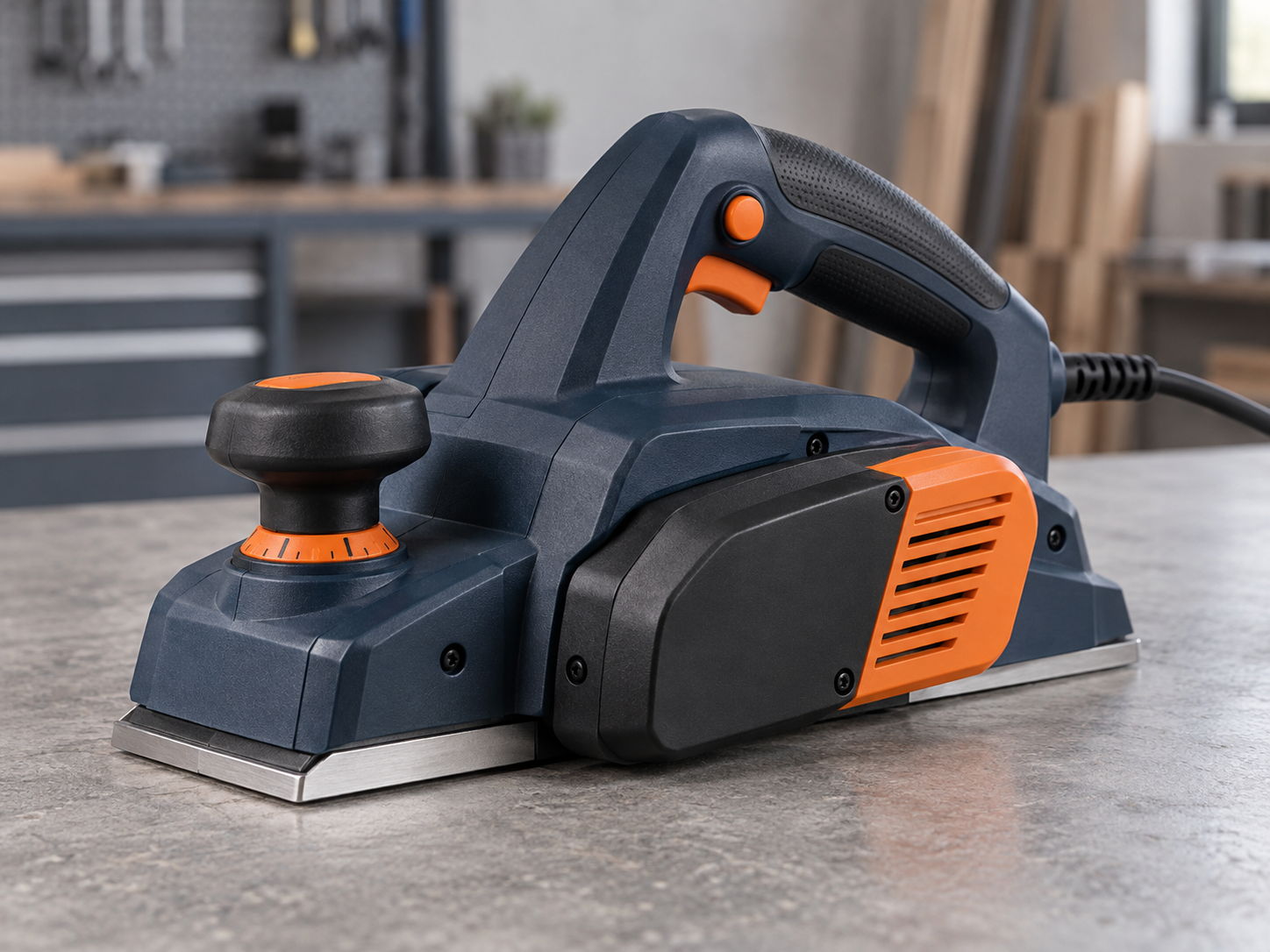
Caption: Test depth settings against controlled timber rather than reading a dial in isolation.
Separate dial resolution from actual removal
A dial marking is an intended setting, not a guarantee that every piece of wood loses exactly that amount. Timber compression, grain, tool handling and blade condition affect a measured result. Instead of claiming laboratory precision, compare repeatability under a controlled method. Use a fixed material lot where possible, mark the test zones and record pre- and post-pass measurements with an appropriate instrument.
Test several settings across the practical range, not only the maximum. The lower settings are important for final fitting and finish work. Note whether the dial moves smoothly, whether it holds position and whether the front shoe remains stable. A large nominal range is less useful if customers struggle to make a shallow, controlled cut.
Record the measurement method. A caliper reading at one point can miss uneven removal across the width. Check the surface at multiple positions and document how the planer was supported. Do not publish a “±” tolerance unless it has been established with an appropriate test plan and sample size.
Prepare a fair application sample
Choose the wood species and moisture condition that resemble the target channel's work. Secure the piece and follow the approved tool instructions. Use a fresh or documented blade, the same operator or a controlled technique, and a consistent pass length. Note whether the work is edge trimming, full-width planing or a rebate task.
For an installation-market SKU, a prepared door-edge sample is more relevant than an arbitrary softwood block. The door-fitting workflow connects depth control with first-use preparation. For a woodworking shop, compare surface consistency and the ability to repeat the setting after the dial is moved away and returned.
Inspect the front and rear shoes for alignment and finish. A visible mismatch or rocking can affect the cut independently of the dial. Ask whether the factory checks shoe flatness and blade seating as part of quality control. Document any adjustment the sample required before testing; a product that needs specialist tuning before first use should not be presented as ready without that caveat.
Mid-article sourcing CTA: Need a planer depth-approval plan? Send your timber, typical pass width and finish requirement so samples can be compared on relevant work.
Compare maximum-depth claims carefully
The maximum dial setting can be useful for specification comparison, but it does not tell the buyer whether that cut is sensible at full width in every material. Ask the supplier to define the conditions under which the maximum is quoted. A deep pass may require a narrower working width or multiple lighter cuts depending on the tool and wood. Use the manual's guidance for the actual model.
Avoid marketing “fastest material removal” without a defined comparison. A customer may value a clean, repeatable finish more than an aggressive maximum. Show application examples with realistic settings, not an exaggerated single-pass cut that the tool cannot repeat comfortably.
Turn testing into shipment controls
Approve a reference sample and write a short inspection method: specified timber, blade, depth positions, number of passes and acceptance observations. Factory testing can check dial action, blade seating and a defined sample cut. Shipment inspection can sample production units for correct parts and obvious functional issues. Neither step should be described as a universal guarantee for every species and operator.
Record the dial revision and blade part ID. If the supplier changes the front shoe, adjustment linkage or blade holder, repeat the relevant checks. A cosmetic housing update can also alter access to the dial, so confirm ergonomics in the final production sample.
The ToolViron electric-planer product page can start a model discussion, while the buyer's acceptance sheet should hold the tested configuration and conditions.
Distinguish a depth-setting problem from technique
If a sample removes uneven material, investigate several causes. The workpiece may not be flat or secured, the blade may be seated unevenly, the shoes may not align, or the operator may shift pressure during entry and exit. A buyer should record these observations rather than attributing every difference to the dial. Repeat the test with a controlled setup and an experienced operator before drawing a product conclusion.
Check whether the dial returns to the same practical result after it is moved to another setting and back. This can reveal backlash or a weak detent. The objective is not a laboratory tolerance unless one has been specified; it is whether an installer can make predictable light passes. Take measurements at several positions along the timber to detect taper or snipe.
Review the manufacturer's maintenance and adjustment guidance. Some planers need blade setting procedures after replacement. If the retail customer is expected to perform them, ensure the instructions and required tools are available. If specialist setup is required, do not portray the blade change as effortless.
Make quality criteria useful to production
An acceptance standard should be observable and repeatable. “Good cut” leaves too much room for disagreement; “no visible step at the specified test setting on the defined sample” is more actionable, provided both parties agree on the sample and method. Photographs can supplement written criteria but lighting and wood grain can alter appearance, so keep physical reference samples where practical.
Ask the factory which upstream controls affect depth behaviour: shoe machining, dial assembly, spring or screw quality, and blade seating. A final pass test may catch defects, but process checks can reduce them. The importer should agree on what is checked on every unit and what is sampled, then verify production records rather than assuming an attractive prototype will be repeated automatically.
If the supplier changes a critical part, update the reference sample and acceptance method. A small mechanical revision can improve the tool, but it should not enter shipments without the buyer understanding whether the product page and service documents remain accurate.
Translate a test result into a defensible claim
The purpose of the sample test is not to produce an impressive number; it is to define what the tool can reliably do for its intended customers. If several planers produce similar maximum-depth results but one gives a cleaner shallow pass, a door-fitting channel may prefer that model. State the conclusion in application language and retain the measured setup behind it.
Avoid quoting a removal tolerance from one plank. Wood varies naturally, and operator pressure can change the result. If a tolerance is necessary for a technical specification, develop an appropriate measurement plan with sufficient samples, calibrated instruments and an agreed acceptance method. Otherwise, use descriptive language such as “adjustable depth setting” and show realistic sample cuts.
Make sure the result corresponds to the blade and shoe configuration that will ship. A factory may use a specially adjusted display unit for a demonstration. Request a randomly selected production-representative sample and record any setup work required. If the tool needs calibration before first use, the manual and retail expectation should reflect that.
Plan inspection across the product lifecycle
At incoming component control, check the critical dimensions of shoes and adjustment parts according to the manufacturer's process. During assembly, verify dial travel and blade seating. At final inspection, run the defined sample cut on selected units. The importer need not dictate every factory method, but it should understand how the approved sample will be reproduced.
After shipment, track finish and depth complaints by batch. A cluster may indicate blade seating or a component change. Compare a returned unit with the retained approval sample and the test record. Do not assume the buyer used the wrong setting; investigate both application and product possibilities.
When a revised model is introduced, decide whether old blade parts and adjustment instructions remain valid. Update the product page and service parts together. Depth-setting quality is as much a consistency issue as a prototype performance issue.
Example: comparing two planers for an installer channel
Imagine two quoted planers, A and B, both advertising a similar maximum depth. The distributor's customers mostly trim doors and adjust timber edges on site. Start with a shallow-setting test on the same prepared timber, using the blade supplied with each retail kit. Record the actual dial setting, pass length, measured change at several points and finish. Repeat after moving the dial away and back to the original mark.
Suppose A has a higher headline motor rating but a less stable shallow setting, while B produces more predictable light cuts. The buyer might reasonably prefer B for this channel, even if A removes more material in a maximum-depth demonstration. That is an illustrative decision framework, not a claim about any real ToolViron model. The actual choice needs measurements from production-representative samples.
Also compare the supporting details. Does the dial have a clear zero position? Can the front shoe sit flat on the prepared edge? Is the blade holder serviceable with the tools in the box? Does the chip bag or hose disturb the pass? These conditions can explain an apparent depth difference and may be easier to fix than changing the motor.
After selecting a model, agree on a factory check that reflects the buying reason. If shallow control won the decision, testing only the deepest setting during production misses the point. The acceptance method should protect the feature that customers will actually use.
Questions for the supplier before signing off
Ask which blade and timber were used for the published maximum-depth claim, and whether the same blade ships to customers. Ask how the front and rear shoes are aligned and checked. Request the adjustment mechanism drawing or a service explanation, especially if the dial can be replaced. Ask what happens when a sample falls outside the agreed result: is it adjusted, reworked or rejected?
Finally, ask how revisions will be communicated. A different dial spring, blade holder or shoe casting can change the feel and outcome. Put a change-notification requirement into the purchasing agreement and retain a reference sample. These questions turn a specification number into an enforceable, application-led product decision.
A final sample record for depth control
Keep a short table of the tested dial settings, wood, blade part, pass width and measured outcomes. Add photos of the surface and notes on shoe alignment and any setup needed before the test. The data need not imply laboratory precision; they should allow the buyer to compare a later production sample with the one approved.
Use the same record during shipment sampling if a functional cut is part of the inspection plan. If the production result differs, first check blade, wood and operator conditions, then investigate the tool. Do not change the acceptance standard after seeing a weak shipment unless the buyer and supplier agree on a documented reason.
The web listing should not publish every internal measurement, but it should reflect the tool actually tested. A claim about “precise depth control” is stronger when the buyer can show a repeatable method and explain what that phrase means in a real customer application.
Frequently asked questions
Does the dial setting equal exact material removal?
Not necessarily. Wood, blade condition and operating method affect the result. Use a controlled sample check to evaluate repeatability rather than assuming exact removal from the marking.
Is maximum depth the best performance measure?
No. Shallow-setting control, finish, shoe alignment and the intended application may matter more to the customer.
Why test several settings?
Customers often use shallow cuts for fitting and finishing. A tool can look capable at its maximum while being difficult to control at ordinary settings.
What changes require retesting?
Changes to blades, holder, shoe, dial mechanism or relevant housing geometry should trigger review against the approved configuration.
Conclusion
Planer depth is a working property, not just a catalogue number. A buyer who defines the material and pass type, measures several settings and records the blade and shoe configuration can make more credible product claims and manage quality with greater consistency.
End-of-article CTA: Request ToolViron planer samples or a depth-setting test discussion. Include your market, common wood types and whether your customers prioritise door fitting, general trimming or workshop finish.

Caption: A repeatable sample method makes later production checks meaningful.
Images illustrate product and inspection topics; they are not documentary evidence of a specific ToolViron test or customer project. Confirm the exact model and market requirements before ordering.