
An electric chainsaw becomes difficult to sell responsibly when the distributor cannot identify a replacement chain, bar, tensioner or oil cap. The initial shipment may be fine, but service questions arrive later—often after a model revision or accessory-supplier change. A replacement-parts plan should be prepared before the first order, not assembled after customer complaints begin.
This article explains a practical B2B plan for importers and retailers. It does not imply that every part should be repaired by an end user. The approved manual, qualification requirements, local rules and warranty process determine who can perform a repair.
Start with a model-specific parts map
Ask the supplier for an exploded view and parts list tied to the exact saw model and revision. It should identify the bar, chain, sprocket or drive components as applicable, tensioner, front hand guard or brake assembly, oil cap and seals, relevant housing pieces, and power-system parts. The importer should distinguish consumables from service-only components.
The list needs stable identifiers, descriptions and photographs where parts are easily confused. “16-inch chain” is not enough. Bar and chain fit depends on pitch, gauge, drive-link count and the approved saw configuration. STIHL's guide-bar reference is a useful example of manufacturer-managed component compatibility, though its parts are specific to STIHL systems.
Record whether a part is sold individually or only as an assembly. A tensioner screw may be inexpensive but unavailable alone; a distributor needs to know that before setting warranty expectations. Also record lead time and any minimum parts order, without implying a guaranteed availability period that has not been agreed.
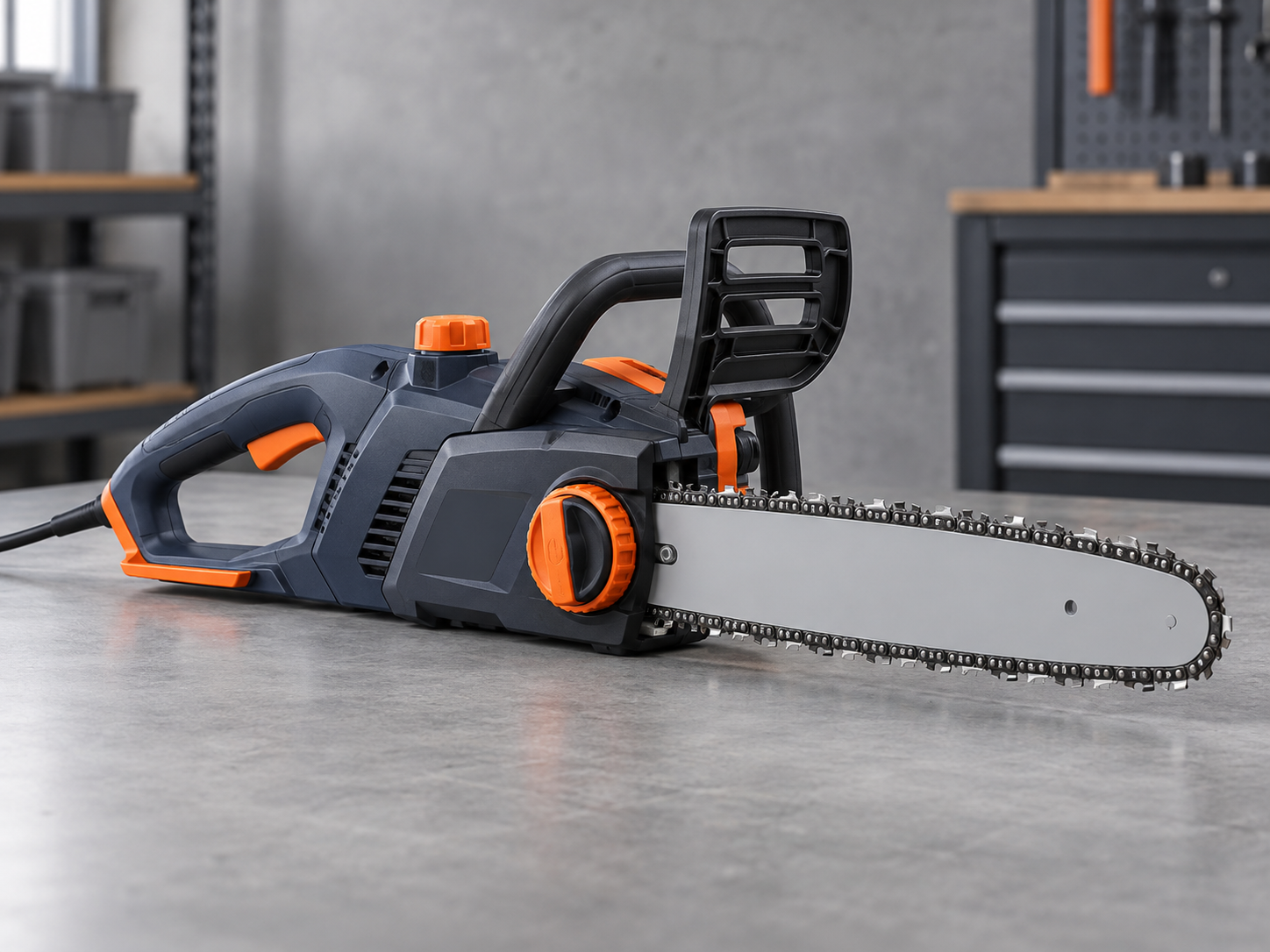
Caption: A service plan starts with exact part identifiers for the approved saw revision.
Put consumables first
The chain and bar are the parts many customers will seek first. Stock a compatible replacement chain or at least provide a precise specification and approved part reference. The chain-tensioning guide explains why length alone is insufficient. If the original chain supplier changes, verify the new component before treating it as equivalent.
Plan bar-and-chain oil information as well. The oil-system guide details why the reservoir, cap and delivery path matter. The service team should be able to distinguish a missing cap, a blocked passage and an incorrectly specified oil without resorting to unsupported troubleshooting instructions.
For battery saws, identify approved battery and charger models separately. A battery can fit a housing without being approved for the saw's electrical and thermal requirements. If the retail range is sold as a platform, maintain a current compatibility matrix and version it as packs and chargers change.
Decide what the channel can actually service
Some retailers only replace consumables and return a faulty saw to the importer. Others have trained service partners. The parts plan should reflect the real channel, not an idealised workshop network. A service-only brake or electrical component should not be listed as a casual do-it-yourself spare.
Define the intake data customer support needs: model ID, serial or batch number, purchase date, symptom, photos and whether the correct bar-and-chain set is installed. This can shorten diagnosis and prevent a part from being sent for the wrong revision. A short decision tree can separate user-maintenance questions from potential defects requiring technical assessment.
Plan for returns and quarantine. A reported brake fault or electrical defect may require the tool to be isolated and inspected by qualified personnel. Do not advise a user to keep operating a suspected faulty chainsaw while waiting for a part.
Mid-article sourcing CTA: Launching an electric-chainsaw SKU? Ask ToolViron for a model-specific parts list and consumable plan before you finalise the first order.
Control design revisions and substitutions
Importers often ask for a “compatible replacement” years later. That requires records of what was actually shipped. Keep the approved bill of materials, manual version, sample photos and shipment batch information. When a supplier changes the bar, chain, tensioner or cover, review the effect on compatibility and support.
A visually similar chain cover can have a different tensioner interface. A later oil cap may have a different seal. Mark revisions in the parts system and do not quietly merge them under one stock code. A service technician should be able to identify the correct item without trial fitting a part to a live tool.
Factory testing and shipment inspection should reference the same approved model record. Spot-check that the packed bar and chain IDs match the approved configuration and that the manual corresponds to that revision. If a supplier offers a last-minute substitute, require a documented review before release.
Calculate a realistic initial parts stock
There is no universal spare-parts percentage for all saws. The right starting quantity depends on expected sales, consumable use, supplier lead time, seasonality and the channel's return policy. Separate predictable consumables from less frequent service components. A buyer may stock chains and bars locally while ordering uncommon parts through a controlled service process.
Ask for a replenishment plan with lead times and part lifecycle expectations, then test those assumptions against the first selling season. Keep a record of actual requests: chain fit questions, cap losses, tensioner faults and battery issues. This evidence is more useful than blindly stocking equal quantities of every item.
The general power-tool spare-parts plan shows how this model-level plan fits a wider importer service system.
Make retail information helpful but bounded
The product page should say which replacement bar and chain configuration is approved and where customers can find the manual. It should not imply that every same-length chain fits. Explain whether batteries and chargers are included and which replacements are approved. Keep any installation instructions aligned with the manufacturer manual.
The ToolViron electric-chainsaw range is an entry point for enquiries, but a distributor's final listing should be tied to the exact supplied SKU and service part references.
Test the parts plan before launch
Run a mock service request against the supplier's parts list. Give the team a saw model, batch code and a photograph of a worn or missing component. Can they identify the correct part without asking for the entire machine to be shipped back? Can they tell whether the part is consumer-replaceable or service-only? If not, improve the records while the factory and approved sample are still easy to access.
Repeat the exercise for a chain that appears to match the bar length but has a different pitch or drive-link count. A support system that responds with “16-inch chain” is not precise enough. The service representative should be able to point to the approved cutting-system specification and explain where the customer can find the identifier on the product or manual.
Ask the supplier for a small sample set of critical replacement components with the first order, then verify each against the physical saw. This can expose drawing errors and part-number swaps before customer demand begins. Keep the parts sample labelled and protected from being consumed by routine workshop use.
Plan for products at the end of their selling life
When a model is discontinued, the importer still needs a realistic way to handle warranty and service questions. Ask what parts will remain available, for how long under a written agreement, and whether a later model uses compatible consumables. Do not promise lifetime availability unless it is contractually and operationally supported.
If a compatible successor part is proposed, review it on the old model and record the result. A manufacturer may replace a chain supplier or redesign a cap; neither change should be accepted solely because the catalogue says “new version.” Update retailer and service data, then remove obsolete part links from product pages.
Keep service records for the period appropriate to the market and your obligations. They can show whether a replacement-part shortage is isolated or systemic. They also inform future purchasing: a model with a marginally lower acquisition price may be more costly if support parts cannot be identified or shipped reliably.
Connect the parts register to packaging and support
Put a durable model identifier on the saw and in the manual so owners can request the right parts later. A retail carton may be discarded immediately; it should not be the only place the model code appears. If the saw has a batch or serial identifier, customer support should know where to find it and how to use it without exposing unnecessary personal data.
Create a small customer-facing consumables page for the approved bar and chain, plus any battery and charger models. Keep service-only parts out of a casual “add to cart” interface unless the channel can install them safely. Each listing should state compatibility by exact model and revision range where necessary, not by a generic product family name.
The support team should have internal photographs showing differences between revisions. A tensioner cover change may be obvious to a technician but not to an overseas customer describing the part by email. Ask for a photo of the existing assembly where safe, then verify the order against the parts register before shipping.
Use field demand to forecast replenishment
Initial parts stocking is an estimate; actual consumption will teach the importer more. Track how many chains, bars, caps, tensioner components and approved batteries are requested per sold saw, over a defined period. Separate warranty replacements from normal consumable purchases. This helps avoid both stock-outs and piles of parts that belong to a discontinued revision.
Consider seasonality. Garden and property-maintenance demand may cluster in certain months, while supplier lead times can extend around holidays or production shutdowns. The buyer should set reorder points from observed demand and realistic replenishment time. A single “five percent spares” rule ignores these factors.
When a supplier announces end of production, compare remaining installed base with the parts available. Decide whether to buy a final stock, offer a compatible successor after verification, or explain a limited service path. Be honest with retailers; a promise of indefinite parts supply unsupported by the factory can damage trust more than a clear, bounded plan.
Example: a chain request after a model revision
A customer contacts a retailer for a replacement chain and says only that the saw has a “16-inch bar.” The service team should request the model and batch identifier, inspect the approved bar-and-chain record and confirm pitch, gauge and drive-link count. If the supplier introduced a new bar in a later batch, the same marketing bar length may not be enough to choose the correct chain.
The retailer can send a link to the exact approved replacement SKU and the matching manual. If information is missing, it should pause the recommendation and escalate rather than guessing. A wrong chain can create performance and safety problems, while a short delay to verify compatibility is manageable when the parts system is organised.
This scenario demonstrates why the product page, internal register and warehouse labels must share the same model codes. A service database that uses factory codes unknown to the retailer will fail at the point of need.
Connect parts planning to the purchase order
Specify which consumables and service documents will be supplied with the first shipment. Agree on whether replacement chains and bars are ordered in a separate line, how they will be labelled, and whether the supplier will notify the buyer before any compatible part is discontinued. Ask for spare-parts prices that remain traceable to exact SKUs, not a broad “parts available on request” clause.
If a saw is sold in several bar configurations, each should have its own approved cutting-system record. The supplier should not swap bars between cartons because warehouse staff view them as the same nominal length. At pre-shipment inspection, sample enough variants to check that each box contains the intended configuration.
The goal is not to maintain every part forever. It is to make a truthful service promise with a documented replenishment route and an escalation path when a component changes. That is the foundation for retailer trust after the sale.
Final approval questions
Can a retailer identify the correct chain from a model and batch code? Is there a stock or order route for the bar, cap, tensioner and approved battery where applicable? Are service-only components clearly separated from consumer consumables? Does a discontinued-model plan exist? Test these questions with a mock request before the first shipment.
Keep the service record connected to the physical tool and the website. A part number in an internal spreadsheet is little use if the customer cannot find the model identifier or the retailer cannot interpret a revision code. Clear model labels, current manuals and a maintained compatibility page make the after-sales promise operational rather than aspirational.
Frequently asked questions
Is a chain described by bar length alone?
No. Pitch, gauge, drive-link count and the approved bar-and-sprocket arrangement matter. Use the saw maker's compatibility information.
Should every replacement part be sold directly to consumers?
No. Some parts are suitable for user maintenance, while safety-related or electrical components may require qualified service. Follow the approved product and market rules.
What if a supplier changes the tensioner during production?
Treat it as a controlled design revision. Review fit, instructions, service parts and any testing affected before accepting it into a shipment.
How much spare stock should an importer buy initially?
Base it on forecast volume, predictable consumable demand, lead time and service model. Review actual customer requests after launch rather than using a fixed percentage for all parts.
Conclusion
Parts support is part of the chainsaw product, not an afterthought. A buyer who identifies consumables, controls revisions and defines a realistic service process can protect both customers and retailer confidence after the first sale.
End-of-article CTA: Request a ToolViron chainsaw catalogue and parts-planning discussion. Send your target market, expected order volume and the service level your channel can provide.

Caption: Traceable part numbers and revision records reduce wrong-part shipments.
Images illustrate product and inspection topics; they are not documentary evidence of a specific ToolViron test or customer project. Confirm the exact model and market requirements before ordering.