
Chain tension is a practical ownership issue for an electric chainsaw. A chain that is too loose can leave the guide bar; one that is too tight can increase wear and impair movement. For distributors, the tensioning system matters because it affects first setup, routine adjustment, manual clarity and after-sales calls. The best buying decision is not simply “tool-free is better.” It is whether the exact system is understandable, durable and suitable for the intended user.
This guide addresses product selection and sample approval. Operators should always use the instructions supplied with their specific saw, isolate it from power before adjustment and obtain training appropriate to the work. Chain-saw operation carries serious hazards that a blog article cannot resolve on its own.
Why tension changes in service
Chains and bars warm during use, components settle, and a new chain can require early adjustment. The operator should check the condition according to the saw maker's instructions before work and at intervals specified for the machine and application. STIHL's chain-tension guidance illustrates why a chain should be checked when cool and why over-tightening can be a problem. Apply the exact approved saw's manual for its procedure.
For a buyer, the question is whether an ordinary customer can make the adjustment correctly without improvising. A complicated arrangement may be acceptable for a professional channel with established maintenance habits, while a simpler external control may fit a homeowner range. Neither choice eliminates the need for correct instructions and inspection.
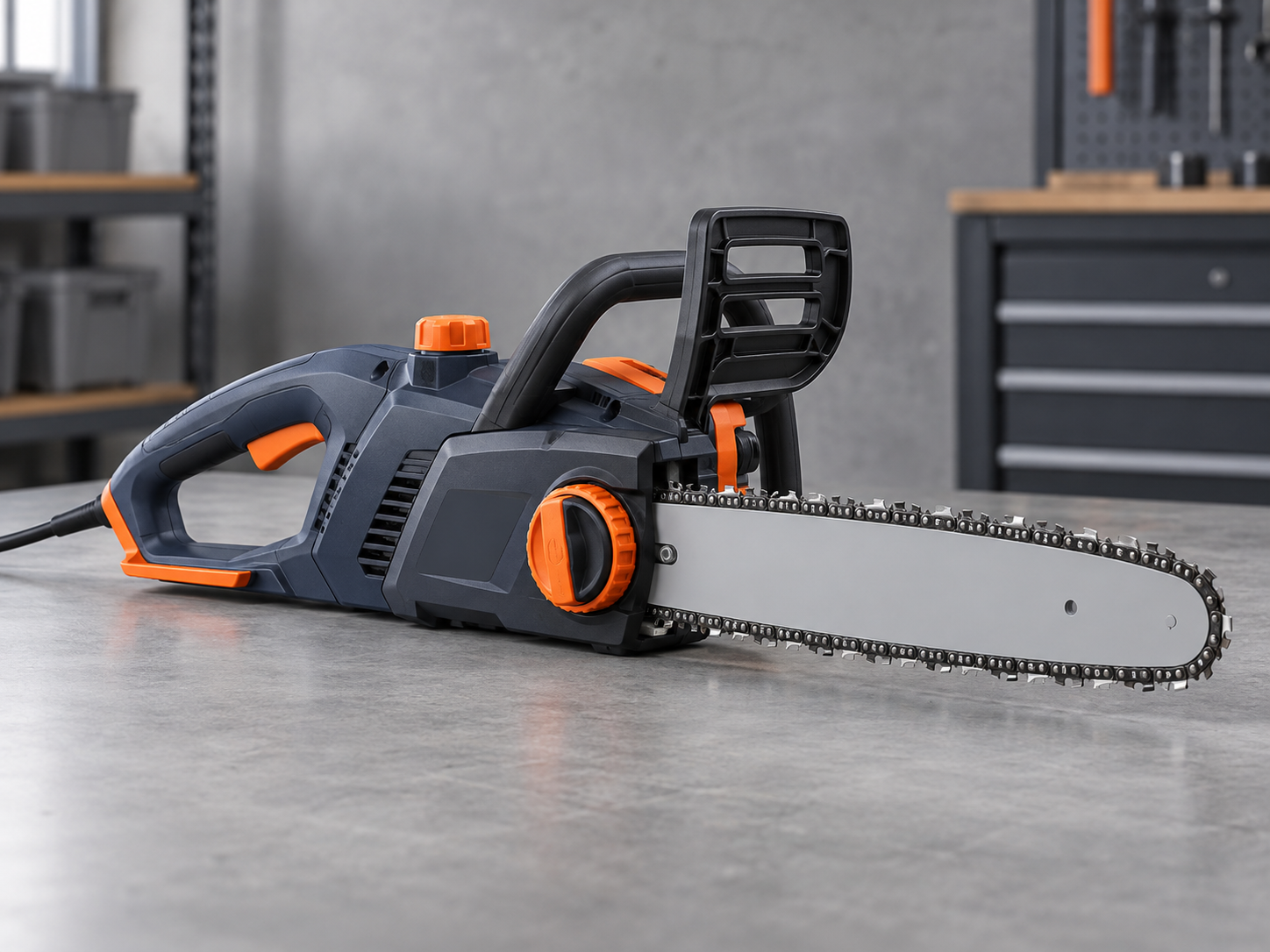
Caption: The approved bar, chain and tensioner must be assessed as one assembly.
Compare side-access and tool-free designs
A conventional tensioning design may use a screw or adjuster accessed with a tool, followed by appropriate bar fixation. It can be familiar to experienced users and may have fewer visible external controls. Buyers should check access around the sprocket cover, the quality of the supplied tool and whether adjustment can be made without awkward hand positions.
A tool-free system commonly combines a hand-operated cover fastener and adjustment control. It can reduce the need to find a separate tool, but the physical design must still provide reliable bar fixation and clear feedback. Inspect how the control behaves with gloves, resin deposits and normal cleaning. A large plastic knob that is easy to turn on a desk is not automatically robust in use.
Ask for a sequence demonstration using the exact user manual. Do not let a supplier demonstrate one prototype and quote another production configuration. The bar, chain, cover, fastener and tensioner revision all belong on the sample record.
Review the complete cutting system
The guide bar and chain must be compatible in length, pitch, gauge and drive-link count according to the approved saw configuration. STIHL's guide-bar information shows the importance of matching components within a particular saw system. A replacement chain sold as “fits 16-inch saws” is not sufficiently specific.
The tensioner should have adequate adjustment range for the intended chain and bar. Confirm that the bar can be fixed securely after setting tension and that the chain moves in accordance with the manual when isolated from power. Ask whether the system remains clear after the cover is removed for cleaning or a chain replacement. A replacement-part diagram should identify the tensioner parts accurately.
For a battery-powered model, remove the battery before adjustment as directed by its manual. For a corded model, unplug it. The product page should not encourage users to adjust a chain on an energised tool.
Test the first-use experience
Open a retail sample as a customer would. Is the bar-and-chain assembly preinstalled or packed separately? Are the instructions intelligible and illustrated for the exact tensioner? Can the user identify the correct direction of adjustment? Does the package include the required tool if it is not tool-free? Are bar oil and setup requirements conspicuous?
Record the time and errors observed during a supervised first assembly, but avoid turning that into a universal performance claim. The value of the test is finding unclear steps, missing parts and components that are easily installed incorrectly. Include a buyer representative who has not seen the prototype; experts can unknowingly compensate for poor instructions.
Factory testing should inspect the adjustment mechanism on the approved sample and during production sampling. Shipment inspection should verify the same cover and included adjustment tool, if applicable, are in the carton. This is particularly important if a lower-cost tensioner variant looks similar externally.
Mid-article sourcing CTA: Comparing chain-tension systems for a retail range? Send the intended user, bar size and market requirements to request a model-specific sample discussion.
Plan maintenance and replacement support
Tensioner parts can be lost or damaged when a bar is replaced. Ask for part identifiers, drawings and availability for the cover, adjuster, fasteners and any dedicated tool. A distributor should know whether a service team can supply a single component or must replace an assembly. The warranty process should distinguish normal wear, misuse and a confirmed manufacturing defect without making blanket assumptions.
Create a compatibility table that identifies the approved chain and bar configuration for each saw SKU. Revision control matters: a design change in the tensioner or cover can change service-part compatibility. The chainsaw replacement-parts guide expands this planning step.
Write an honest customer explanation
Describe the actual adjustment method, not just a marketing adjective. “Tool-free chain tensioning” should correspond to the packed, approved mechanism. If a separate wrench is required for bar fixation, do not imply that the entire process is tool-free. Show the correct cover and control in photos and list the required setup steps in the manual.
The ToolViron electric-chainsaw page can introduce the model range, but a specific product listing should name the exact bar-and-chain combination and tensioner design. Clear information reduces avoidable returns from customers expecting a different adjustment method.
Compare the mechanism through maintenance cycles
One successful adjustment on a new bench sample does not tell the buyer how the tensioner behaves after use. Plan a supervised cycle that includes initial setup, a defined cutting task, cool-down, inspection and re-adjustment according to the manufacturer's instructions. Record whether the markings remain readable and whether the control still turns smoothly. This is an application review, not a lifetime durability test.
The cover may accumulate chips and oil. Ask how users are expected to clean it and whether the tensioner remains accessible without exposing them to an unsafe maintenance step. A tool-free design with an easy-to-lose external knob may create a service burden; a tool-adjusted design with a missing included wrench creates another. Test the actual retail carton and replacement-part path, not just the prototype on a factory bench.
Where several bar lengths are offered, confirm that the adjustment range and cover parts are appropriate for each approved configuration. A salesperson should not promise that any longer bar can be added later merely because it physically mounts. The cutting system and powertrain need model-specific approval.
Teach the retailer to answer the first three questions
Customers commonly ask how to set tension, whether a new chain needs another check and which replacement chain fits. Give the retailer a model-specific quick reference that points to the manual rather than paraphrasing a risky adjustment procedure. It should also identify the approved bar and chain part numbers. When the product changes revision, update the reference immediately.
The listing should describe the adjustment method in plain language and show the correct control. If the mechanism requires a screwdriver, say whether one is included. If it is tool-free, state what that applies to and avoid implying that other maintenance tasks require no tools. Clear wording reduces returns from customers whose expectations were shaped by a generic category photo.
Specify the tensioner in the purchase order
The purchase specification should identify the tensioner type and the exact cover and adjuster parts, not merely state “easy tensioning.” Include the approved bar and chain identifiers and any tool supplied for adjustment. If a customer receives a box with a different cover from the sample, the buyer needs an objective basis for rejecting or reassessing it.
Ask the supplier which dimensions or functional checks it uses during production. For a tool-free system, this might include control engagement and secure cover fixation; for a screw-adjusted system, access and adjustment travel. The buyer should agree on a sample frequency and acceptance approach with the manufacturer. A shipment spot-check can confirm obvious assembly differences, but it is not a substitute for process control.
Include service-part availability in the commercial agreement. The adjuster may be inexpensive yet essential to keep the saw in use. If the supplier can only sell a complete side-cover assembly, account for that cost in the after-sales plan. A retailer should know whether a damaged control can be resolved locally or requires the whole saw to be returned.
Consider the multilingual first-use journey
Export markets often need more than one language. The tensioning instructions should show the actual model and part positions, with clear warnings about isolating power. If the manual uses a diagram from another saw, customers may move the wrong control. Review translated text with a technically knowledgeable person; a mistranslated “loosen” or “tighten” direction can create real setup trouble.
Use a quick-start card only as a supplement to the full manual. It can point to the adjustment section and approved chain specification, but it should not omit important cautions to save space. The packaging can state that the chain requires inspection before use and at intervals described by the manual. It should not imply that a tool-free mechanism automatically sets the correct tension.
When customer support receives a question, have staff identify the saw model and tensioner version first. Then direct the user to the matching manual or qualified service. A generic video for another mechanism can confuse a customer. If the website offers downloadable instructions, keep obsolete revisions available in an archive for owners of older batches rather than silently replacing every link with the newest design.
Example: an importer comparing two tensioners
Imagine a garden-equipment retailer comparing a tool-free saw with a screw-adjusted model. The tool-free sample may be easier for a new user to understand, but the buyer should also test whether the bar is secured consistently after repeated adjustment. The screw-adjusted sample may be familiar to an experienced user, but the buyer needs to confirm the correct tool is packed and the access point is not obstructed by the cover.
Use the same approved bar and chain, wood sample and operator for a controlled application review. Then ask a second, supervised reviewer to follow the manual without a verbal demonstration. Record where each person hesitates, whether the adjustment can be checked clearly and whether the cover seats properly after reassembly. This is a usability comparison, not a claim that either mechanism eliminates chain-maintenance risk.
Compare service economics too. If a tool-free knob is proprietary and unavailable separately, a damaged knob may require a whole cover replacement. If a screw-adjusted system uses several small parts, the retailer may need a simple spare kit. The total customer experience includes the second year of ownership, not only the first minute out of the box.
What to reject before shipment
Hold a lot for review if sampled units have the wrong bar-and-chain set, a missing adjustment tool, an unapproved tensioner cover or instructions for another mechanism. A small packaging difference can lead to incorrect setup. Document the finding against the approved sample and determine whether it is isolated or widespread.
Do not “fix” a mismatch by inserting a generic leaflet without technical review. The manual, quick-start card and retail listing should describe the actual mechanism and approved cutting system. A corrected pack needs a controlled revision and verification. Buyers who manage this carefully reduce avoidable complaints and protect the credibility of their saw range.
Final approval questions
Before ordering, ask whether the exact tensioner mechanism, approved chain and bar, required adjustment tool and matching instructions are all present in the production carton. Confirm replacement-part identifiers and who will support an owner after a damaged control. Record a cool-tool adjustment check using the approved procedure, then compare later shipment samples with that reference.
Do not let the sales phrase “tool-free” obscure the maintenance steps that still require care. The mechanism can simplify access, but it cannot decide correct tension on the user's behalf. A retailer should direct customers to the model manual and avoid a generic video for a different design. This is a modest claim, but one that holds up after the product has been sold.
Frequently asked questions
Is tool-free tensioning always better for a retailer?
No. It may simplify setup for some users, but the exact mechanism must be checked for secure bar fixation, clarity, durability and parts support.
Can every chain of the same nominal bar length fit?
No. Match pitch, gauge, drive-link count and the saw's approved bar-and-sprocket arrangement using the manufacturer information.
Why does a new chain need attention after initial use?
Chains and assemblies can settle during use. Follow the approved saw manual for checks and adjustment; do not assume the original setting remains correct indefinitely.
Should the battery remain fitted during adjustment?
No. Isolate the tool from its power source as the manufacturer directs before handling the chain or tensioner.
Conclusion
The buying question is not whether the tensioner sounds convenient. It is whether the complete saw, bar, chain, control and instructions let the intended customer maintain correct tension reliably. A physical sample and a clear service-parts plan provide more confidence than an unqualified feature label.
End-of-article CTA: Ask ToolViron for an electric-chainsaw catalogue or sample review. Include the user segment, bar configuration and preference for conventional or tool-free adjustment.
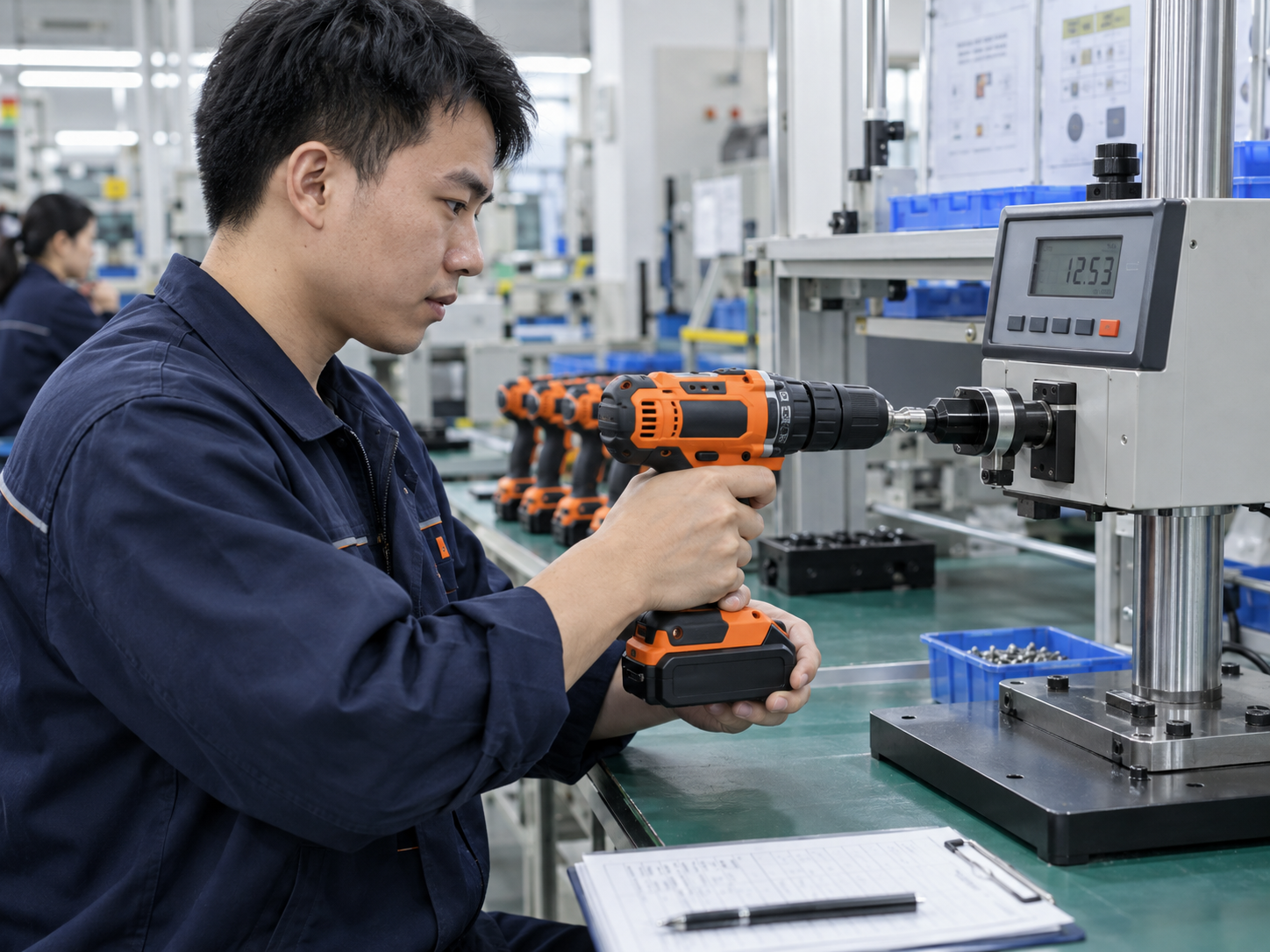
Caption: Record the exact tensioner and cutting-system parts used for sample approval.
Images illustrate product and inspection topics; they are not documentary evidence of a specific ToolViron test or customer project. Confirm the exact model and market requirements before ordering.