
A dull saw chain can make a good electric chainsaw feel slow, encourage extra force and increase service questions. A retailer may hear “the motor is weak” when the actual issue is a worn or improperly maintained cutting system. That does not mean a consumer should improvise sharpening: the chain pitch, cutter geometry, file size, depth-gauge method and safety procedure must match the exact chain. For a private-label programme, a sharpening kit is an after-sales product decision, not a handful of generic files added to a box.
This article explains how an importer can specify a compatible kit and trustworthy instructions. It does not provide a full chain-sharpening tutorial. Users should follow the chainsaw and chain manufacturer's manuals and obtain training where appropriate. A correctly selected maintenance package can make the product easier to support, but it cannot replace safe cutting technique or an appropriately maintained saw.
Start with the actual chain specification
Record the approved saw-chain part number, pitch, gauge, drive-link count and cutter family for each saw SKU. Bar length alone does not determine file size or sharpening method. Two saws with the same nominal bar length may use different chains. The replacement chains and bars guide explains how to maintain a compatibility matrix for consumables; the sharpening kit must be tied to that matrix.
Ask the chain supplier for its file and guide recommendations and the required depth-gauge procedure. Husqvarna's chain-sharpening guidance illustrates that filing angle and matching tools matter. That guidance belongs to Husqvarna chains, not automatically to a different private-label chain. Your own kit instructions must be reviewed against the chain actually shipped with your saw.
A kit can include a correct round file, handle, file guide, depth-gauge tool, flat file and protective case if each item is justified. More pieces are not necessarily better. A generic kit that appears comprehensive but includes the wrong file size creates a false sense of readiness. The buyer should request a physical layout and inspect every component against the chain specification before artwork is approved.
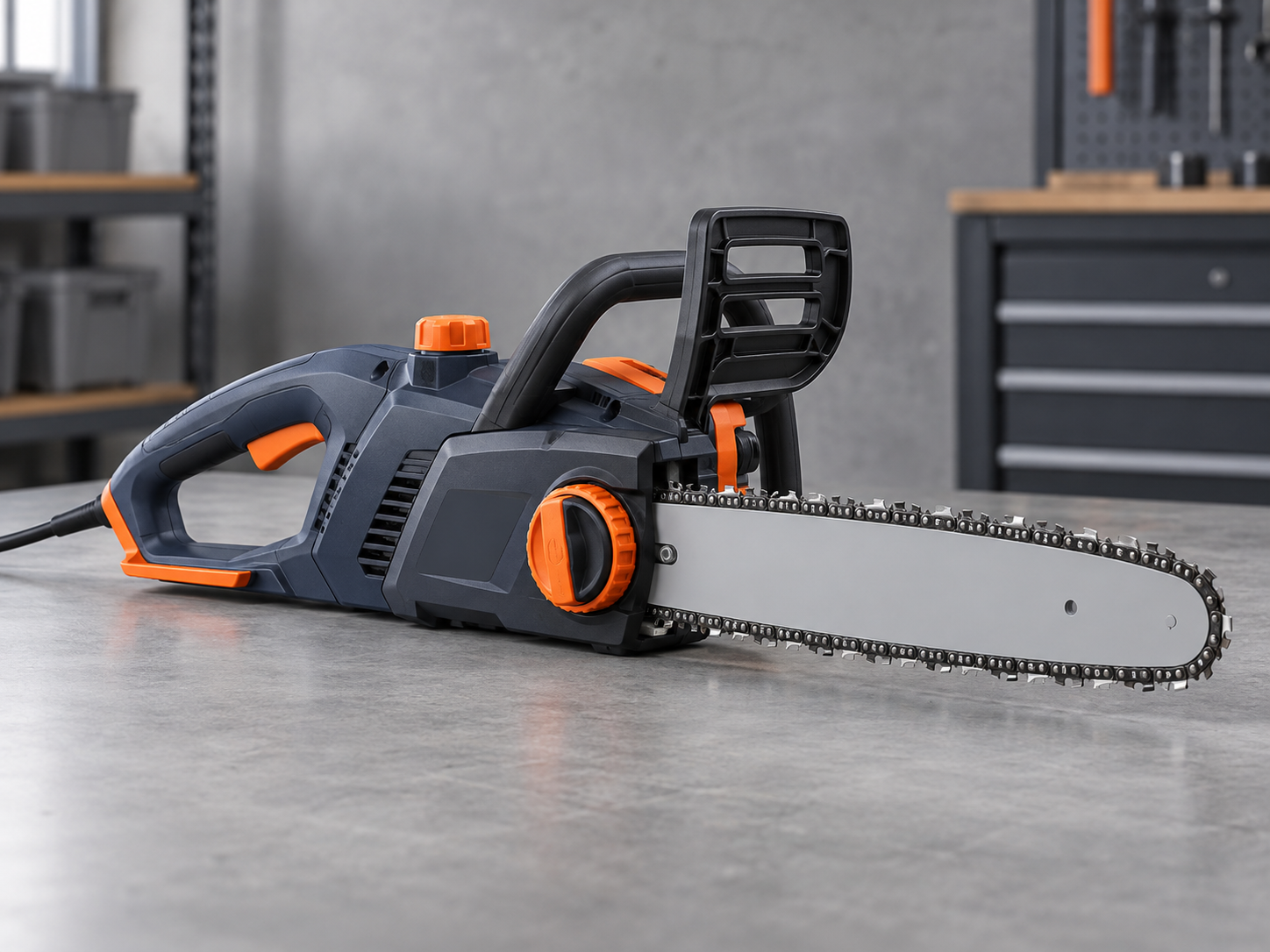
Caption: Maintenance accessories should be matched to the exact chain in the approved retail SKU.
Define what the customer needs to learn
The support material should explain when a chain may need attention, how to identify the correct replacement chain and where to find the model-specific sharpening procedure. Do not diagnose every poor cut as dullness. Wrong chain tension, lubrication, damaged teeth, incorrect technique or unsuitable wood can also affect performance. A help sheet can guide customers to stop using a damaged or unsafe saw and contact service rather than keep forcing a cut.
Illustrations should show the chain and guide accurately, with the tool de-energized before maintenance. For a corded saw, disconnect power. For a battery saw, remove the battery according to the instructions. The customer should be told to wear the appropriate protective equipment and secure the saw before any maintenance. Avoid a photograph of someone filing a chain while the saw is connected or balanced loosely on a table.
Use plain language but preserve technical accuracy. A file diameter that is “close enough” in a drawing may not be correct in use. If the kit is intended for several chains, list each compatible chain explicitly and include variant-specific instructions. If a future chain revision changes the filing requirement, version the kit and manual. The cost of a new insert is much lower than the cost of widespread confusion or unsafe maintenance advice.
Decide whether to bundle or sell separately
Bundling a sharpening kit can make sense for a rural hardware retailer where customers may have limited access to matching consumables. A specialist garden distributor may prefer a separate service SKU so customers can choose a filing guide or professional sharpening service. A low-price entry saw may need only clear identification of the correct accessory rather than an included kit. The right approach depends on the channel and after-sales capacity.
Compare total customer value, not the apparent number of accessories. A correct small kit with a reliable replacement route can be more useful than a crowded case with unlabelled files. Record the price and packaging impact of each option. If the kit is offered separately, make its compatibility visible on both the chainsaw page and the accessory page, using exact model and chain identifiers.
For distributors serving professional crews, consider whether a training handout or a service referral is more appropriate than a consumer-facing filing tutorial. The product must not encourage an untrained person to perform maintenance beyond the manufacturer's instructions. STIHL's chain-maintenance guide is an example of detailed manufacturer-specific guidance; a private-label brand needs the same discipline of model matching rather than copying text or angles.
Create a sample review using a de-energized saw
The buyer can review a kit without performing a live cutting demonstration. Lay out the approved saw, chain package, file set, manual and labels. Ask a qualified technician to confirm that each accessory is specified for the chain and that the instructions identify the correct sequence. Check whether the file guide actually fits and is understandable to the target user. If the chain supplier recommends a different component, resolve the discrepancy before sampling proceeds.
For a functional review, a qualified person can demonstrate the manufacturer-approved maintenance method on a de-energized, secured saw. Record any ambiguity: unclear file direction, missing depth-gauge information, labels too small to read, or a kit that lacks a handle. The purpose is to validate the offer and the instructions, not to publish a claim that a novice can master sharpening in a fixed number of minutes.
After maintenance, any cutting evaluation should be separately controlled with safe equipment, a prepared workpiece and competent operator. A smoother cut after sharpening is not by itself proof that the original saw was defective or that every chain of the same age will behave identically. Keep customer-support language conditional and specific.
Mid-article sourcing CTA: Preparing an electric-chainsaw range? Send the saw and chain identifiers plus your after-sales model to discuss a compatible maintenance offer.
Plan replacement supply and support records
A sharpening kit is one part of a chain-maintenance ecosystem. Retailers also need a route for replacement chains and bars, chain oil where applicable, and clear support for tensioning and safe storage. A buyer should not bundle a file set and then leave customers unable to buy the chain when it is damaged or worn beyond practical service. The chain tensioning guide and bar-oil guide address adjacent support issues.
Set up a support record that distinguishes dull chain, incorrect chain, tension issue, lubrication issue, mechanical fault and user question. This is not about blaming customers. It helps the importer identify whether instructions or product configuration need improvement. If many questions refer to a file that does not fit, review the kit immediately; if complaints cluster in one saw lot, investigate the approved chain and packing records.
Keep replacement information by exact revision. A chain substitution may be technically acceptable for cutting but require a different file or guide. Change control must cover both the saw box and the standalone sharpening kit. Do not silently substitute the chain while leaving old maintenance diagrams in distribution.
Carry the kit through factory and shipment checks
Before production, approve the saw chain and kit as a matched combination. Factory checks should confirm the chain ID on the saw and the accessory kit's components and labels. At shipment inspection, open sampled packs and verify file size or ID, guide, instructions, protective case, chain identifier and carton claims. ToolViron's quality page can help structure a checklist tied to the actual order.
If the kit is supplied by another manufacturer, obtain its specifications and change-notification commitment. The power-tool factory cannot validate a maintenance accessory from a photograph alone. Packaging should protect the files and keep sharp items from damaging the saw or manual in transit. A missing or bent guide can become a customer complaint before the saw is ever used.
Safety documentation for chainsaws and electrical tools depends on the final model and market. This article is not a conformity assessment. The buyer should have qualified personnel review the saw, chain, maintenance instructions and any market-specific information before launch.
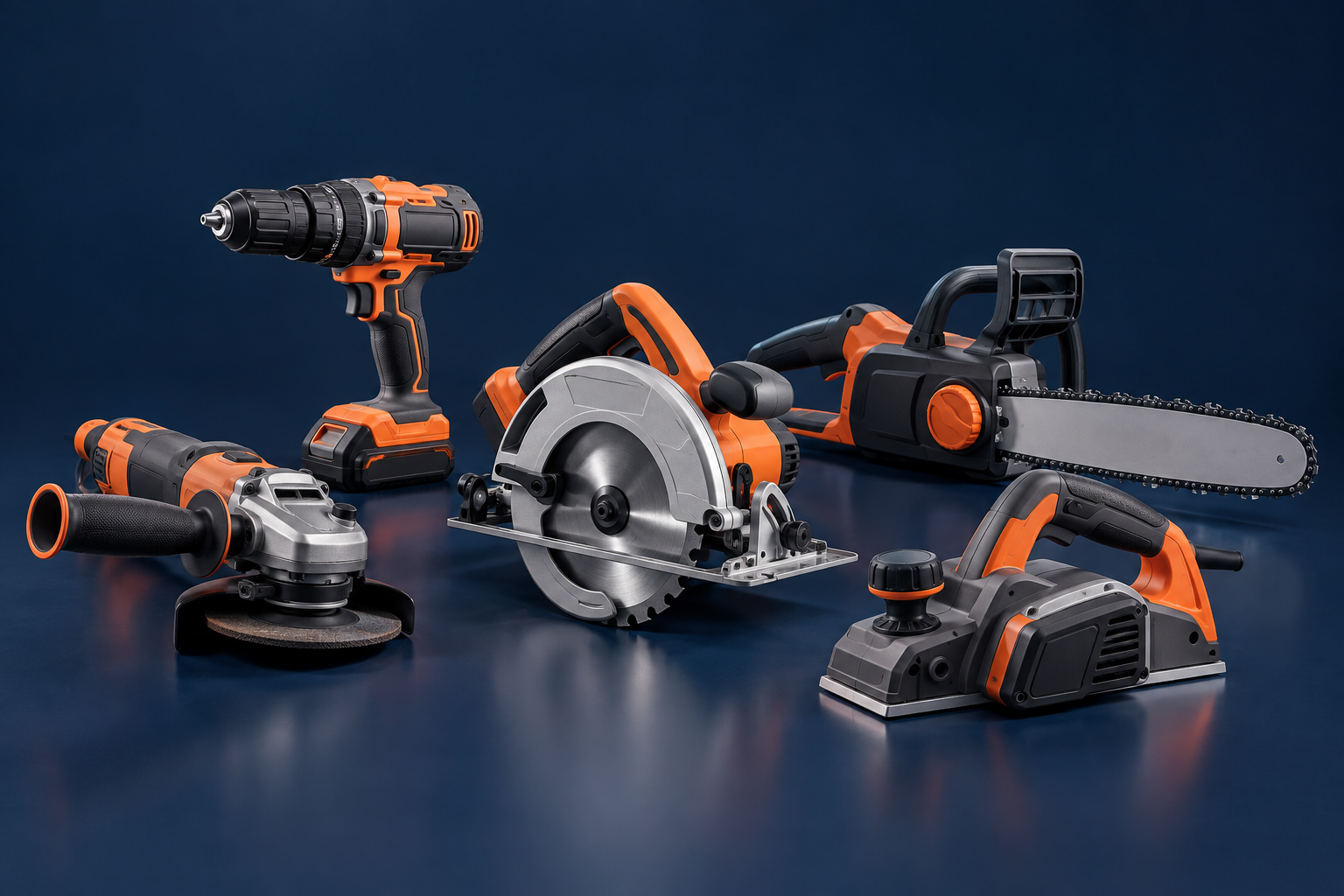
Caption: Illustrative range photography: bar, chain and power configuration must be checked on the actual SKU.
A kit decision for a garden-retail channel
Imagine a retailer selling one electric chainsaw for occasional property care and one for more frequent cutting. The supplier offers a universal file kit for both at a small added cost. The buyer should first compare each saw's actual chain specification. If the two chains need different file sizes or guides, the “universal” bundle may create confusion and could encourage incorrect maintenance. The buyer can instead approve two clearly identified service SKUs or provide a qualified service referral for one model.
The retail team should walk through the customer journey. When the original chain becomes dull, can the buyer find the saw's model number, identify the chain, obtain a correct file or replacement chain and read the approved maintenance instructions? If any step depends on guessing the chain pitch from a photograph, the support route is not ready. A maintenance bundle must reduce uncertainty, not add another ambiguous accessory to the shelf.
The importer may choose to include a file kit only with the higher-use saw because those customers are more likely to maintain chains themselves. The entry saw's carton might instead contain a clear part-number card and a local retailer-service route. Either choice can be sound if it follows the target user and the product's instructions. The decision should be documented so a later packaging manager does not add or remove the kit solely to meet a price target.
Do not measure success by the number of files sold. Monitor whether customers can identify compatible parts, whether the manual produces recurring questions and whether service claims are routed correctly. A well-chosen maintenance kit may reduce preventable “weak saw” complaints, but no importer should promise that it eliminates them. Chain damage, lubrication or mechanical issues can produce similar symptoms and need safe investigation.
Questions to ask the chain and accessory suppliers
Request the exact chain part number and cutter geometry, recommended file and guide IDs, depth-gauge method, approved service sequence and any limits on resharpening. Ask for a physical kit sample, not only a photograph. The technician should confirm each component against the chain installed on the production-intent saw. If the chain supplier changes its product, require notice and a review of the bundled kit and customer information.
For packaging, check that sharp or pointed components are secured, the model compatibility is legible and the kit cannot be confused with another chain size. A barcode and product name should reflect the exact compatible saw or chain family. If several versions share an outer case, put clear identifiers on the inner components too, since a service centre may separate them from the retail sleeve.
At shipment inspection, inspect the saw's chain and the maintenance kit together. A pack containing a correct kit but a substituted chain may still be incompatible. Conversely, a changed kit packed with an unchanged saw can fail the user's first maintenance attempt. Give the inspector both part numbers, a photograph of the signed-off layout and the applicable manual revision. This closes the loop between the original product and its after-sales offer.
A warning about false compatibility shortcuts
Do not label a file kit “universal for 16-inch electric chainsaws.” Bar length does not identify the chain's cutter geometry or filing requirement. Even a chain sold as a replacement for the same saw may have a different specification if the buyer approved a variant change. Put the chain identifier and compatible saw revisions on the kit and in the product data. If compatibility changes, keep old stock clearly separated and update customer support. This small discipline prevents an accessory that looks helpful from becoming a source of poor maintenance, returns or unsafe improvisation.
Frequently asked questions
Can one chainsaw sharpening kit fit every electric saw?
No. The required file and guide depend on the exact chain specification. Match kits to chain identifiers, not only bar length or “electric” power source.
Is a dull chain always the reason a saw cuts slowly?
No. Chain tension, lubrication, damaged cutters, workpiece and technique can also matter. Service staff should use a safe diagnostic route and follow the manufacturer's instructions.
Should a retailer include a sharpening kit in the saw carton?
Include one only if it is correctly matched, clearly explained and commercially appropriate for the channel. A separate compatible accessory SKU can be a better offer for some buyers.
What should a shipment inspector compare?
Compare the saw's chain ID, kit component IDs, manual, carton claim and physical packed contents with the approved sample and bill of materials. A generic file set is not an acceptable substitute without re-approval.
Conclusion
A useful electric-chainsaw sharpening kit starts with the actual chain, not a generic accessory bundle. Specify the correct tools, give model-specific maintenance information and preserve compatibility through product changes and shipment inspection. That approach supports safer customer decisions and more accurate after-sales triage.
Send your requirements
Share the saw SKU, chain specification, intended sales channel and planned maintenance support. ToolViron can discuss the accessory and documentation questions to resolve before launch. Send your requirements to start.
Images illustrate product and inspection topics; they are not documentary evidence of a specific ToolViron test or customer project. Confirm the exact model and market requirements before ordering.