
Corded and cordless angle grinders can perform similar categories of cutting and grinding work, but they create different purchasing and support decisions. A corded unit depends on an appropriate power supply and cable management. A cordless unit adds mobility but depends on a matched battery, charger, runtime plan and replacement route. Neither platform makes an unsuitable wheel, missing guard or poor technique acceptable. A distributor should compare a complete working system for its customers, not bare-tool catalogue photographs.
For trade distribution, the correct question is often whether the buyer needs uninterrupted fixed-location work, short mobile tasks, or a range that covers both. A workshop fabricator may value a predictable mains supply. An installer moving between floors may value a cordless tool for intermittent cuts. This guide turns those use cases into a sample, package and shipment-inspection brief without declaring a universal winner.
Define the work pattern and accessory first
Write down the material, wheel type, nominal wheel diameter, work duration, number of cuts or grinding passes, access to mains power, weather exposure and operator profile. A steel cut-off sequence is different from surface grinding, even on the same tool. A concrete application may require a dust-control system and a separate review of extraction compatibility. The cutting disc versus grinding wheel guide helps prevent accessory assumptions from distorting the power-source choice.
Do not start with “X cuts per battery” unless the cut and battery are defined. For a cordless sample, the pack's capacity, health and temperature, the wheel's condition and the material geometry all affect observed work. For a corded sample, supply voltage and cable suitability also matter. Establish safe, comparable conditions, but do not force unlike tools into an unrealistic identical endurance contest if their intended users are different.
List non-negotiable controls for both platforms: guard compatibility, side handle, switch arrangement, wheel rating and clear instructions. The U.S. OSHA portable powered-tool rule illustrates why guarding is a core consideration, although market-specific rules and the exact tool design must be reviewed for the final product. A cordless designation does not change the wheel's need for correct rating and mounting.
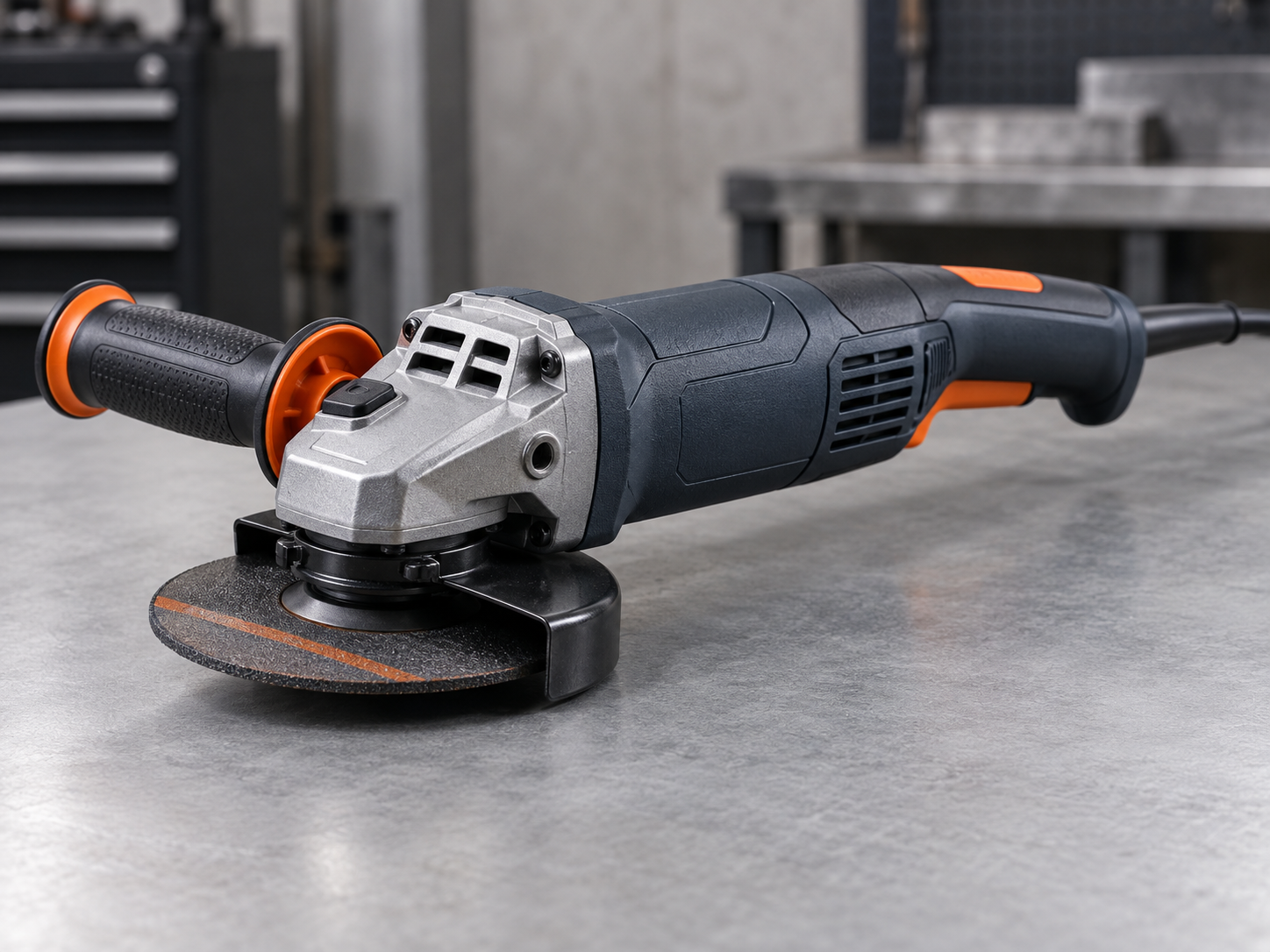
Caption: Compare the complete guarded tool, wheel and power arrangement, not an isolated motor claim.
Understand the corded offer
A corded grinder can be straightforward for a fixed workshop or site where a suitable supply is routinely available. The buyer still needs to specify rated voltage and frequency, plug, cable and strain relief, switch, guard, handle and accessories. Cable placement is part of the work setup. A customer-facing manual should explain appropriate supply and routing without improvising generic cord advice that may not apply to the model or jurisdiction.
In a sample review, observe startup, control under a representative load, wheel access, guard adjustment, handle positions and the condition of the cable after a realistic sequence. Check whether the product remains comfortable for the target work; a continuous supply does not imply that the operator should use the tool continuously without considering fatigue, wheel condition or manufacturer duty guidance. Ask what thermal or overload behaviour the exact sample has and how it is described to the user.
For an importer, the corded kit may be simpler to stock because it avoids batteries and chargers, but it is not free of service complexity. Regional plug variants, replacement cables, switches and gear components still require version control. A product shipped with the wrong plug or carton rating is not the approved market variant. The voltage and plug guide can structure this part of the brief.
Understand the cordless offer
A cordless grinder should be evaluated as a tool-plus-battery system. Name the exact pack and charger IDs, pack quantity and whether the retail offer includes them. Battery seating, charge indication, mode behaviour and replacement availability matter. A bare tool may be attractive to customers who already own a compatible platform, but an importer must not assume that shoppers understand the distinction between bare and kit versions. Put box contents in the title, image and technical sheet.
Test real work cycles, not only a free-running no-load demonstration. Record the wheel, material, cut or pass size, battery capacity, starting charge, rests, tool mode and stopping condition. A result from a thin metal tube cannot be marketed as a result for thick plate. If the battery or control electronics trigger a pause, treat that as part of the observed workflow, not a defect to hide or a protection to bypass.
The cordless offer also changes logistics. Lithium battery pack configuration may affect packaging, documentation and carrier acceptance. These are route- and pack-specific questions, not a generic “air freight allowed” statement. The battery shipping guide lists information to collect before booking freight. Service staff also need a triage method to distinguish pack, charger and grinder-body complaints.
Compare the total cost and support load
Build a side-by-side commercial sheet for complete SKUs: tool, wheel or disc accessories, guard, handle, case, battery count, charger, manual, carton, spare parts and estimated service route. A low bare-tool quote beside a corded ready-to-use kit is misleading. Freight volume and battery transport assumptions can change landed cost. So can the channel's existing battery ecosystem: a distributor with an established compatible platform may value a bare cordless tool differently from a retailer selling to first-time buyers.
The decision matrix should give weight to mobility, task length, replenishment, battery availability, storage, price position and user information. Mark unknowns explicitly. For example, a cordless sample may meet the intended short-cut task but have unverified replacement-battery availability; a corded sample may be operationally attractive but require a plug variant not yet approved. These unknowns define the next sourcing action.
Do not compare performance by voltage or rated input wattage alone. Battery voltage is not the same kind of measure as mains input power, and neither tells the whole story about useful work at the wheel. Use a defined application test and inspect quality of the cut or finish, control and interruptions. The intended sales claim should never be broader than the tested setup.
Mid-article sourcing CTA: Planning a grinder range for mobile and workshop users? Send the material, wheel, duty pattern and market to discuss two comparable configurations.
Design a representative sample test
For a metalworking distributor, prepare secured workpieces of the specified material and size. Use new, correctly rated and compatible wheels of the same type where possible. Follow each grinder's manual for guard, handle and safe operation. Log the operator, wheel, workpiece, power arrangement, start condition, number of cuts or passes, tool interruptions and user observations. A qualified reviewer should stop an unsafe test rather than chase a marketing number.
If the purpose is a sustained workshop task, compare each tool under a duration that remains within its instructions, recording pack changes for cordless and cable management for corded. If the purpose is a mobile service call, include carrying, setup and packing away. The full workflow may make the cordless advantage more visible than a narrow cut-time measurement. Conversely, a fixed station with frequent long grinding passes may reveal why a simple mains offer is commercially sensible.
Photograph the setup and keep the approval record tied to the exact product revision. An internal observation can say “in our defined sample sequence, the cordless kit reduced cable setup time but required a pack change,” not “cordless grinders are faster.” This makes the finding useful to a category manager without turning it into an unsupported universal claim.
Carry the decision through factory testing and shipment
For both variants, agree product-relevant checks for switch, guard fit, handle, wheel interface, visible finish, labels and packed accessories. Corded units additionally need the approved cable and plug; cordless units need the approved battery and charger combination. The check plan should specify which tests are in-line, which are sample based and who reviews a failed result. ToolViron's quality page is a starting point for that discussion.
Shipment inspection compares finished cartons with the exact approved SKU. Inspect model identity, power arrangement, wheel and guard information, handle, case, manual, carton art and quantity. A variant that performs well in the factory but arrives without its promised battery is not commercially equivalent. Any change in pack or charger must trigger a claim and documentation review, not just a replacement part number.
The general electric-tool safety standard scope is described by IEC 62841-1, while applicable particular standards and national requirements depend on the exact product. Certification and conformity are model-specific. This article does not certify a grinder or authorize a wheel combination.
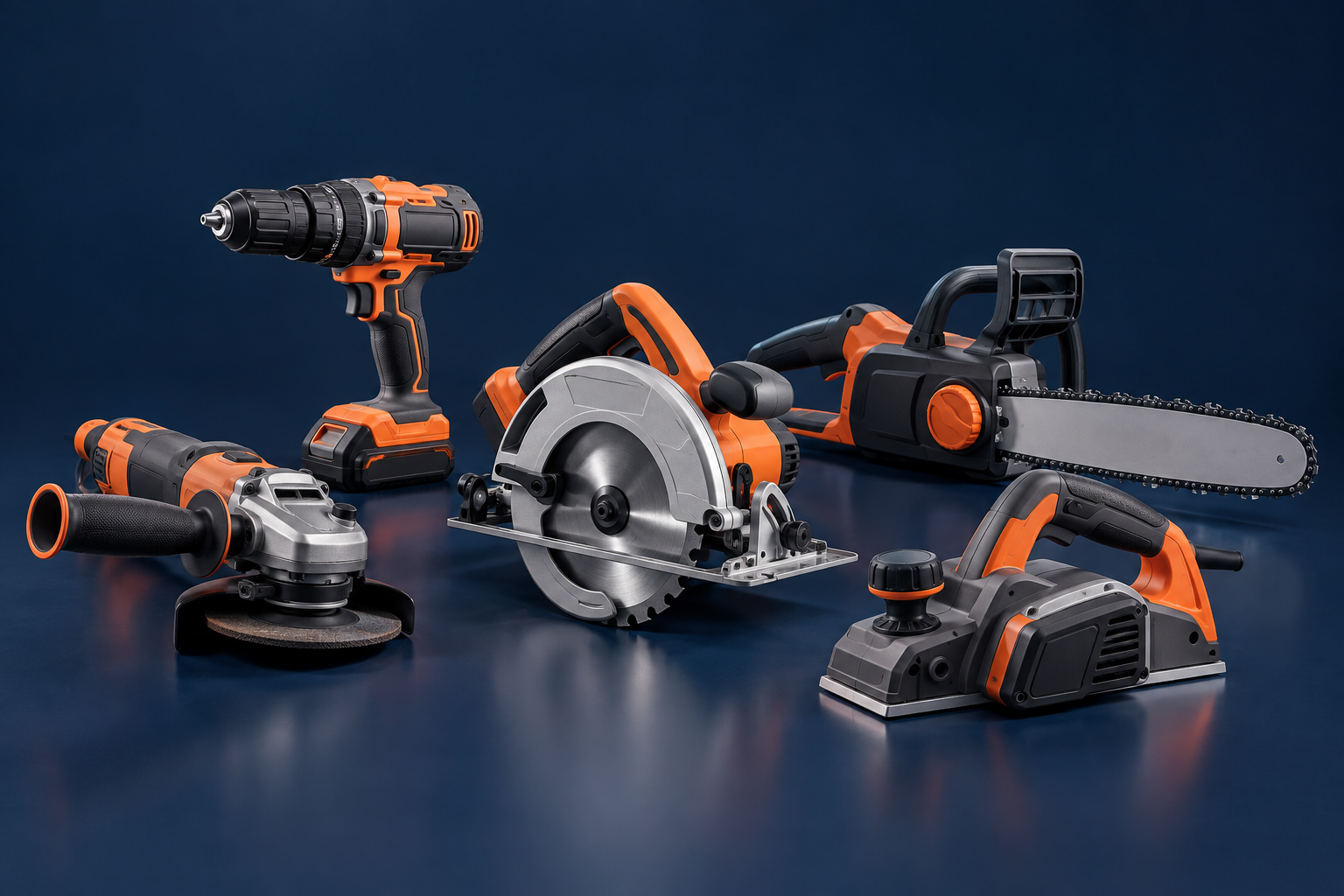
Caption: Illustrative range photography: accessory and safety details require model-specific review.
A two-channel assortment example
Imagine a distributor selling to fabrication shops and mobile maintenance contractors. The fabrication customers usually work near fixed power and perform longer surface-preparation sequences. The mobile teams carry tools between sites and make shorter, intermittent cuts. A buyer who asks each group only whether it prefers “more power” will learn little. A better interview asks about time spent positioning the tool, available outlets, cut count, wheel changes, battery-sharing opportunities and after-sales needs.
The buyer can prepare one fixed-workstation test and one mobile-service workflow. For the first, record sustained work on a specified metal sample, interruptions, cable routing and user control. For the second, include travel from case to workpiece, battery insertion, safe setup, a limited series of cuts and packing away. The tests need not be identical if the jobs differ; they need to be transparent. A cordless result from the mobile sequence should not be used as a claim about all-day bench grinding.
The eventual range may contain a corded core SKU for shops and a cordless kit for mobile teams. That creates two support paths. The corded SKU needs the correct regional plug and cable service; the cordless kit needs packs, charger, transport documentation and replacement-battery supply. The distributor must decide whether the second path is justified by demand. A cordless bare tool may make sense only if the channel already supports a verified compatible battery platform. Selling it to first-time buyers without stating the missing pack is likely to create returns.
The price ladder should compare complete work-ready offers. If the cordless kit costs more, explain what mobility and battery system the buyer receives. If the corded model is cheaper, explain its supply requirement and intended fixed-location use. Neither should be positioned by a vague promise that it can use any wheel of the advertised diameter. Guard, mount and speed compatibility remain model-specific on both platforms.
What to ask in a grinder-platform RFQ
Request rated power arrangement, switch and control features, guard and handle, spindle and supported accessory data, supplied wheel or case, battery and charger IDs where relevant, cable and plug for corded units, documentation, parts and packaging. Ask for the test condition behind any runtime or output claim. If the supplier offers a “tool only” quote, add a separate work-ready kit quote before comparing. The RFQ should also ask how revisions are identified and whether a future battery-pack change will be announced before production.
Include a service scenario. Suppose a customer reports a grinder that stops in use. What questions distinguish a discharged pack, overload event, switch issue, unsuitable wheel or damaged cable? A supplier does not need to publish a full repair manual in the quotation, but it should be able to discuss a safe escalation route and available parts. This reveals whether the platform can be supported after the launch stock is sold.
Finally, agree the inspection plan by SKU. The factory cannot use one checklist that merely says “angle grinder OK” if one carton should contain a charger and another should contain a regional plug. The shipment inspector needs sample photographs, precise accessory counts and variant-specific labels. This is where the initial platform decision becomes a controlled, saleable range.
Frequently asked questions
Is a cordless angle grinder as powerful as a corded one?
That cannot be answered by platform alone. Compare exact models with the intended wheel and workpiece under safe, documented conditions. Battery pack and electronics are part of the cordless configuration.
Which platform is better for a retail kit?
It depends on the customer. A first-time buyer may value a complete, straightforward corded package; a customer who already owns a compatible battery system may prefer a cordless bare tool. Make box contents and accessory compatibility explicit.
Should both platforms use the same wheel?
Only if the wheel is compatible with each exact tool's diameter, arbor, rated speed, guard and instructions. Shared wheel size is not enough to establish compatibility. Review the wheel-rating checklist.
What should shipment inspection emphasize?
Confirm the approved power variant, tool model, guard, handle, wheel/accessory contents, charger and battery where supplied, labels, manual and carton claim. Inspect against the approved sample and purchase-order configuration.
Conclusion
Corded and cordless grinders solve different work patterns. A strong assortment starts with the customer's material, mobility and duration needs, then compares complete safe configurations and realistic workflows. The buyer should carry the selected platform through sample approval, factory checks, shipment inspection and a service plan rather than choosing on a headline motor claim.
Send your requirements
ToolViron can discuss grinder configurations for your target channel. Share the application, wheel type, power preference, destination market and estimated order. Send your requirements to start a specification-led conversation.
Images illustrate product and inspection topics; they are not documentary evidence of a specific ToolViron test or customer project. Confirm the exact model and market requirements before ordering.