
An electric chainsaw listing often calls the tool “quiet” or “low vibration.” Compared with some petrol products, an electric drive can sound different and may remove engine-related vibration. But the chain still cuts wood, the motor and gearbox make noise, and the user's actual exposure depends on the task, cutting attachment, material and duration. Buyers preparing technical claims need to separate a declared measurement, a sample observation and a workplace risk assessment.
NIOSH notes that vibrating hand tools, including chainsaws, can contribute to hand-arm problems in occupational use and recommends reducing exposure where practical; its vibration guidance provides context, not a model-specific ranking. A trade distributor should not convert a five-minute demonstration into a promise of “safe all-day operation.” Follow the exact saw manual and applicable local workplace requirements.
What does “quiet” mean to the customer?
Some customers mean lower noise at the operator's ear, others mean less disturbance to nearby people, and others simply mean no petrol engine idling between cuts. These are different propositions. A saw's acoustic declaration uses a stated measurement method and operating condition; perceived sound in a garden or workshop can differ because of the wood, chain, distance, room reflections and other machines.
Define the claim before commissioning evidence. If the listing says “quieter than model X,” both models must be compared using a fair method and a clear point of reference. If it says “suitable for noise-sensitive areas,” local rules and actual conditions matter. “Quiet” without context may mislead a buyer into thinking hearing protection is unnecessary, which cannot be inferred from the power source alone.
The manufacturer should provide model-specific noise information and the method used for its declarations where required. The importer must verify that the figures and model revision in the manual match the saleable tool. A generic certificate from another saw does not establish this model's performance.
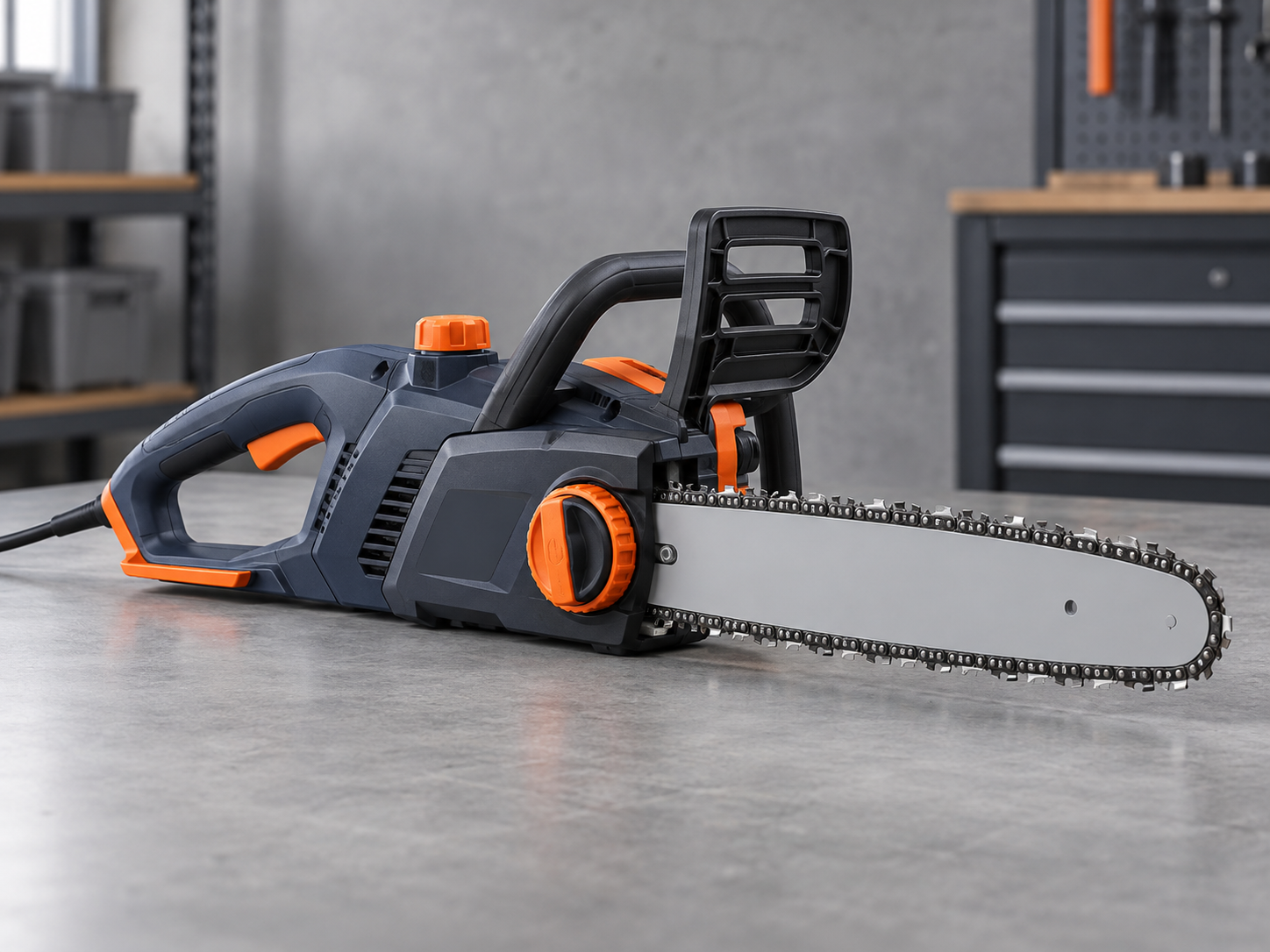
Caption: Sound and vibration claims should identify the exact saw and cutting setup.
Treat vibration as an operating-system result
The chain, bar, sprocket, motor mounting, handle and cutting method all affect felt vibration. A sharp, well-lubricated chain on a correctly maintained bar can behave differently from a dull chain forced through timber. The buyer should therefore record cutting attachment and maintenance condition when comparing samples. A “low-vibration” handle design may be helpful, but it does not eliminate the need for appropriate work practices.
Distinguish vibration declarations from hand comfort. Declared values may come from a defined test method; a user panel can report grip, balance and fatigue under a representative task. Neither should be substituted for the other. Some markets require particular declarations or warnings, and a qualified local adviser should confirm the documentation path for the final product.
If a tool is claimed to have a special anti-vibration system, request drawings or a functional explanation, the specific model's test report and a change-control plan. A rubber grip alone does not prove a particular exposure reduction. Do not borrow a rival brand's performance language without evidence for your own product.
Build a fair sample comparison
Choose stable, representative timber and a controlled cutting task within each saw's intended use. Check the chain and bar, oil level, tension and power source before testing. Use appropriate PPE and trained operators in a safe environment. Record saw model, bar and chain part numbers, wood species or description, diameter, number of cuts and operating method.
If measuring noise or vibration numerically, use appropriate calibrated instruments and a competent method. State measuring position, operating condition and background conditions. A phone recording can help document a symptom but is not a substitute for a standardized declaration. For workplace noise, NIOSH's hearing-protection guidance emphasizes knowing actual sound levels when selecting protection.
A sample comparison can also assess nonnumeric factors: whether the saw feels balanced, whether the handle transmits unexpected buzz, and whether the chain stays cutting efficiently over a defined sequence. Record observations separately from instrument readings. If one sample sounds different, investigate chain, bar or assembly condition before claiming a design advantage.
Repeat the trial with more than one unit or cutting attachment where the claim will be commercialized. One unusually smooth sample may not represent production. If the saw is offered with more than one bar length, verify whether the technical declarations still apply to the chosen configuration.
Build a claim file before writing the listing
A claim file should contain the exact wording, model and revision, evidence source, test method, date, comparison reference if any, and reviewer approval. A phrase such as “quiet electric cutting” may be interpreted differently from a precise numeric claim. The marketing team should be able to trace every published statement back to evidence and conditions.
Avoid “zero emissions” unless carefully qualified. An electric saw has no petrol exhaust at the point of use, but its electricity and manufacturing have wider impacts. Similarly, “maintenance-free” ignores chain sharpening, bar care and oil. The chainsaw replacement-parts plan reinforces the real maintenance picture.
Use the manual's technical data consistently across carton, website, marketplace listing and sales sheet. A mismatch can create customer and importer questions even if each number was copied from a real document. Control units and rounding: sound pressure, sound power and vibration acceleration are not interchangeable fields.
Mid-article sourcing CTA: Preparing electric-saw technical claims? Send the model, market and exact wording you want to publish for a documentation and sample-review discussion.
Connect the claim to user information
If the saw requires hearing protection under its instructions, do not show an operator without it in a product image. A photo or AI-generated visual is part of the claim environment. The page should depict suitable PPE and a supported workpiece without implying that a low-noise claim removes other hazards.
Explain the limits of a comparative sample. Customers may experience more noise when the chain becomes dull or the wood is different. Product information should direct users to maintain the cutting attachment and follow the manual. This is not a caveat to hide an inadequate product; it is the physical reality of a cutting process.
Trade buyers may need a test report rather than a simplified advertisement. Provide model and configuration identifiers so they can compare relevant products. If the result was obtained by a third-party laboratory, retain the full report and scope rather than only a screenshot of the best number.
Handle complaints and revisions
An increase in noise or vibration after use can signal a worn chain, damaged bar, loose part or mechanical fault. Ask when the change began, what cutting attachment is installed and whether the saw has been dropped. Instruct customers to stop using a tool that behaves abnormally and seek appropriate service. Do not encourage continued cutting to gather more recordings.
If a supplier changes motor mounts, handles or the bar-and-chain set, review whether the published claims and test reports still apply. Update the manual and listings if needed. A component change that looks small in the bill of materials can alter acoustic or vibration behavior.
Track support cases by lot and symptom. Several unusual-noise returns from one lot need a different response from occasional complaints about normal chain-cutting sound. The supplier change-control guide provides a route for documenting and approving revisions.
Separate three common acoustic fields
Sound pressure at a position, sound power of a source and a customer's subjective sense of loudness are not the same field. A technical sheet should name which value it reports, its units, the model configuration and the measurement method. A marketplace listing that copies a sound-power figure into a “noise at the ear” field can mislead even when the number came from a real report.
If a retailer asks whether a saw is suitable for a residential noise rule, the importer should not answer from one laboratory value alone. Local rules may address time, location and measurement method. The user should review the specific rule and actual work setting. Product information can support that decision, but it cannot guarantee permission to cut in every neighborhood.
The same discipline applies to vibration: state the declared measure and method, not “vibration-free.” A smooth-feeling sample under one chain and timber condition is an observation, not a general exposure limit.
Compare electric and petrol categories honestly
An electric saw lacks petrol-engine exhaust at the point of use and may avoid idling noise, but it still produces cutting noise and needs maintenance. A fair comparison identifies the specific models, chain condition, wood and work cycle. “Electric is quieter” is a broad category statement; a model-to-model claim needs evidence. A buyer should not import an advertisement from another market and assume it applies to its own configuration.
Consider the task sequence. A battery saw that stops the drive between cuts can reduce some idle sound, while the cutting portion may still require hearing protection. A corded model may have a different motor sound but no battery swap. The user may care about total disturbance during a job, not one peak reading. Record enough context to answer the customer's real question.
If a salesperson uses an illustrative video, do not use audio captured on a phone as numeric proof of a sound reduction. Microphone distance and automatic gain can make a louder tool appear quieter.
Review claims after component changes
A new guide bar, chain profile, handle insert or motor controller can change the sound and vibration profile. The factory's change notice should trigger a review of the manual, report scope, carton and website claim file. If the new configuration is not covered by existing evidence, withhold the comparative statement until it is checked. A small sourcing change should not silently invalidate a prominent sales claim.
At receiving, verify that the declared model and cutting attachment match the shipment. At after-sales intake, ask whether an unusual sound appeared from first use or later, and whether the chain or bar was changed. A spike in noise complaints on one lot may indicate a product issue; a gradual change after wear may call for maintenance or service.
Build a buyer comparison sheet
For each candidate saw, list declared acoustic and vibration data with source documents, tool mass with its saleable battery where relevant, bar and chain, intended duty, customer-visible features and replacement parts. Mark unknown values honestly. Add a separate row for observations from the controlled sample trial. This prevents a salesperson from presenting subjective handling comments as laboratory measurements.
The sheet should include a decision note: which model is better suited to the buyer's channel and why. One model may be lighter and easier for intermittent garden care; another may have a different service or battery ecosystem. A procurement decision is not made by selecting the smallest decibel number in isolation.
An editorial checklist before publication
Before publishing a product page, a reviewer should locate the exact report behind every numerical sound or vibration statement; confirm model, bar, chain, power configuration, units and method; and compare the manual, carton and online values. They should mark any qualitative word such as “quiet,” “comfortable” or “low-vibration” and ask what evidence and comparison it implies. If the answer is unclear, rewrite the claim more narrowly.
Review the images and captions too. A staged photograph of an unprotected operator can undermine correct manual guidance. A chart that places an electric saw beside an unnamed “petrol chainsaw” implies a comparative test that may not exist. Honest visuals should identify whether they are illustrative and avoid placing unverified numbers on the image itself.
After launch, repeat the checklist when a component, market or report changes. Claim control is an ongoing product process, not a final proofreading step.
Keep a dated copy of the approved claim, its supporting report and the exact product configuration together. That record makes it possible to withdraw or revise a statement when the motor, bar, chain or market-specific documentation changes.
Frequently asked questions
Is an electric chainsaw silent when cutting?
No. It may avoid petrol-engine noise, but motor, drive system and chain cutting still create sound. Users should follow the saw's hearing-protection instructions and relevant workplace guidance.
Can a distributor state that an electric saw has no vibration?
No. The cutting process and drive system can transmit vibration. Any comparative claim needs model-specific evidence and a defined test method.
Does one laboratory value predict a user's whole shift exposure?
No. Real exposure depends on task, cutting attachment, maintenance, work cycle and duration. Workplace assessment is separate from a product declaration.
What evidence supports a “quieter than” claim?
Identify the compared models, configurations, measurement method and conditions. Confirm the statement remains true and relevant for the final saleable revision before publication.
Conclusion
Noise and vibration are legitimate buyer concerns, but they require careful language. Distinguish declarations from sample impressions, record the cutting setup, keep marketing tied to the exact model and avoid universal safety promises. This gives trade customers information they can use without overstating what a single test proves.
Send your requirements
Share the saw platform, destination market and proposed technical claims. ToolViron can discuss what model and sample information should be reviewed before a product listing is published. Send your requirements to begin.
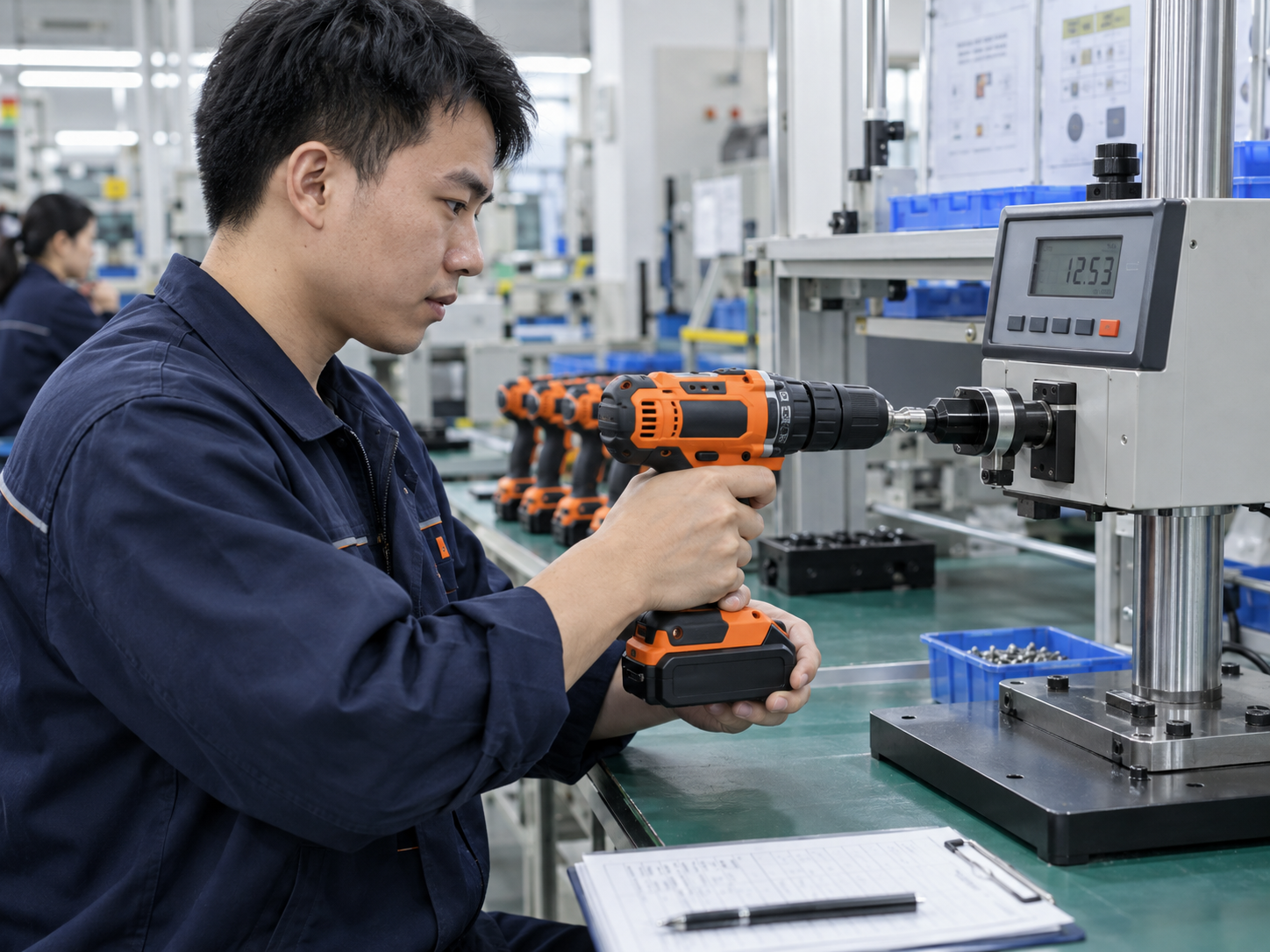
Caption: A claim file links the wording customers see to the exact model and test conditions.
Images illustrate product and inspection topics; they are not documentary evidence of a specific ToolViron test or customer project. Confirm the exact model and market requirements before ordering.