
Concrete grinding is often described as a motor-power problem. For the buyer preparing a credible angle-grinder offer, dust control is just as important. The accessory, shroud, extraction connection, vacuum, work method and destination-market rules affect whether the complete offer suits an indoor renovation or surface-preparation task. A grinder alone does not define a dust-control system.
This guide is for importers and distributors planning a concrete-grinding product range. It explains what to ask suppliers, what to verify on samples and what not to claim in product copy. It is not a substitute for the workplace exposure assessment, local law or a site-specific safe-work method.
Separate the application from the headline claim
Ask what the customer actually grinds: a small high spot on cured concrete, adhesive residue, masonry edge or a broad floor surface. These jobs differ in duration, accessory contact area and dust volume. A small angle grinder can be useful for local work, while a dedicated floor grinder may be more appropriate for a large surface. Marketing every grinder as a general “concrete floor solution” invites disappointment.
Record the material, approximate task size, expected duration, indoor or outdoor setting and available power. Those details determine which accessories and extraction equipment a buyer should investigate. A retail customer looking for a one-off repair needs clearer setup guidance than a professional contractor who already owns dust extraction equipment.
OSHA's handheld-grinder silica fact sheet describes dust-control approaches for concrete and masonry grinding in U.S. construction. It is a primary reference for understanding why shrouds and dust collectors matter in that setting. The importer must still verify the laws and exposure-control obligations of each destination market.
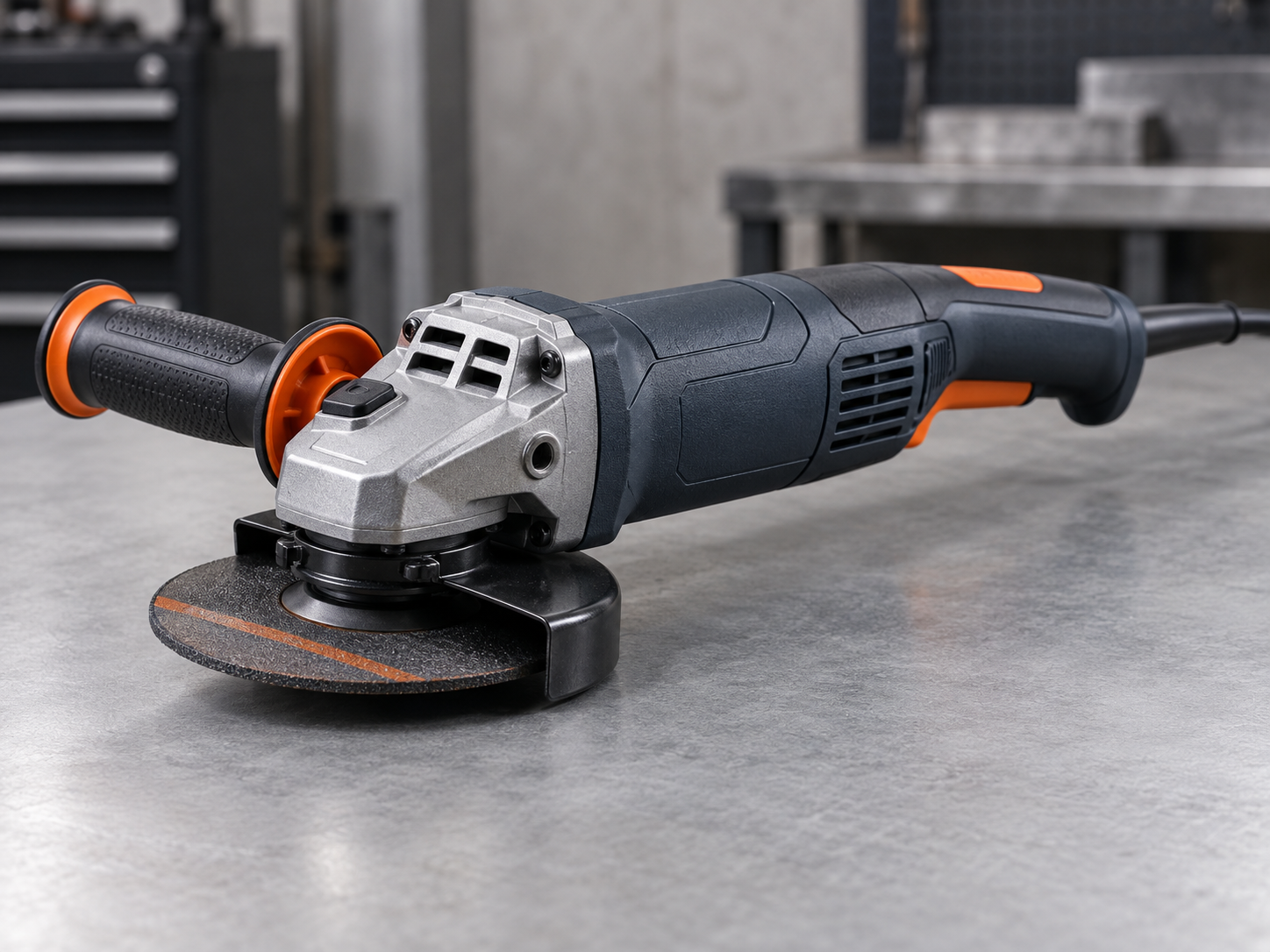
Caption: The concrete task should be specified before choosing a wheel, shroud or extraction connection.
Specify the system, not only the grinder
A concrete-grinding package may involve a diamond cup wheel, a compatible shroud and an extraction hose connected to a suitable dust collector. The component dimensions and interfaces must be checked against the exact grinder model. A shroud that looks close in a photograph can interfere with a guard mount, handle position or depth of cut.
Ask for a drawing or physical sample of the shroud's attachment and the hose outlet size. Confirm that the wheel can rotate without contact, that the shroud can be installed according to its instructions, and that the operator can still use the auxiliary handle. If an adapter is needed, list it as an actual packed item. Do not describe a dust port as “universal” without a tested compatibility range.
The grinding accessory itself needs a defined maximum speed, size and material application. Read the wheel-RPM compatibility guide when building a kit. A diamond cup wheel should not be selected only because its diameter fits the spindle. The wheel and grinder makers' instructions determine acceptable use and mounting.
Understand what a shroud can and cannot do
A shroud can help capture dust near the point where it is generated when connected to a properly selected extractor and used as intended. It does not mean “dust-free.” Dust can escape at edges, during repositioning, during wheel changes and while cleaning the work area. Extraction performance also depends on the filter condition, hose route and the way the tool is held.
For a supplier sample check, look at the shroud's fit through the useful wheel depth, its access near edges, the quality of seals or brush skirt, and whether users can inspect wear. Ask how replacement skirts, adapters and clamps will be supplied. If the shroud is an optional accessory, distinguish it from the basic grinder package in every product photograph.
Do not infer occupational exposure compliance from a brief video of a clean-looking workspace. A real exposure assessment needs the correct method and competent interpretation for the market and job. A buyer can, however, reject obvious mismatches such as an unsealed shroud, loose hose connection or a kit lacking the stated adapter.
Build a test around a defined material
Use consistent concrete samples, the same cup-wheel specification and the same extraction equipment when comparing two configurations. Record surface condition, grinding duration, operator approach and visible issues such as hose interference or blocked collection. Keep the result as an application observation, not a universal dust-reduction percentage unless measured by a qualified method.
Ask the supplier for images of the actual test setup and the product labels. At factory testing, check that any quoted shroud and outlet actually appear in the bill of materials. During shipment inspection, open sample cartons and compare their packed contents to the approved setup. A quote with a shroud but a shipment containing only a bare grinder is a frequent and avoidable purchasing dispute.
Mid-article sourcing CTA: Planning a concrete surface-preparation range? Send ToolViron the material, task scale and extraction equipment you expect customers to use.
Write cautious, useful product information
State which accessory is included, which is optional, the connection size where confirmed, and which grinder models have been checked. Explain that extraction equipment and the correct work practices are required for dust management. Avoid “zero dust,” “silica-safe” or “fully compliant everywhere” unless a specific claim has been substantiated for the relevant market and use.
Provide setup steps in the approved manual, especially how the accessory and shroud attach and how the hose should be routed. Do not use product images that show unguarded, unsupported or obviously hazardous work. The purpose of application photography is to explain an appropriate configuration, not to create an impressive dust cloud.
If the channel serves professional users, support the retailer with a compatibility sheet and service-parts list. Brushes, seals, hose adapters and extraction components are more useful than a broad promise that replacement parts are “available.” Provide item identifiers and revision information.
Compare sourcing options
One option is a grinder sold alone with a recommendation to use a compatible third-party extraction system. Another is a defined grinder, cup-wheel and shroud bundle. The former gives professional buyers flexibility but requires precise compatibility information. The latter simplifies first purchase but transfers more responsibility to the importer to validate the combination and manage substitutions.
Ask suppliers to quote both versions if the channel is uncertain. Compare not just unit price, but sample-validation work, accessory availability, carton size, instructions and customer-support burden. The lowest kit price can become costly if customers cannot connect the shroud to the extractor they use.
The ToolViron angle-grinder product page can anchor the model discussion, while the final bundle should be specified in a separate buyer-approved configuration sheet.
Compare field setup burden
The best dust-control configuration is not necessarily the one with the longest accessory list. A contractor may need to move between rooms, connect a hose, adjust a shroud and empty a collector. Ask how many steps are involved before the first cut and whether the parts can be installed with the supplied tools. A package that is theoretically compatible but slow or awkward to assemble may be bypassed by users.
During a supervised sample review, observe the setup sequence without coaching the operator at every step. Note which connections are ambiguous and whether the manual names them correctly. Check that the hose can be routed without pulling the grinder off the workpiece or crossing the operator's path. A well-designed adapter that stays attached during ordinary movement can matter more than a broad, unverified suction claim.
If the channel serves renovation work, ask how users will protect adjacent surfaces and clean up after grinding. The shroud and extractor are only part of the work method. Packaging copy should not imply that all dust is captured and no further housekeeping is needed.
Build a controlled sample matrix
Instead of comparing several grinders on random surfaces, define a small matrix: one representative concrete substrate, one accessory specification, a fixed grinding interval and the same extraction equipment. Record the shroud, hose and filter condition before each run. This does not create an exposure-compliance test, but it can reveal obvious fit and usability differences.
If a supplier claims a percentage reduction in dust, ask for its test method, baseline configuration, measurement location and confidence in repeatability. A visible before-and-after photo is not a quantitative exposure result. The buyer can present measured evidence if it is robust and relevant; otherwise, state only the verified product configuration and the need for appropriate controls.
Inspect wear parts after the sample run. A brush skirt that tears or a port that cracks during ordinary handling may undermine the offer even if initial dust capture looks good. Ask for service-part pricing and lead times before approving a bundle dependent on that shroud.
Turn regulatory questions into a sourcing brief
An importer should ask the destination-market compliance adviser what the proposed application requires before finalising the kit. The answer may affect shroud design, extraction performance, documentation and user information. Do not ask the supplier for a generic “silica certificate” and assume it resolves every workplace duty. Exposure control is tied to the actual task and jurisdiction.
Provide the adviser with the grinder model, accessory, shroud, proposed extractor and intended material. If the buyer cannot name the extractor because it is customer-supplied, the product page should state a compatibility interface and make the remaining selection responsibility clear. A tool manufacturer cannot honestly guarantee a particular workplace exposure level when the customer may use an unsuitable or poorly maintained collector.
Keep the outcome in the product file: which configuration was reviewed, which claims were permitted, and which controls the user still needs. If a promotion changes the cup wheel or shroud, revisit the relevant conclusion. Regulatory review is not a one-time sticker that survives arbitrary component changes.
Distinguish a workable offer from a complete job plan
A product package can provide a suitable grinder and verified accessories, but the contractor still needs a site plan. Material composition, nearby occupants, enclosure, ventilation and clean-up method matter. A retailer should avoid promising that buying the kit alone makes an indoor job safe or compliant. The manual and sales training can instead identify the necessary equipment and point to local requirements.
This distinction also protects customer trust. A claim such as “dust-control ready with approved shroud and 35 mm outlet” can be checked if the outlet and approval are real. “Dust-free concrete grinding” cannot be supported by a shroud photograph. Buyers should prefer a narrow, true statement and a useful compatibility sheet over a broad promise that collapses in field use.
After launch, monitor questions about hose fit, edge access and replacement brush skirts. These are signals about the actual product application. If customers repeatedly ask for an adapter that was not included, consider adding a correctly specified accessory or changing the listing. If the shroud wears rapidly, investigate material and service-part quality with the supplier. Feedback should update the approved configuration.
Final RFQ questions for the factory
Ask the supplier to quote the exact grinder, cup wheel, shroud, hose adapter and any required guard or handle as separate bill-of-material lines. Request drawings or dimensions for the extraction port and identify which components are included in the retail carton. Ask for the accessory makers' instructions and speed ratings. These details allow a buyer to reject a vague “dust-control ready” quote before it becomes a misleading product listing.
Then request a supervised sample test on the material and task scale the buyer expects to sell into. Record shroud fit, hose movement, chip or dust escape observations and any wear. Do not convert the result into a universal exposure claim. Have a qualified adviser assess the destination-market requirements and any proposed compliance language separately.
Finally, ask how replacement brush skirts and adapters will be supplied. If a shroud is central to the offer but its wear parts cannot be obtained, the system may be difficult to support. A buyer should be able to answer the customer’s practical question—“what do I connect, and what happens when this part wears?”—before placing a production order.
Frequently asked questions
Is an angle grinder suitable for every concrete-grinding job?
No. It can serve defined local tasks, but a large floor or long-duration project may call for equipment designed for that scale. Match the offer to the application rather than making a universal claim.
Does a shroud make grinding dust-free?
No. Capture depends on fit, the selected extractor, filter condition and work method. The appropriate workplace controls and local rules still apply.
What should an importer request with a sample?
Ask for the exact grinder, cup wheel, shroud, adapters, instructions and a bill of materials. Check physical fit and a representative material application.
Can a retailer sell the shroud separately?
Yes, provided the listing identifies the verified compatible grinder models, required mounting components and any extractor connection limits.
Conclusion
Concrete-grinding credibility comes from defining a real task and documenting the complete setup. A grinder motor specification alone cannot answer the buyer's dust-control question. Matching the accessory, shroud, extraction interface, instructions and service parts produces an offer that is easier to explain and support.
End-of-article CTA: Request a concrete-grinding kit discussion or product catalogue. Include your target market, grinder size, work material and preferred extraction arrangement so the sample can be reviewed as a system.
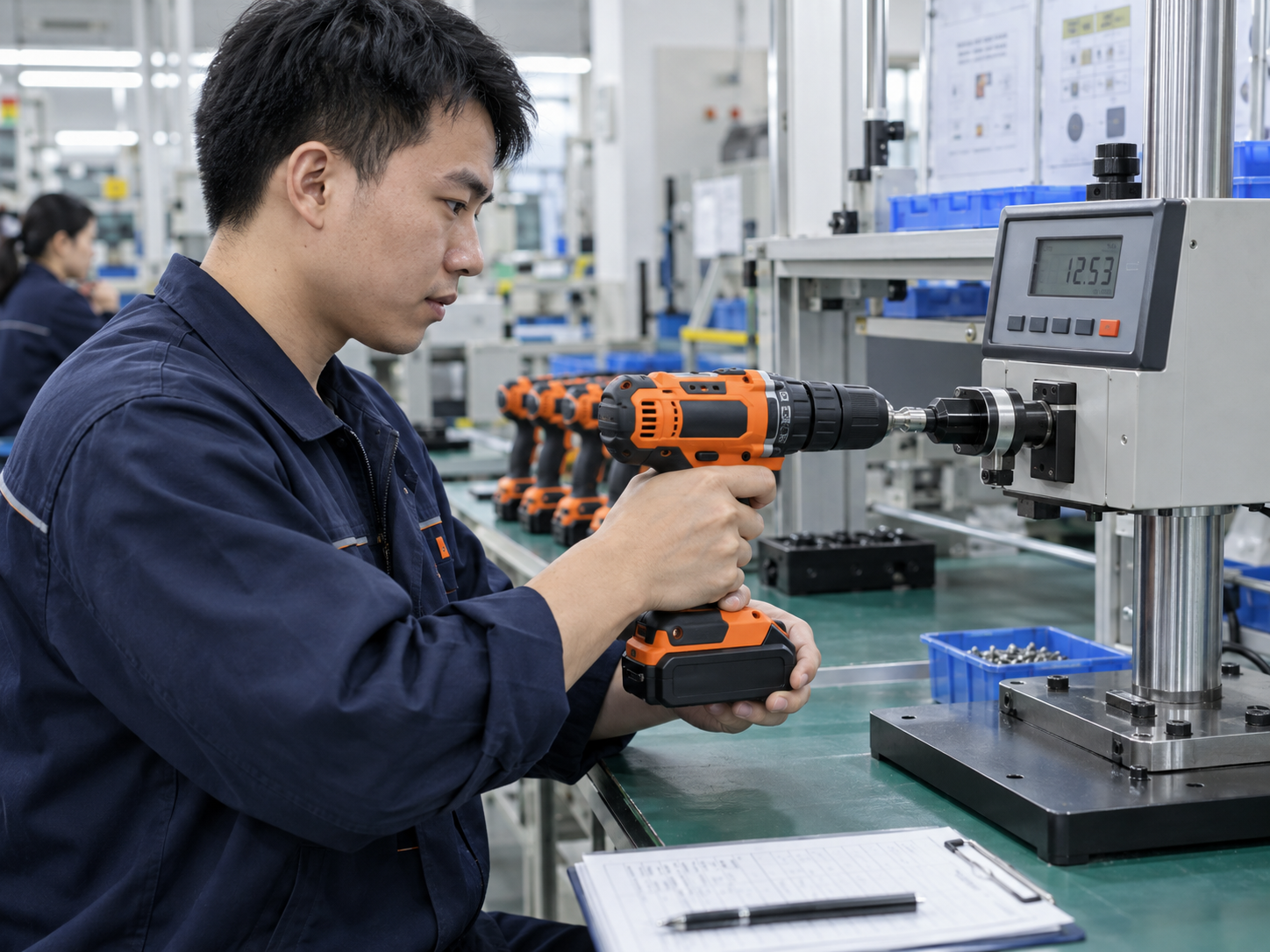
Caption: Inspection should compare the packed configuration with the one used for application review.
Images illustrate product and inspection topics; they are not documentary evidence of a specific ToolViron test or customer project. Confirm the exact model and market requirements before ordering.