
Brands building their first private-label range
PROJECT FRAMEWORKS
Private-label project patterns buyers can use.
See how common sourcing challenges can be structured without invented customer names, performance claims or commercial results.
Useful project evidence is specific about the method and honest about the result.
The examples on this page are representative project frameworks, not customer testimonials. They show the questions, controls and deliverables that a real buyer programme should define.
WHO THIS PAGE IS FOR
Built around a real buying decision.
Importers consolidating inconsistent SKU information
Quality teams connecting sample approval with shipment inspection

PROGRAMME CONTROLS
Connect the commercial brief with production.
Range launch framework
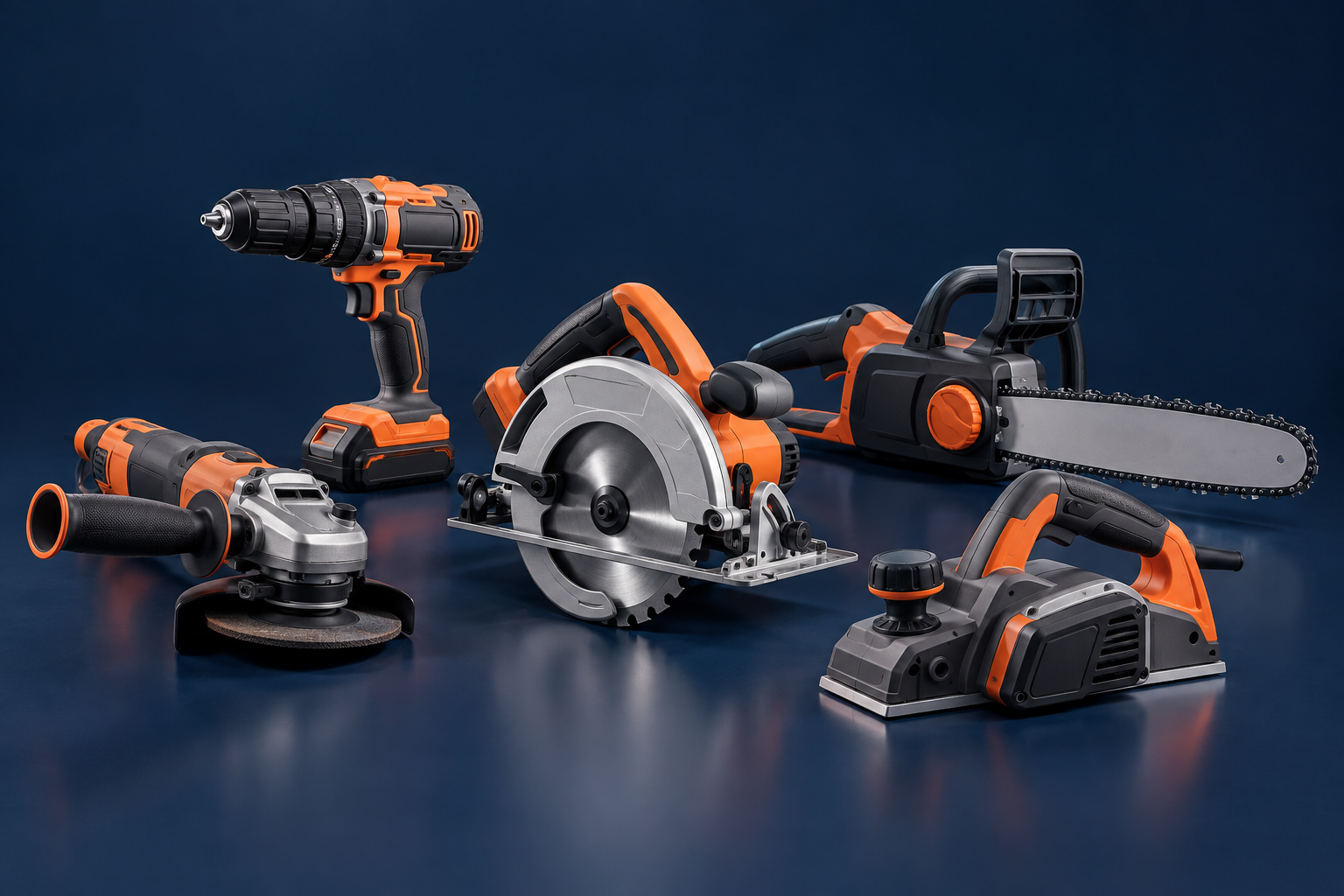
Map target users, channels and price positions before selecting coordinated drill, grinder, chainsaw or planer SKUs.
Market-variant framework
Separate voltage, plug, language, accessory and packaging differences into controlled regional SKUs.
Packaging-control framework
Link artwork, included items, carton structure and product identity to one approved reference set.
Quality-feedback framework
Carry the same model, lot and failure codes from shipment inspection into after-sales analysis.
A CONTROLLED ROUTE
From initial requirement to shipment preparation.
Share requirements
Tell us the product, application, destination market, expected quantity and commercial objective.
Confirm the configuration
Align the tool, accessories, labels, manual, packaging and evidence needed for the intended programme.
Review samples and production
Use production-intent samples and an agreed review plan before mass production is released.
Inspect and prepare shipment
Confirm the approved configuration, packing and selected shipment checks before dispatch.
FACTORY & QUALITY EVIDENCE
Replace generic success stories with evidence buyers can request.
For an active programme, ask for the exact sample record, specification, inspection method and production evidence relevant to your model. Confidential information should remain protected.
- Clear business and customer requirement
- Defined product and regional SKU
- Controlled evidence and decision owners
- Visible limitations and open issues
- Repeatable production and shipment criteria

BUYER FAQ
Questions to resolve before the order.
What information should a buyer send first?+
Start with the product category, intended application, destination market, target quantity, voltage or battery direction, required accessories and branding needs.
Can ToolViron support private-label packaging?+
Private-label colour, product labels, manual and packaging can be discussed for the exact model, market and order programme.
Can buyers request samples before production?+
Yes. The sample scope, configuration, commercial terms and evaluation method should be agreed before the sample is prepared.
How is shipment quality confirmed?+
The buyer and factory should align the approved specification, inspection scope, acceptance criteria, packing and release authority before inspection.
PROJECT ENQUIRY
Start with a clear product brief.
Share the application, market, quantity and configuration you are planning. Your email app will open with the project details ready to send to info@ToolViron.com.
Direct emailinfo@ToolViron.com