
Two power-tool quotations can show the same unit price while describing different products and delivery obligations. One may include a battery and charger, another a bare tool. One may quote from a factory gate, another to a destination port. Packaging size, inspection, documentation, replacement parts and freight assumptions can also differ. An importer should normalize the configuration and commercial terms before deciding which offer is cheaper. The goal is not to find the lowest displayed number; it is to find a defensible cost for the approved, saleable SKU.
This guide is a procurement framework, not financial, customs or legal advice. Duties, freight rates and destination rules change. Use current quotes from carriers, brokers and qualified advisers for a real landed-cost calculation. The examples here describe line items and decision logic without inventing ToolViron prices or suggesting that one Incoterms rule is universally best.
Freeze the comparison product first
Prepare an RFQ sheet for each SKU with intended application, motor or platform, key specifications, power source, plug or battery, accessories, labels, manual languages, carton, warranty expectations, test evidence and target quantity. A bare drill should not be compared directly with a kit containing two packs, charger, case and bits. If suppliers propose alternatives, list them as separate options and identify which requirements they do or do not meet.
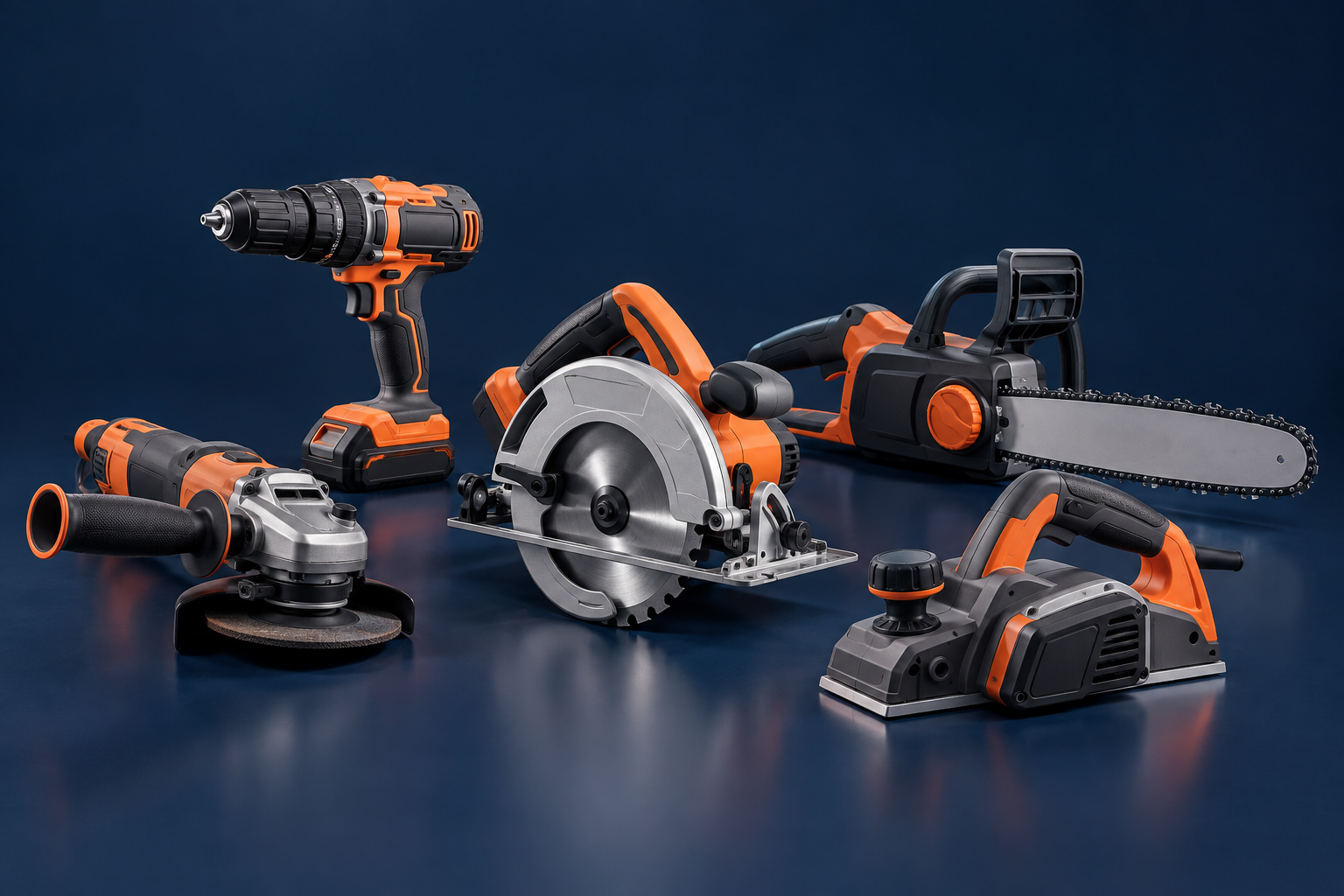
For a grinder, name the guard, handle, disc compatibility and supplied accessories. For a chainsaw, identify bar, chain, power arrangement and maintenance items. For a planer, list blade type, guide and dust arrangement. The OEM manufacturer checklist is useful for structuring supplier questions, but the RFQ should be precise enough that two suppliers can quote the same work.
Ask each supplier to flag exclusions. A quotation that omits the destination-market plug, a specific manual translation or test documentation may be lower only because work remains to be priced. The buyer should not assume silence means inclusion. Make exceptions visible in a column beside the comparable total, not buried in email threads.
Caption: A fair RFQ compares the same approved SKU and a clearly named delivery point.
Specify the delivery rule and named place
Incoterms allocate delivery, risk and cost responsibilities in an international sale; the three-letter term without a named place is incomplete. The International Chamber of Commerce's Incoterms 2020 checklist explains why containerized or multimodal shipments may call for a different rule from traditional bulk cargo. The buyer should choose a rule for the actual route with professional advice, not use “FOB” automatically because it appears in an old template.
Record the named place, who books main carriage, who handles export and import formalities, who pays which charges and when risk transfers. ICC's FCA explanatory note shows why the exact place of delivery matters. A quote “FCA Shenzhen factory” is not the same cost and risk point as a quote “FCA terminal.” The importer should obtain carrier and customs estimates for the legs outside the supplier's responsibility.
Do not compare a seller's delivered price with a factory price by simply adding an assumed ocean rate. Other costs may include origin handling, documentation, insurance where chosen, destination charges, duty, taxes, inland delivery and warehousing. The exact basket varies by rule and route. A landed-cost worksheet should show each estimate, its source, currency, validity date and the uncertainty still to be resolved.
Include packaging, freight volume and handling
A lower unit price can be offset by a larger or weaker carton. Ask for retail and master-carton dimensions, gross weight, units per carton, palletization assumptions and protection method. Estimate freight using current carrier rules and the real planned mode. The export packaging guide explains why retail presentation and transit protection should be approved together.
Battery-powered tools require additional review. A pack shipped installed in equipment may face different packing and carrier requirements from spare batteries. A carrier may require documents that the supplier has not priced. The lithium-battery shipping guide helps identify questions for the logistics team. Do not assume a low freight estimate applies after the final battery configuration is chosen.
Packaging quality also affects hidden landed cost. If cartons arrive crushed and retailers reject stock, the original invoice saving evaporates. Ask how the supplier validates the packed product and what evidence is available. A packaging test is not a guarantee against every transport event, but it gives the buyer a better basis than a decorative mock-up.
Price inspection, documentation and change control
List any requested testing, third-party inspection, destination-market documentation, manual translation and artwork as separate items. Ask what is included in the supplier's base quote and what requires an external laboratory or specialist. A vague promise of “all certificates included” is not meaningful before the exact product and market are known. Budget for the evidence path that applies to the configured SKU.
Include sample and tooling costs in the comparison. An ODM adaptation may have a lower unit price but a design or tooling charge. Another supplier may charge more per unit but include a suitable existing configuration. Spread one-time costs over a realistic order horizon instead of dividing them by an optimistic volume not yet committed. The MOQ planning guide can help decide whether the intended first order supports a particular configuration.
Set a written change rule. If a battery, switch, blade or carton changes after the quote, require an updated price and technical review. Otherwise the buyer may “save” money on a component substitution that changes performance or claims. The supplier change-control guide covers the approval side of this decision.
Mid-article sourcing CTA: Comparing power-tool RFQs? Send one standardized product brief and the desired delivery point to request a configuration-based discussion.
Estimate after-sales exposure without false precision
Service and returns can affect total cost, but do not invent a warranty failure rate for a new model. Ask each supplier for the proposed spare-parts list, claim process, replacement lead time and responsibility for confirmed manufacturing defects. Record which party pays outbound parts freight or return freight under the commercial agreement. Treat unknown rates as a scenario, not a known cash cost.
Use a sensitivity table. For example, compare totals under different freight rates, exchange rates and plausible service allowances rather than presenting one fragile landed-cost number. Clearly label assumptions. This helps the buyer see whether a small unit-price advantage survives ordinary uncertainty. A less expensive offer that lacks parts and traceability may carry higher operational risk even before any return occurs.
Think about retailer requirements. A chain store may demand specific carton labels, barcode quality or delivery windows; an online seller may face dimensional-weight charges and damage claims. The right “lowest cost” depends on the channel. Use the same output unit—saleable SKU delivered to the agreed location—when comparing suppliers.
Build a final comparison table and decision memo
Your table should include quoted unit price and currency, complete SKU contents, named Incoterms rule and place, carton data, freight estimate, insurance choice, duties and taxes estimate, inspection and documentation, sample/tooling allocation, service plan, lead time and unresolved assumptions. Add a column for evidence: approved sample, written specification, packaging drawing or carrier quote. If a cell is unknown, leave it explicitly open rather than entering zero.
After normalization, choose the offer that meets the application and compliance needs at an acceptable total risk and cost. The decision memo should say why: perhaps a higher-priced kit includes a local charger and a verified replacement route, or a lower-priced offer remains attractive after the buyer adds freight and inspection. This is a better governance record than “supplier A was cheapest.”
Do not publish the worksheet's estimates as market-wide facts. Freight, tariffs and regulation are temporally sensitive. Recalculate before issuing the purchase order and again if the route or product configuration changes. A sourcing article can provide the method, not a current price guarantee.

Caption: Illustrative shipment photography: every order needs its own approved inspection record.
A worked comparison without invented prices
Imagine two suppliers quoting a cordless drill for an importer. Supplier A quotes a lower body price under a named origin delivery point, but its offer excludes the charger, case, translated manual and final packaging artwork. Supplier B quotes a higher complete kit with a stated battery, charger, case and inspected retail carton under a different delivery term. Comparing the displayed unit prices would answer the wrong question. The buyer should build a common saleable SKU, then request revised prices or add documented missing items before estimating landed cost.
The worksheet should show each supplier's assumptions separately. Supplier A may need a charger sourced elsewhere, creating compatibility, freight and service questions. Supplier B may have larger cartons that increase freight. A difference in Incoterms rule may shift when the importer takes risk and which transport charges it must arrange. The buyer can ask both parties to quote the same rule and named place, or calculate their offers back to a common destination using current third-party estimates. Do not fill unknown items with zero.
Next test sensitivity. If freight increases or a second battery is added, does the ranking change? If one supplier's spare-parts route is weak, how will the importer support a retailer warranty? These are scenarios, not made-up actual costs. The decision memo can say which assumptions are robust and which require another quote. It may still select the lower initial price, but it should do so with a clear view of the remaining work and risk.
The product manager should also examine lead time and order quantities. A unit price dependent on a large MOQ may not be attractive for a first launch, especially if the market position is untested. The cost of unsold inventory is not visible in a supplier quote. A smaller pilot order at a slightly higher unit cost can sometimes produce better market evidence, but the buyer must calculate that for its own channel and cash position.
A practical RFQ checklist to send to all finalists
Use one specification sheet and ask every finalist to state product model and revision, power source, included accessories, manuals and languages, carton dimensions and weight, test and conformity evidence, warranty and parts route, sample costs, tooling, MOQ, production lead time, quoted currency, payment terms, Incoterms rule with named place and quote-validity date. Keep supplier exceptions in a visible column. If one supplier cannot meet a non-negotiable requirement, do not let a low price disguise that difference.
Ask whether the quoted packaging was physically tested and whether batteries have the information needed for the intended carrier route. The answer may be “not yet”; that is an open workstream, not an automatic rejection. Assign the cost and schedule implication instead of silently assuming another party will solve it. Likewise, if a destination-market manual is still a draft, record who pays for review and print changes.
Before the purchase order, reconcile the final quotation with the approved sample. A quotation can be technically precise and still drift during negotiations. Confirm that the battery capacity, charger plug, accessory count, carton and delivery place remain the same. If any change is accepted, revise both the technical and commercial comparison. The importer should be able to explain later why the selected offer represented the best total choice for the target customer.
Keep landed-cost estimates dated
Freight, exchange rates and import charges are time-sensitive, so attach a date and source to each estimate. A worksheet from an earlier order can be reused as a structure, not as a current quote. If the route or carton dimensions change, request updated carrier pricing. If the destination market changes, obtain new customs and compliance advice. This matters especially when a battery configuration changes the transport assumptions. A decision memo can state its confidence range and open items rather than present a falsely precise number to management. Rechecking the few high-impact assumptions before deposit payment is often more useful than refining minor cost lines to the last cent.
Frequently asked questions
Is FOB price the same as landed cost?
No. A quote under any delivery rule must be combined with the buyer's remaining freight, insurance, import, duty, tax and inland costs as applicable. Name the place and route before calculating.
Why do two “same model” quotes differ?
They may include different accessories, battery/charger arrangements, manuals, carton protection, test evidence or delivery obligations. Normalize the configuration before discussing price.
Should warranty cost be added to an RFQ comparison?
Yes, as a transparent scenario or service-plan item, but not as a fabricated exact failure rate. Ask for parts availability, claim responsibilities and historical evidence where relevant.
What if a supplier offers a cheaper substitute after sample approval?
Treat it as a new technical and commercial proposal. Review effect on function, safety, documents and packing, then approve or reject in writing before production.
Conclusion
A good power-tool RFQ comparison starts with the same saleable SKU and a named delivery point. Add real packaging, transport, inspection and service assumptions; label uncertain inputs; and keep change control active. The result is a purchasing decision the importer can explain after the first shipment arrives.
Send your requirements
Share the target product, market, kit contents, order range and preferred delivery point. ToolViron can discuss a quotation against a defined configuration. Send your requirements to begin.
Images illustrate product and inspection topics; they are not documentary evidence of a specific ToolViron test or customer project. Confirm the exact model and market requirements before ordering.