
Introduction
Buyers searching for power tool HS code are usually close to a sourcing, market-entry or shipment decision. The useful question is not whether a supplier can repeat a familiar sales phrase. It is whether the importer has enough product facts and destination-specific authority to support a defensible tariff classification and landed-cost estimate. This guide gives importers, distributors and private-label teams a practical way to define that decision and keep the evidence connected to the exact SKU. The first six Harmonized System digits support international nomenclature, while national tariff schedules add digits and legal notes. Importers should use the current schedule for the destination country. Classification depends on objective product characteristics and applicable interpretive rules, notes and rulings—not only the marketing name or code previously used by a supplier. Cordless kits can require special attention because a tool, battery, charger, case and accessories may be packaged together. A customs professional should assess the actual imported configuration. ToolViron manufactures drills, angle grinders, electric chainsaws and electric planers in Shenzhen. The methods below describe buyer-side controls and ordinary factory coordination. They do not claim that every model has completed every test, certification or market route. Confirm the selected product, destination, current documents and qualified professional responsibilities before ordering.
Direct answer: For power tool HS code, first define the exact product, market and decision owner. Then verify the four decision factors, follow the six-step workflow, keep model-specific evidence and release production or shipment only when the commercial brief, product configuration and documents agree.
Article SEO brief
- SEO Title: Power Tool HS Code & Customs Classification Guide | ToolViron
- Meta Description: Prepare a customs classification file for drills, grinders, electric chainsaws and planers using product function, construction and destination tariff schedules.
- URL Slug: /blog/power-tool-hs-code-customs-classification
- H1: Power Tool HS Codes: How Importers Prepare a Classification File
- Target keywords: power tool HS code, power tools customs classification, power tool import duty, customs classification for cordless drills, angle grinder HS code, electric chainsaw HS code
- Search intent: Customs and landed-cost research by power-tool importers seeking classification inputs before purchase and shipment.
- Why this topic is suitable: A product name alone may not determine classification, and a code copied from a supplier or another country can create incorrect duty and documentation.
Define the buying decision before collecting documents
The boundary for this guide is whether the importer has enough product facts and destination-specific authority to support a defensible tariff classification and landed-cost estimate. This is narrower and more useful than asking whether a supplier, product or document is “good.” A defined boundary tells purchasing which questions belong in the quotation, quality which evidence belongs in the sample or inspection record, logistics which information must be ready for booking, and management who can accept remaining risk. Write the destination market, customer group, selling channel, intended application, expected order quantity and timing at the top of the project brief. Identify the exact tool, battery or cord system, charger or plug, accessories, packaging, labels, manual and after-sales promise. Mark every field as approved, selectable or open. An open field needs an owner and a date; silence is not approval. Keep general supplier information separate from model-level evidence. A factory profile, management-system certificate or catalogue may support initial screening, but it does not prove the construction, performance, compliance status or shipment condition of the SKU being purchased. The evidence chain should narrow as the order moves from supplier screening to sample approval, pilot production and finished-goods release.
Four decision factors to control
| Decision factor | Buyer-control question |
|---|---|
| Primary function and mechanism | Describe what the tool does, how it operates, motor type, power source and whether it is hand-held or part of another machine. |
| Imported configuration | List tool, batteries, charger, case, accessories, consumables and quantities exactly as packed and invoiced. |
| Destination tariff schedule | Use the current national schedule, legal notes, explanatory material and published rulings relevant to the importing country. |
| Origin, value and additional measures | Keep classification separate from but connected to origin marking, valuation, additional tariffs, licences and agency requirements. |
Use this table as a focused risk register. Add a status, owner, due date and evidence link for each factor. If a point is outside the competence of the purchasing or inspection team, assign it to the relevant engineer, customs broker, dangerous-goods specialist, laboratory, lawyer or destination-market adviser. A responsible hold decision is better than converting an unknown into a sales claim.
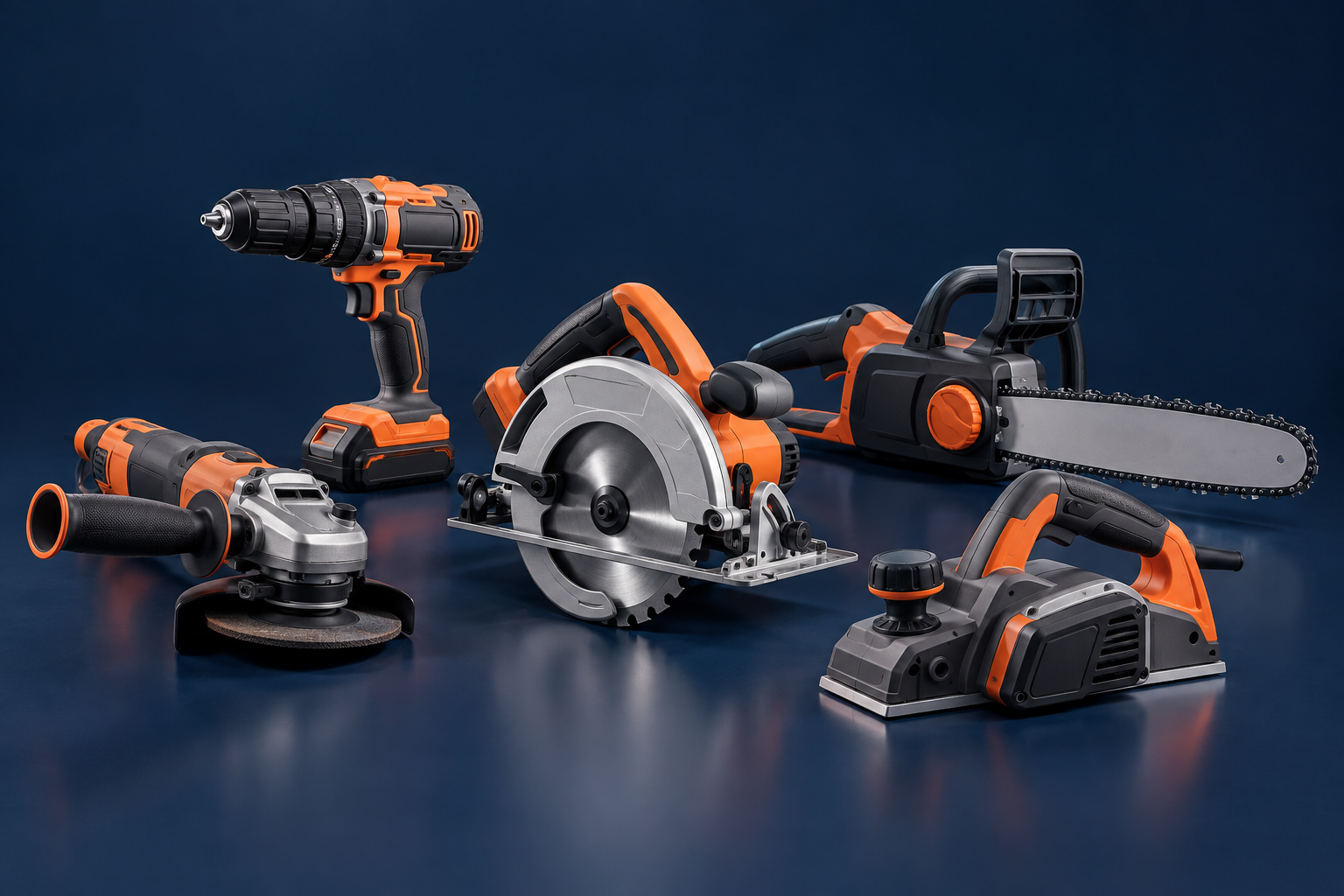 Power Tool HS Codes: How Importers Prepare a Classification File: connect the customer requirement, product configuration and supporting evidence before approval.
How to manage the decision step by step
The workflow below is designed for a B2B order rather than a consumer purchase. Each step creates an output that the next step can use. Keep the original finding when a correction is made; do not overwrite the history, because the difference between the first result and the accepted result is valuable evidence for production and future orders.
Step 1: Create a technical classification sheet
Record model, function, construction, power source, ratings, materials where relevant, photographs and pack contents. Record the model, revision, date, owner, source and outcome. Relate the work to power tools customs classification only where product facts support it. If an input changes, assess prior approvals rather than assuming a similar-looking configuration remains covered.
Step 2: Search the current tariff schedule
Start with candidate headings, then read section, chapter and subheading notes rather than selecting from keyword results alone. Record the model, revision, date, owner, source and outcome. Relate the work to power tool import duty only where product facts support it. If an input changes, assess prior approvals rather than assuming a similar-looking configuration remains covered.
Step 3: Review rulings and official guidance
Look for decisions involving sufficiently similar products and understand which facts controlled the outcome. Record the model, revision, date, owner, source and outcome. Relate the work to customs classification for cordless drills only where product facts support it. If an input changes, assess prior approvals rather than assuming a similar-looking configuration remains covered.
Step 4: Resolve kits and variants
Classify corded, cordless, battery, charger and combination kits using the facts and rules applicable to each imported SKU. Record the model, revision, date, owner, source and outcome. Relate the work to angle grinder HS code only where product facts support it. If an input changes, assess prior approvals rather than assuming a similar-looking configuration remains covered.
Step 5: Obtain professional or binding guidance
Use a licensed customs broker or request an official ruling when classification is material or uncertain. Record the model, revision, date, owner, source and outcome. Relate the work to electric chainsaw HS code only where product facts support it. If an input changes, assess prior approvals rather than assuming a similar-looking configuration remains covered.
Step 6: Control documents and changes
Keep the approved code rationale with invoices and broker instructions, then reassess when function, pack contents or destination changes. Record the model, revision, date, owner, source and outcome. Relate the work to power tool HS code only where product facts support it. If an input changes, assess prior approvals rather than assuming a similar-looking configuration remains covered.
Mid-article sourcing CTA — Send Your Requirements: Share your destination market, product application, expected quantity, target configuration and the decision your sample or quotation must answer. ToolViron can use that information to prepare a focused sourcing discussion. Send your requirements.
Evidence the buyer should retain
Evidence should be understandable to a colleague who did not attend the original meeting. Give files controlled names, model references, revision or date, origin and approval status. Screenshots and chat messages can support the history, but final decisions should move into the product specification, artwork record, purchase order, quality agreement or shipment file.
- Model-specific technical description and photographs: Retain a controlled record linked to the exact SKU, supplier or shipment.
- Current destination tariff schedule references: Retain a controlled record linked to the exact SKU, supplier or shipment.
- Relevant official rulings or broker rationale: Retain a controlled record linked to the exact SKU, supplier or shipment.
- Controlled invoice description and pack contents: Retain a controlled record linked to the exact SKU, supplier or shipment. Retain superseded information according to the buyer’s record policy. A previous label, sample or report can explain a later complaint or mixed shipment. Deleting it removes the ability to distinguish a production escape from an obsolete reference, an unauthorized change or a customer-use issue.
Factory testing, shipment inspection and release control
Factory testing is useful only when the scope is explicit. Ask which characteristics are checked on incoming parts, during assembly, on every finished unit and on sampled units. Record the method, equipment, acceptance rule and reaction to failure. A phrase such as “100% tested” is incomplete until the buyer knows which checks it covers and which design, compliance or durability questions remain outside that station.
Translate sample decisions into ordinary production controls. The bill of materials should identify important components and regional variants. Work instructions and reference samples should carry a current revision. Where a result depends on an accessory, battery, charger, material or setup, control the complete system rather than the bare tool alone.
Pre-shipment inspection should compare the completed lot with the current purchase order, approved configuration, artwork and packing references. Sampling supports a release decision but does not prove that every unit was inspected. Reports should identify the lot, sampled cartons, product revision, limitations, findings, photographs and the person authorized to accept, rework, reinspect or reject.
No tariff code in this article is a classification ruling. The importer and its customs professionals should determine the current code and duty for the actual product and destination.
 Power Tool HS Codes: How Importers Prepare a Classification File: verify factory and shipment evidence against the released product and decision criteria.
Common failure modes and how buyers contain them
Copying the supplier’s code
The supplier may use an export code, another country’s extension or a generic description that does not control the importer’s entry.
Searching by product name only
Tariff classification follows legal text and objective characteristics, not the most familiar retail term.
Reusing one code for every kit
Adding batteries, charger, case or accessories can change the analysis and should be reviewed.
Calculating duty from an old schedule
Tariff revisions and additional measures change, so landed-cost work needs a current date and destination.
Contain failures by preserving as-found evidence, identifying affected models or lots, assigning an owner and defining an accept, hold or reject decision. Record any rework and reinspection without overwriting the original finding.
Connect approval with after-sales evidence
Prepare warranty and support intake around the same characteristics used during approval. Capture model and lot, market, battery or accessory where relevant, application, operating condition, time in service, customer symptom and photographs. Preserve returned units in as-received condition until competent triage is complete. Separate symptoms from confirmed causes. Trend confirmed causes by model, lot, component revision and market. A replacement may close one customer case, but corrective action should still address affected stock, production containment, document changes and the evidence required before release resumes.
Authoritative sources and related ToolViron guidance
U.S. International Trade Commission: Harmonized Tariff Schedule and U.S. Customs and Border Protection: Tips for New Importers and Exporters provide authoritative context for this topic. They do not certify a ToolViron model, determine the complete requirement set for a destination or replace professional review of the actual transaction. Check publication dates, consolidated versions and current carrier or authority instructions before acting. Continue with Import power tools from China and FOB vs CIF for power tools. These internal links connect this decision with the relevant sourcing, factory, product or market-access cluster instead of leaving the article as an isolated keyword page.
AI photography plan
Image 1 — Buyer decision evidence
- Purpose: Show the product, documents and buying decision discussed in the first half of the guide.
- Insertion position: After the decision-factor table.
- English caption: Power Tool HS Codes: How Importers Prepare a Classification File: connect the buyer requirement with the exact product and evidence.
- ALT text: Asian customs coordinator documenting an unbranded drill, grinder, chainsaw, batteries and charger for tariff classification.
- AI image prompt: Photorealistic B2B industrial editorial photograph, candid documentary composition, natural factory or office light, ordinary working surfaces and credible scale. Asian customs coordinator documenting an unbranded drill, grinder, chainsaw, batteries and charger for tariff classification. No visible brand logos, text, watermark, CGI, artificial glow or exaggerated futuristic cleanliness. If people appear, all employees are Asian and wear task-appropriate PPE.
Image 2 — Factory or shipment verification
- Purpose: Document a realistic factory, inspection, logistics or record-verification activity.
- Insertion position: After the factory and shipment-control section.
- English caption: Power Tool HS Codes: How Importers Prepare a Classification File: verify the finished configuration against controlled records.
- ALT text: Asian export clerk comparing power-tool carton contents with commercial invoice descriptions and a customs classification worksheet.
- AI image prompt: Candid photorealistic documentary photograph inside a real Shenzhen power-tool factory or warehouse with natural mixed light, realistic wear, tools and paperwork. Asian export clerk comparing power-tool carton contents with commercial invoice descriptions and a customs classification worksheet. All employees Asian and wearing correct PPE where required. No logos, readable confidential text, watermark, CGI, staged futuristic effects or artificial glow.
Enquiry popup and CTA plan
- Trigger: Show once after 40% scroll or 30 seconds of engaged reading. Use exit intent on desktop only and suppress the popup after dismissal for the rest of the session.
- Popup title: Need a Production-Ready Power Tool Configuration?
- Popup description: Send your market, application, quantity and required configuration. ToolViron will use the details to structure a relevant product, evidence and quotation discussion.
- Required fields: Name, Email and Phone. Recommended additional fields: Company, Country/Market, Product, Estimated Quantity and Requirements.
- Submit button: Send Your Requirements The popup should not interrupt the direct answer, cover safety or compliance information, or reappear after dismissal. Consent and privacy wording should be reviewed for the markets where leads are collected.
Frequently asked questions
Do all countries use the same power-tool HS code?
Countries share the Harmonized System framework but add national digits, tariff rates and measures. Use the destination country’s current schedule. Confirm the exact model, destination and current commercial or regulatory context before applying this general answer to an order.
Can my factory decide the import code?
The factory can provide product facts and its export classification, but the importer remains responsible for destination entry and should use qualified advice. Confirm the exact model, destination and current commercial or regulatory context before applying this general answer to an order.
Does a cordless drill kit use the same code as a bare drill?
It may or may not. The battery, charger, case and accessory configuration can affect analysis, so classify the actual imported SKU. Confirm the exact model, destination and current commercial or regulatory context before applying this general answer to an order.
When should I request a binding ruling?
Consider one when classification is uncertain, recurring, high-value or likely to materially affect duty, restrictions or business decisions. Confirm the exact model, destination and current commercial or regulatory context before applying this general answer to an order.
Conclusion
Power Tool HS Codes: How Importers Prepare a Classification File is best handled as a documented buying decision. Determine whether the importer has enough product facts and destination-specific authority to support a defensible tariff classification and landed-cost estimate, control the four decision factors, follow the six-step workflow and keep every approval tied to the exact product, supplier, market and shipment. The strongest B2B evidence is specific, traceable and honest about limitations. It connects the customer requirement with production-intent samples, ordinary factory controls, shipment inspection and after-sales records. When customs, dangerous goods, engineering, legal or destination-market expertise is required, pause the commercial conclusion and obtain qualified input.
End-of-article CTA — Get a Quote: Share your destination market, product application, estimated order quantity, branding needs and inspection priorities. ToolViron will use the information to prepare the next sourcing discussion. Get a quote from ToolViron.
Images illustrate product and inspection topics; they are not documentary evidence of a specific ToolViron test or customer project. Confirm the exact model and market requirements before ordering.