
“Soft start” and “restart protection” sound similar because both appear in grinder feature lists, but they answer different questions. Soft start concerns how the motor accelerates when the operator intentionally switches the tool on. Restart protection concerns what happens after an interruption to power while the switch remains in an on position. A buyer should never treat either label as proof that a model has every protective function associated with a premium grinder. The exact circuit, switch type, power source and user instructions must be checked.
These features matter commercially because the carton, sales page and manual may all mention them. If the sample behaves differently from the printed claim, the buyer faces a product-information and safety problem, not merely a copywriting error. This article gives importers a model-specific review method. It is not instructions for an unqualified person to conduct hazardous electrical fault testing, and no feature replaces correct guarding, accessories or training.
Define the two functions in plain language
Soft start reduces the abruptness of acceleration from rest. Depending on the exact design, the user may notice a smoother pickup rather than an immediate jump to full speed. It does not mean the disc can be touched during run-up, that the tool is safe without a guard, or that all kickback events are controlled. An official Bosch grinder manual describes electronic soft start separately from its restart-protection feature, illustrating why buyers should not merge the terms.
Restart protection is intended to prevent uncontrolled starting after power has been lost and then restored under specified conditions. For a corded grinder, that might involve mains interruption with a latching switch left on; for a battery model, the scenario can differ. A particular switch arrangement can change the observable behaviour. The buyer must obtain the exact model's written functional description and test plan from the manufacturer, not copy a general explanation from another brand's brochure.
Some grinders also advertise overload protection, kickback control, braking or variable speed. These are separate functions. Never imply that a soft-start model necessarily has a brake or that restart protection prevents a disc bind. An importer should create a feature matrix with each function, its user-facing description, the SKU on which it is present and the approved verification method.
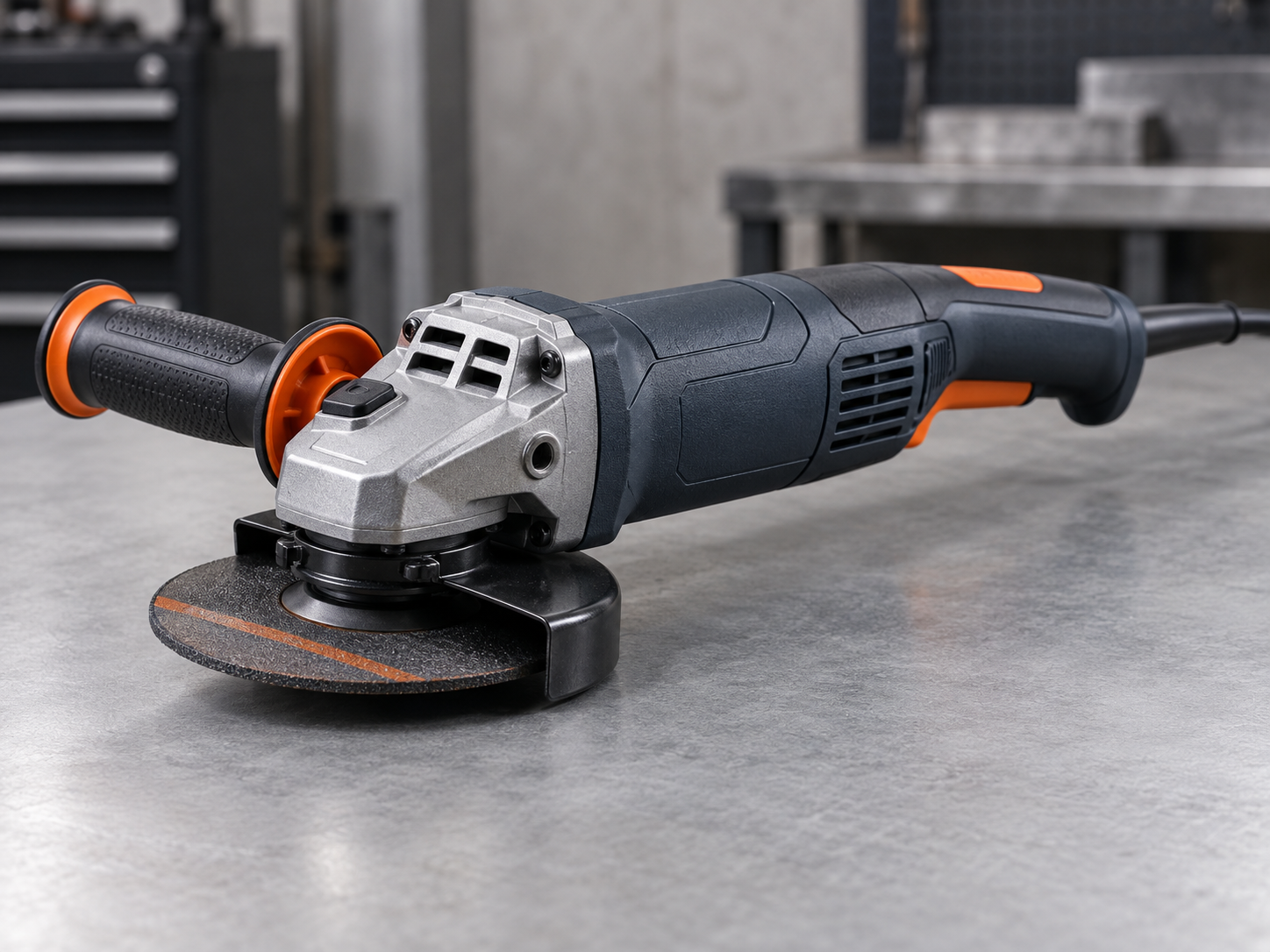
Caption: A feature claim belongs to the exact grinder and switch configuration that was tested.
Begin with the intended user and switch design
Ask where the tool will be used, how it will be powered and how the operator activates it. A slide switch that can remain on presents different questions from a non-locking paddle switch. A cordless model may be affected by battery removal and reinsertion. A grinder with several market variants may not share identical controls. Record the switch part, electronic control revision and power source in the sample file.
Do not choose a switch solely for a feature label. The operator must be able to understand how to start and stop the grinder and maintain control with the appropriate handle and guard. The paddle versus slide switch guide provides a separate comparison of user interaction. This article concentrates on whether the promised electronic behaviour is present in the chosen layout.
Review the manual language before sample approval. It should explain normal start, intended restart behaviour, fault signs and service action without inviting the user to bypass a control. If a feature depends on a particular sequence, the sequence should be described accurately for that model. Translate the explanation for the destination market and verify that the carton and online listing do not overstate it.
Plan a safe, controlled sample review
The factory's qualified test team should propose a controlled method for observing start-up and restart behaviour under the model's instructions and applicable standard. The buyer can witness or review the recorded result. Do not ask a retail salesperson to pull a live plug, disconnect wiring, defeat a switch or deliberately create a dangerous condition. Use an approved fixture and risk assessment with the guard fitted, no inappropriate accessory and a clear exclusion area.
Start by confirming the sample's identity and revision. Photograph the rating label, switch, electronics version if visible through records, guard and manual version. Record ambient and supply conditions relevant to the test. For soft start, observe the specified start sequence and compare it with a documented acceptance criterion. A subjective statement such as “seems smooth” is a weak factory standard; the manufacturer should define what constitutes correct behaviour for the product.
For restart protection, the approved test should establish what interruption scenario the feature is designed to address and what the tool must do when supply returns. Record the result and required user reset action. If a sample behaves inconsistently, quarantine it and investigate; do not publish a narrower interpretation after the fact simply to retain a marketing claim. The purpose of the test is to support the promised configuration, not to demonstrate a stunt for a sales video.
Mid-article sourcing CTA: Comparing grinder control features? Send the proposed switch, power source and target market so the sample and product-claim review can be scoped correctly.
Keep safety context attached to the feature
Portable grinding tools need appropriate guards and correctly selected abrasive wheels. OSHA's hand-held power-tool guidance discusses guards, wheel inspection and safe starting position. That source concerns U.S. workplace practice, not a certification of any ToolViron model. The general lesson for a buyer is that one electronic convenience feature cannot substitute for physical protection, wheel compatibility or instructions.
The feature description should avoid absolutist language such as “prevents all accidental starts.” The scope is the defined interruption and control state. Mechanical damage, misuse, wrong accessories or other faults can create different hazards. Similarly, “smoother start” does not guarantee lower vibration under load, lower noise or freedom from kickback. If the marketing team wants one of those claims, it needs separate evidence under an appropriate method.
Include any protective function in the user-support script. If customers report that a grinder will not restart after an interruption, service staff should know the approved reset procedure and when to refer the unit to service. They should not tell customers to defeat the switch or repeatedly reconnect power as a workaround. A clear fault-flow can prevent a normal protective response being mislabelled as a defective motor.
Control the feature across production variants
An electronics board, switch or wiring revision can change behaviour without changing the outside housing. A private-label buyer needs a change-control agreement that flags any component affecting the claimed feature. Ask for a revised sample, test report and manual review before accepting a substituted component. A date code or lot reference should allow later service teams to identify which version was shipped.
Factory testing should state which check confirms the feature and at what sampling frequency or production stage. It may not be reasonable to repeat a full engineered fault scenario on every finished unit, but there should be a defined process for board qualification, assembly checks and final verification. The accepted method must be technically appropriate for the exact circuit. A vague checklist tick beside “safety features OK” is not enough for a claim that appears on retail packaging.
Pre-shipment inspection then checks the visible and documentary elements: correct SKU, switch type, feature icons, manuals, carton version, labels and any relevant sample functional check. Inspectors must not invent a live test if it was not in their approved method. The ToolViron quality page outlines the broader route from agreed configuration to shipment check.
Position the feature without over-selling it
A trade distributor may request restart protection as a procurement condition because of its worksite policies. A retail buyer may value a simple explanation of what happens after a power interruption. Both need a feature statement tied to the exact SKU. If only one model in a family has the feature, the website should not place the claim on the family page without a clear variant distinction.
Use a comparison table with columns for model, power source, switch type, soft start, restart protection, braking, overload response, supplied guard and test reference. Leave an item blank or mark “not confirmed” until the approved configuration supports it. This table is more useful than a row of generic shield icons. It also helps a sales team distinguish a genuine differentiator from an accessory that every safe offer should already include.
The relevant electric-tool safety framework includes IEC 62841-1 and product-specific requirements for the final grinder. Conformity must be evaluated for the exact market and configuration by qualified parties. A feature-list comparison, even a careful one, is not a conformity assessment.
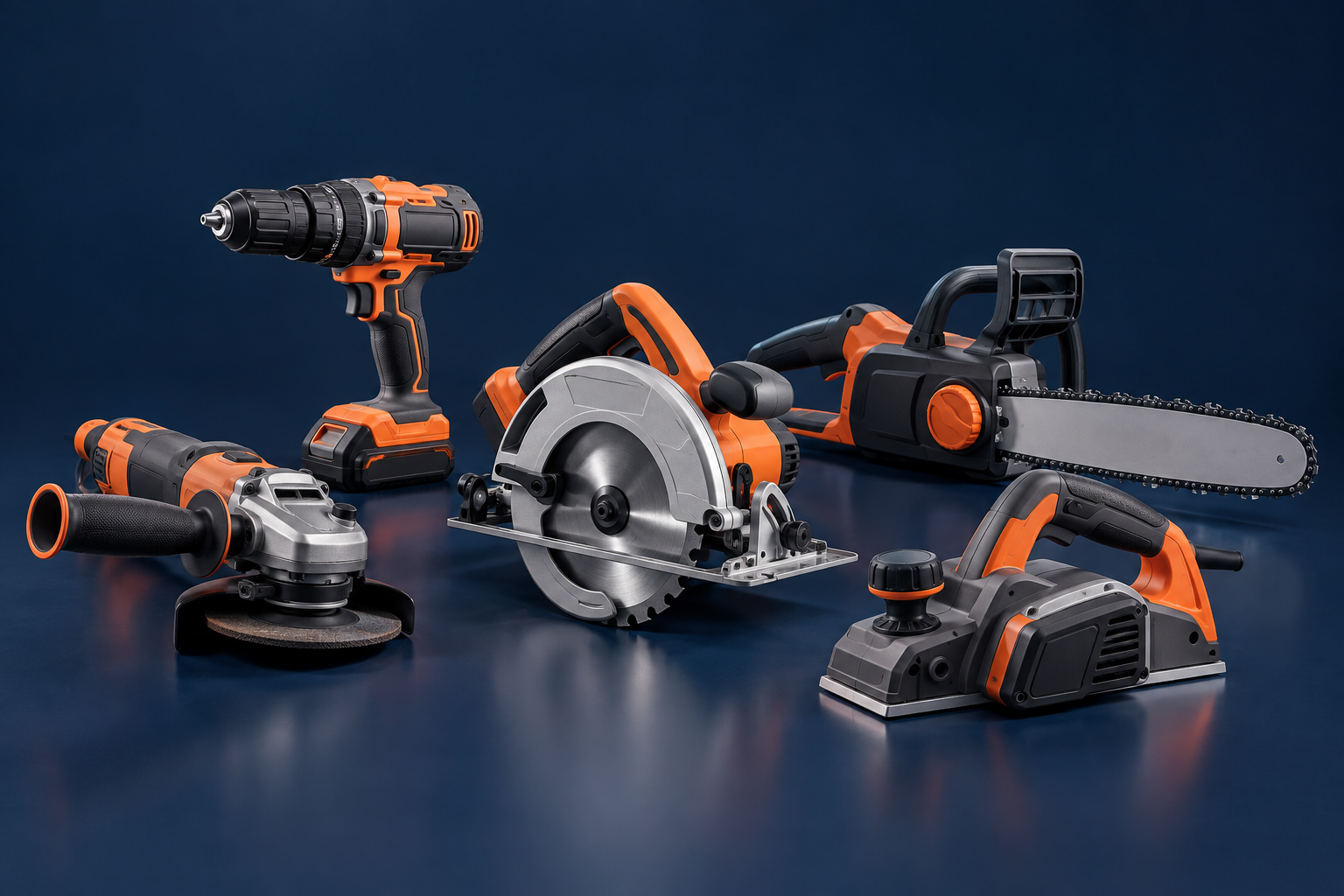
Caption: Illustrative range photography: accessory and safety details require model-specific review.
A feature-claim sign-off example
Suppose an importer receives two visually similar grinder samples. The supplier's spreadsheet says both have soft start, but only one lists restart protection. The buyer should create two separate claim rows, each tied to a sample ID, switch design, electronic revision and manual page. A product engineer then reviews the manufacturer's safe test method and observes the intended behaviour. The marketing team should not publish either icon until the relevant row has an approved result and the final carton is assigned to that exact variant.
If a test shows smooth acceleration but the tool restarts after a specific supply interruption, the product may have soft start but lack the promised restart behaviour under those conditions. That is not solved by changing the icon's wording while retaining an ambiguous “advanced safety system” headline. The buyer should either obtain the intended qualified configuration and repeat approval or remove the unsupported claim. If the result is inconsistent across samples, hold the lot and investigate the electronics, switch or test setup before release.
The importer should also check customer understanding. Ask a few technically competent sales or service staff to explain the difference between the features without reading a brochure. If they conflate soft start with braking or kickback control, a retailer will likely do the same. A concise model-specific explanation can say when the tool accelerates smoothly and what reset action is required after an interruption. It must not imply that the tool is safe to leave switched on, or that a guard can be removed because an electronic feature exists.
After launch, support tickets can reveal whether the instructions are clear. A customer who says the tool “will not start again” after power returns may be seeing normal restart protection; a customer who says it resumes without reset may be reporting a fault. The service team needs the exact model and revision to classify the report safely. This is why the feature matrix and lot identification belong in the after-sales file, not only in the sales deck.
An evidence table buyers can maintain
For each SKU, keep columns for claimed feature, functional definition, relevant components, test method, sample result, responsible reviewer, manual revision, carton revision and effective lot. If a later component change is proposed, the table makes the affected claims visible immediately. A changed on/off switch can require a new restart review even if its colour and location are unchanged. A changed guard does not necessarily affect electronics, but it still requires its own compatibility and safety review.
Keep separate rows for overload response, braking and kickback control if offered. These functions have different mechanisms and acceptance methods. Resist a single checkbox labelled “electronic protection,” because it hides whether the product actually has the feature a retailer expects. The approved feature table should be short enough that purchasing, engineering and quality teams can use it before a purchase order and during a supplier change request.
At shipment inspection, do not ask an inspector to infer internal electronics from a visual carton check. Their job is to confirm the correct SKU, switch, label, manual and any approved safe sample check. The engineering approval record supports the deeper claim. This division of responsibility prevents both unsafe ad hoc testing and the opposite error of treating an attractive icon as technical proof.
Frequently asked questions
Does soft start prevent kickback?
No. Soft start relates to intentional acceleration from rest; kickback is associated with an accessory catching or binding during use. Do not merge these functions or imply one guarantees the other.
Does restart protection mean the tool can never start unexpectedly?
No. It addresses specified power-interruption conditions on a specific design. The feature's limits, switch behaviour and reset procedure should be stated in the model's manual and verified in an approved test.
Can an inspector check restart protection by unplugging a grinder?
An unplanned live test is not appropriate. The manufacturer should provide a qualified, controlled method and acceptance criterion for the exact model; the inspector should follow the agreed scope and safety procedure.
What if the supplier changes the switch or electronic board?
Treat the change as potentially affecting the feature. Request a revised sample, functional evidence, manual and label review before allowing the claim to remain on production cartons.
Conclusion
Soft start and restart protection are distinct, model-specific behaviours. The buyer should define each claim, test it through a safe controlled method, keep the approved electronics and switch configuration under change control, and make manuals and packaging agree. Neither feature excuses a missing guard, an incompatible wheel or poor worksite practice.
Send your requirements
Share the grinder model or target configuration, switch preference, intended market and claimed control features. ToolViron can discuss the sample and documentation questions to resolve before production. Send your requirements to start.
Images illustrate product and inspection topics; they are not documentary evidence of a specific ToolViron test or customer project. Confirm the exact model and market requirements before ordering.